Yimei New Material-Professional Wax Product Solution Supplier


-
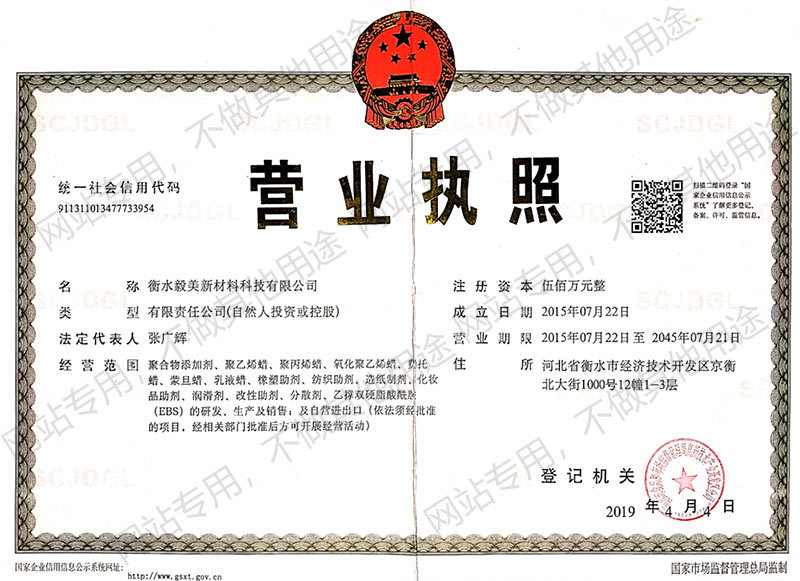
About UsHengshui yi mei new material technology co., ltd. was founded in 2015, is a collection of product development, production, sales and service as one of the high and new technology enterprises, yi mei company focused on deep processing of wax products, determined to become china's professional wax products supplier

-
ProductsThe company mainly produces and sells: polyethylene wax, oxidized polyethylene wax, synthetic Fischer-Tropsch wax, oxidized Fischer-Tropsch wax, maleic anhydride grafted wax, polypropylene wax, micro-powder wax, high-end composite wax and other eight series of dozens of models of high quality products.
-
NewsAt the beginning of its establishment, Yimei Company invested in the establishment of the "Polymer Additive R & D Center", insisting on scientific and technological innovation as the life force of enterprise development. Concentrate funds, technology, and talents in the company's scientific and technological innovation activities, focus on scientific research, public relations and technological breakthroughs of new products, new technologies, and new processes, and resolutely master core technologies.
-
SupportAt the beginning of its establishment, Yimei Company invested in the establishment of the "Polymer Additive R & D Center", insisting on scientific and technological innovation as the life force of enterprise development. Concentrate funds, technology, and talents in the company's scientific and technological innovation activities, focus on scientific research, public relations and technological breakthroughs of new products, new technologies, and new processes, and resolutely master core technologies.
-
RecruitmentOur company always adheres to the talent concept of "people-oriented", actively creates an atmosphere of respect, understanding, integrity and friendship, respects people's knowledge and talents, selects and develops mechanisms, and provides a growth platform for talents. make talents become a strong support for the sustainable development of enterprises, and realize the common growth and development of enterprises and talents.


The Future of Lead Based Compound Stabilizers in the Chemical Industry: Innovations and Implications
Release time:
2024-10-13
Lead-based compound stabilizers, primarily used in PVC formulations, have been essential in enhancing the thermal stability and processing characteristics of various plastic materials. These stabilizers, which often include lead stearate and lead phthalate, have enabled manufacturers to create durable, long-lasting products that withstand heat and other environmental factors.
Lead-based compound stabilizers, primarily used in PVC formulations, have been essential in enhancing the thermal stability and processing characteristics of various plastic materials. These stabilizers, which often include lead stearate and lead phthalate, have enabled manufacturers to create durable, long-lasting products that withstand heat and other environmental factors.
However, the use of lead compounds has raised significant health and environmental concerns, prompting a shift in the industry as stakeholders seek safer alternatives without compromising product performance.
PVC, one of the most widely used plastics, relies heavily on lead-based stabilizers for maintaining thermal stability during processing. This application spans various sectors, including construction, automotive, and consumer goods.
The regulatory landscape surrounding lead-based stabilizers is rapidly evolving, influenced by growing public health concerns and environmental awareness. Key regulations impacting their use include:
The Registration, Evaluation, Authorisation and Restriction of Chemicals (REACH) regulation has significantly curtailed the use of hazardous substances, including lead, in the European Union.
Calcium-zinc stabilizers have gained popularity due to their non-toxic profile and efficacy in providing thermal stability in PVC applications. These alternatives offer comparable performance without the harmful effects associated with lead.
Organic stabilizers, including those derived from natural sources, are increasingly being researched for their potential as eco-friendly alternatives. These stabilizers not only reduce toxicity but also enhance product sustainability.
Combining various stabilization technologies can yield hybrid solutions that meet performance and safety standards while minimizing environmental impact. Such innovations are crucial to maintaining competitiveness in the market.
Lifecycle assessments of chemical products reveal the environmental impacts associated with lead stabilizers, promoting the transition to safer alternatives that align with global sustainability goals.
Investments in research and development of alternative stabilizers are expected to yield innovative products that meet regulatory standards while maintaining performance levels.
Switching to alternative stabilizers may involve initial cost increases. However, long-term savings can be realized through improved product performance and compliance with regulations.
Educating consumers about the benefits of lead-free products is essential for market acceptance. Transparency in sourcing and manufacturing processes will play a crucial role in building consumer trust.
The future of lead-based compound stabilizers in the chemical industry is in a state of flux. With increasing regulatory scrutiny and a growing emphasis on sustainability, manufacturers must adapt to emerging alternatives that ensure product safety and environmental stewardship. By embracing innovative solutions and prioritizing consumer education, the industry can navigate these challenges while continuing to meet market demands.
Key words:
Lead Based Compound Stabilizer
recommend reading