Yimei New Material-Professional Wax Product Solution Supplier


-
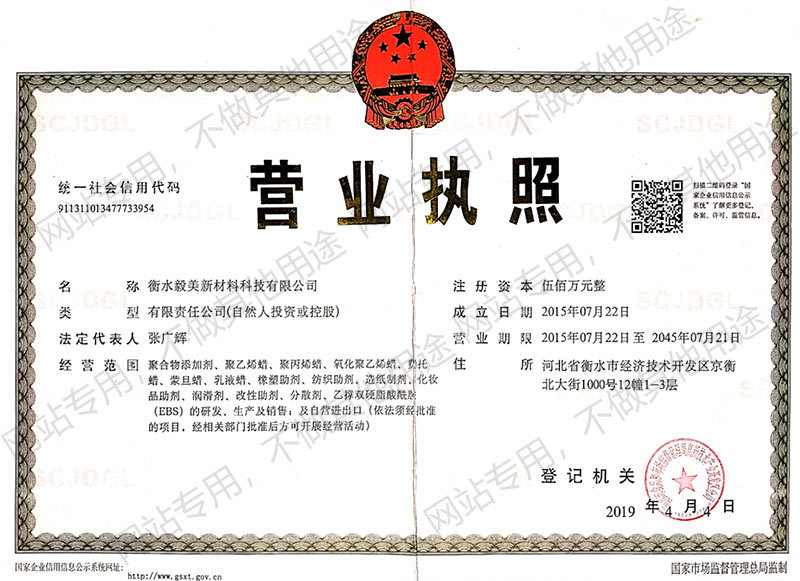
About UsHengshui yi mei new material technology co., ltd. was founded in 2015, is a collection of product development, production, sales and service as one of the high and new technology enterprises, yi mei company focused on deep processing of wax products, determined to become china's professional wax products supplier

-
ProductsThe company mainly produces and sells: polyethylene wax, oxidized polyethylene wax, synthetic Fischer-Tropsch wax, oxidized Fischer-Tropsch wax, maleic anhydride grafted wax, polypropylene wax, micro-powder wax, high-end composite wax and other eight series of dozens of models of high quality products.
-
NewsAt the beginning of its establishment, Yimei Company invested in the establishment of the "Polymer Additive R & D Center", insisting on scientific and technological innovation as the life force of enterprise development. Concentrate funds, technology, and talents in the company's scientific and technological innovation activities, focus on scientific research, public relations and technological breakthroughs of new products, new technologies, and new processes, and resolutely master core technologies.
-
SupportAt the beginning of its establishment, Yimei Company invested in the establishment of the "Polymer Additive R & D Center", insisting on scientific and technological innovation as the life force of enterprise development. Concentrate funds, technology, and talents in the company's scientific and technological innovation activities, focus on scientific research, public relations and technological breakthroughs of new products, new technologies, and new processes, and resolutely master core technologies.
-
RecruitmentOur company always adheres to the talent concept of "people-oriented", actively creates an atmosphere of respect, understanding, integrity and friendship, respects people's knowledge and talents, selects and develops mechanisms, and provides a growth platform for talents. make talents become a strong support for the sustainable development of enterprises, and realize the common growth and development of enterprises and talents.


The Environmental Impact of Lead Stearate in Modern Chemistry: A Comprehensive Analysis
Release time:
2024-10-25
Lead stearate is a lead salt of stearic acid, commonly used as a stabilizer and lubricant in various industrial applications. Its chemical stability and effectiveness in enhancing the performance of polymers make it a popular choice in the manufacturing of plastics, paints, and rubber. However, the growing awareness of environmental sustainability and health safety has raised questions about its use. Understanding the environmental impact of lead stearate is crucial for industries aiming to balance performance with environmental responsibility.
Lead stearate is a lead salt of stearic acid, commonly used as a stabilizer and lubricant in various industrial applications. Its chemical stability and effectiveness in enhancing the performance of polymers make it a popular choice in the manufacturing of plastics, paints, and rubber. However, the growing awareness of environmental sustainability and health safety has raised questions about its use. Understanding the environmental impact of lead stearate is crucial for industries aiming to balance performance with environmental responsibility.
Lead stearate is often used in paints and coatings as a drying agent and thickening agent. It enhances the gloss and durability of finishes, making it a preferred choice among paint manufacturers.
In rubber production, lead stearate acts as a lubricant, facilitating the processing of rubber compounds and improving their overall performance. Its ability to reduce friction during processing contributes to the quality and longevity of rubber products.
Despite its benefits, the environmental concerns linked to lead stearate cannot be overlooked. Lead is a toxic heavy metal that poses significant risks to human health and the environment.
The use of lead stearate in industrial processes can lead to soil contamination through improper disposal or leakage. This contamination can adversely affect soil quality, harming plants and microorganisms essential for a healthy ecosystem.
Improper handling and disposal of lead stearate may lead to its leaching into water bodies, posing severe risks to aquatic life. Lead can bioaccumulate in fish and other organisms, entering the food chain and potentially affecting human health.
The manufacturing and use of lead stearate can result in airborne lead particles, contributing to air pollution. Prolonged exposure to lead dust can lead to respiratory problems and other health issues for workers and nearby communities.
Acute exposure to lead stearate may cause symptoms such as headaches, dizziness, and gastrointestinal disturbances. In severe cases, it can lead to lead poisoning, characterized by neurological impairments and metabolic dysfunctions.
Chronic exposure to lead stearate can result in long-term health issues, including cognitive deficits, reproductive problems, and kidney damage. Occupational safety measures are crucial in minimizing these risks for workers in industries using lead stearate.
Due to the identified health and environmental risks, various regulatory bodies have established strict standards for lead usage. The U.S. Environmental Protection Agency (EPA) and similar organizations globally have set limits on lead emissions and exposure levels. Industries must comply with these regulations, implementing appropriate measures to minimize lead stearate's impact on human health and the environment.
Given the environmental and health concerns associated with lead stearate, it is imperative to explore sustainable alternatives that maintain performance without compromising safety.
Calcium stearate is a non-toxic alternative commonly used in plastics and rubber formulations. It serves similar functionalities as lead stearate but without the associated health risks.
Innovative organic lubricants derived from renewable resources are increasingly being developed. These alternatives aim to reduce environmental impact while offering comparable performance in industrial applications.
As industries strive for sustainability, the demand for environmentally friendly alternatives will continue to grow. Future research and development will focus on creating safer compounds that can replace hazardous materials like lead stearate. Collaborations between researchers, manufacturers, and regulatory bodies are essential to ensure the transition towards safer and more sustainable chemical practices.
The use of lead stearate in modern chemistry presents significant environmental and health challenges. While it plays a crucial role in various industrial applications, the associated risks necessitate a shift towards safer alternatives. By understanding the implications of lead stearate and actively seeking sustainable options, industries can contribute to a healthier environment and protect public health. The transition towards safer chemical practices is not only beneficial for the planet but also essential for ensuring the long-term viability of industrial operations.
Key words:
Lead Stearate
Previous article
recommend reading