Yimei New Material-Professional Wax Product Solution Supplier


-
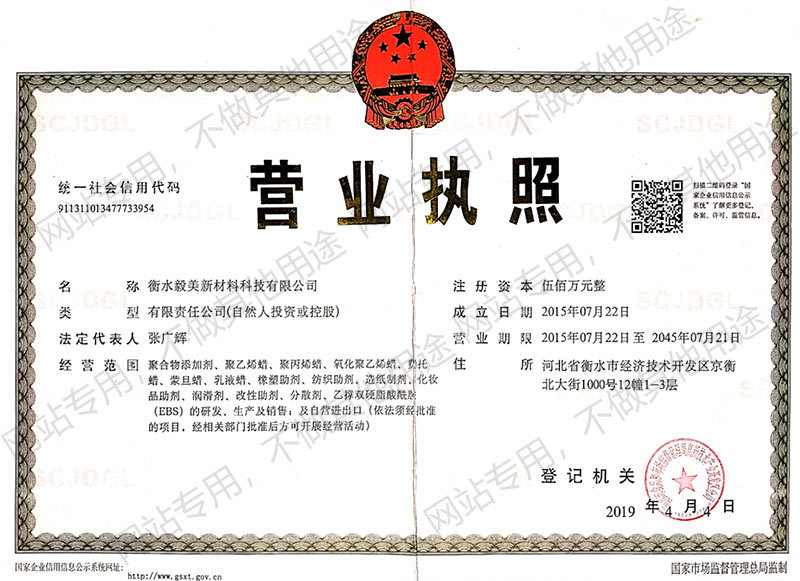
About UsHengshui yi mei new material technology co., ltd. was founded in 2015, is a collection of product development, production, sales and service as one of the high and new technology enterprises, yi mei company focused on deep processing of wax products, determined to become china's professional wax products supplier

-
ProductsThe company mainly produces and sells: polyethylene wax, oxidized polyethylene wax, synthetic Fischer-Tropsch wax, oxidized Fischer-Tropsch wax, maleic anhydride grafted wax, polypropylene wax, micro-powder wax, high-end composite wax and other eight series of dozens of models of high quality products.
-
NewsAt the beginning of its establishment, Yimei Company invested in the establishment of the "Polymer Additive R & D Center", insisting on scientific and technological innovation as the life force of enterprise development. Concentrate funds, technology, and talents in the company's scientific and technological innovation activities, focus on scientific research, public relations and technological breakthroughs of new products, new technologies, and new processes, and resolutely master core technologies.
-
SupportAt the beginning of its establishment, Yimei Company invested in the establishment of the "Polymer Additive R & D Center", insisting on scientific and technological innovation as the life force of enterprise development. Concentrate funds, technology, and talents in the company's scientific and technological innovation activities, focus on scientific research, public relations and technological breakthroughs of new products, new technologies, and new processes, and resolutely master core technologies.
-
RecruitmentOur company always adheres to the talent concept of "people-oriented", actively creates an atmosphere of respect, understanding, integrity and friendship, respects people's knowledge and talents, selects and develops mechanisms, and provides a growth platform for talents. make talents become a strong support for the sustainable development of enterprises, and realize the common growth and development of enterprises and talents.


The Environmental Impact of PVC Lead Based Compound Stabilizers: A Comprehensive Analysis
Release time:
2024-11-06
The Environmental Impact of PVC Lead Based Compound Stabilizers Introduction to PVC and Lead-Based Stabilizers Polyvinyl Chloride (PVC) is one of the most widely used synthetic plastic polymers in the world. Its versatility and durability make it a popular choice in construction, electrical, and automotive industries. However, the use of lead-based stabilizers in PVC formulations raises significan
The Environmental Impact of PVC Lead Based Compound Stabilizers
Introduction to PVC and Lead-Based Stabilizers
Polyvinyl Chloride (PVC) is one of the most widely used synthetic plastic polymers in the world. Its versatility and durability make it a popular choice in construction, electrical, and automotive industries. However, the use of lead-based stabilizers in PVC formulations raises significant environmental and health concerns. Lead compounds, traditionally used to enhance the stability and processing of PVC, pose risks when they leach into the environment. This article investigates the environmental impact of PVC lead-based compound stabilizers, examining their effects on ecosystems and human health.
Understanding PVC and Its Applications
The Versatility of PVC
PVC is employed in various applications, from pipes and cables to flooring and medical equipment. Its resistance to moisture, chemicals, and UV radiation makes it ideal for both indoor and outdoor applications. As a result, the global demand for PVC continues to rise, with the market expected to grow significantly in the coming years.
The Role of Lead-Based Stabilizers in PVC
Lead-based stabilizers, particularly lead stearate and lead phosphate, are incorporated into PVC to prevent degradation during processing and to enhance the material's thermal stability. These compounds have been favored for their effectiveness, cost-efficiency, and ability to prolong the lifespan of PVC products. However, their use has raised alarming environmental and health concerns.
Health Risks Associated with Lead Exposure
The Toxicity of Lead
Lead is a potent neurotoxin that can adversely affect almost every organ and system in the human body. Exposure to lead, especially in children, can lead to developmental issues, cognitive impairments, and behavioral problems. Adults exposed to lead may experience cardiovascular issues, reproductive problems, and decreased kidney function.
Sources of Lead Exposure from PVC
Lead can leach from PVC products throughout their lifecycle—from manufacturing to disposal. This leaching can contaminate soil, water, and air, leading to widespread exposure. Additionally, improper disposal of PVC products can exacerbate the problem, as they may break down and release lead into the environment.
The Environmental Impact of PVC Lead-Based Stabilizers
Soil and Water Contamination
Lead from PVC stabilizers can migrate into the soil and waterways, leading to contamination that affects plant and animal life. This contamination can disrupt local ecosystems, harm wildlife, and potentially enter the human food chain through crops and fish.
Impact on Wildlife
Aquatic and terrestrial organisms are particularly vulnerable to lead exposure. Studies have shown that lead can cause reproductive failure, developmental toxicity, and increased mortality rates in various species. Additionally, bioaccumulation of lead in the food chain poses a long-term threat to biodiversity.
Regulatory Landscape and Safety Measures
Global Regulations on Lead Use
Many countries have begun to implement strict regulations regarding the use of lead-based stabilizers in PVC. The European Union's REACH regulation and the United States' Toxic Substances Control Act (TSCA) are examples of legislative efforts aimed at reducing lead exposure. These regulations encourage the development of safer alternatives and promote environmentally responsible practices.
Best Practices for Safe Disposal
To mitigate the environmental impact of PVC products, proper disposal practices are essential. Recycling and safe disposal methods, including specialized landfills for hazardous waste, can minimize lead leaching into the environment. Companies are encouraged to adopt a circular economy approach, focusing on recycling and repurposing PVC materials.
Alternatives to Lead-Based Stabilizers
Eco-Friendly Stabilizers
With the growing awareness of the dangers posed by lead, researchers and manufacturers are exploring alternative stabilizers. Calcium-zinc stabilizers, for instance, have emerged as a popular eco-friendly alternative that provides similar benefits without the associated health risks. These alternatives are not only safer but also align with sustainability goals.
Innovations in PVC Formulation
Advancements in polymer chemistry have led to the development of innovative PVC formulations that do not require lead-based stabilizers. These formulations use a combination of organic and inorganic stabilizers, enhancing product safety without compromising performance.
Consumer Awareness and Education
The Importance of Informed Choices
As consumers become more aware of the health and environmental implications of PVC lead-based stabilizers, there is an increasing demand for safer alternatives. Educating consumers about the risks associated with lead exposure can empower them to make informed choices when purchasing PVC products.
Labeling and Transparency
Manufacturers should prioritize transparency by providing clear labeling that indicates whether a product contains lead-based stabilizers. This information enables consumers to make safer selections and encourages companies to adopt greener practices.
Conclusion
The environmental impact of PVC lead-based compound stabilizers presents a critical challenge that requires immediate attention. Understanding the risks associated with lead exposure is essential for protecting both human health and the environment. By embracing alternative stabilizers, adhering to regulatory frameworks, and fostering consumer awareness, we can mitigate the detrimental effects of PVC lead-based compounds. As we move towards a more sustainable future, prioritizing eco-friendly materials and practices will be crucial in ensuring a healthier planet for generations to come.
FAQs
1. What are PVC lead-based compound stabilizers?
PVC lead-based compound stabilizers are additives used in polyvinyl chloride formulations to improve stability during processing and enhance the thermal performance of the material.
2. Why are lead stabilizers considered harmful?
Lead stabilizers are harmful because lead is a toxic substance that can leach into the environment, posing health risks to humans and wildlife through soil and water contamination.
3. What alternatives exist for lead-based stabilizers in PVC?
Alternatives to lead-based stabilizers include calcium-zinc stabilizers and other eco-friendly compounds that offer similar benefits without the associated health risks.
4. How can I safely dispose of PVC products?
To safely dispose of PVC products, consider recycling them through specialized programs or disposing of them in hazardous waste facilities dedicated to managing toxic materials.
5. What regulations govern the use of lead in PVC products?
Global regulations such as the EU's REACH and the US's TSCA govern the use of lead in PVC products, promoting safer alternatives and minimizing health risks.
Key words:
PVC Lead Based Compound Stabilizer
Previous article
recommend reading