Yimei New Material-Professional Wax Product Solution Supplier


-
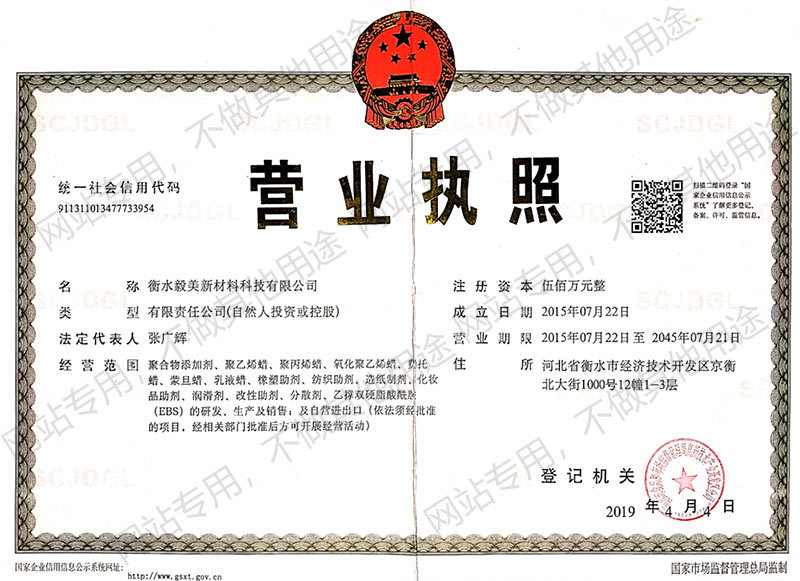
About UsHengshui yi mei new material technology co., ltd. was founded in 2015, is a collection of product development, production, sales and service as one of the high and new technology enterprises, yi mei company focused on deep processing of wax products, determined to become china's professional wax products supplier

-
ProductsThe company mainly produces and sells: polyethylene wax, oxidized polyethylene wax, synthetic Fischer-Tropsch wax, oxidized Fischer-Tropsch wax, maleic anhydride grafted wax, polypropylene wax, micro-powder wax, high-end composite wax and other eight series of dozens of models of high quality products.
-
NewsAt the beginning of its establishment, Yimei Company invested in the establishment of the "Polymer Additive R & D Center", insisting on scientific and technological innovation as the life force of enterprise development. Concentrate funds, technology, and talents in the company's scientific and technological innovation activities, focus on scientific research, public relations and technological breakthroughs of new products, new technologies, and new processes, and resolutely master core technologies.
-
SupportAt the beginning of its establishment, Yimei Company invested in the establishment of the "Polymer Additive R & D Center", insisting on scientific and technological innovation as the life force of enterprise development. Concentrate funds, technology, and talents in the company's scientific and technological innovation activities, focus on scientific research, public relations and technological breakthroughs of new products, new technologies, and new processes, and resolutely master core technologies.
-
RecruitmentOur company always adheres to the talent concept of "people-oriented", actively creates an atmosphere of respect, understanding, integrity and friendship, respects people's knowledge and talents, selects and develops mechanisms, and provides a growth platform for talents. make talents become a strong support for the sustainable development of enterprises, and realize the common growth and development of enterprises and talents.


The Crucial Role of PVC Lead Based Compound Stabilizers in the Chemical Industry
Release time:
2024-11-04
The Crucial Role of PVC Lead Based Compound Stabilizers in the Chemical Industry In the vast landscape of the chemical industry, the use of stabilizers plays a pivotal role in enhancing the performance and longevity of various products. Among these, **PVC lead-based compound stabilizers** have emerged as vital components for numerous applications. This article aims to unravel the intricate world o
The Crucial Role of PVC Lead Based Compound Stabilizers in the Chemical Industry
In the vast landscape of the chemical industry, the use of stabilizers plays a pivotal role in enhancing the performance and longevity of various products. Among these, **PVC lead-based compound stabilizers** have emerged as vital components for numerous applications. This article aims to unravel the intricate world of these stabilizers, discussing their importance, mechanisms, applications, and the regulatory challenges they face.
Table of Contents
- 1. Introduction to PVC Lead Based Compound Stabilizers
- 2. How PVC Lead Based Compound Stabilizers Work
- 3. Applications in the Chemical Industry
- 4. Benefits of Using PVC Lead Based Stabilizers
- 5. Safety Concerns and Regulations
- 6. Alternatives to Lead-Based Stabilizers
- 7. The Future of PVC Lead Based Stabilizers
- 8. Conclusion
- 9. Frequently Asked Questions
1. Introduction to PVC Lead Based Compound Stabilizers
Plastic materials dominate many sectors of the chemical industry, and **polyvinyl chloride (PVC)** is among the most widely used plastics. PVC’s versatility, durability, and low cost render it a popular choice in various applications, from construction materials to consumer products. However, to enhance its performance, **stabilizers** are added during the manufacturing process.
**Lead-based stabilizers**, particularly in PVC formulations, have historically played a significant role in preventing the degradation of the material during processing and throughout its life cycle. They protect against heat, light, and environmental factors that could otherwise compromise the integrity of the product.
2. How PVC Lead Based Compound Stabilizers Work
The effectiveness of PVC lead-based stabilizers lies in their chemical composition and mechanism of action. These stabilizers function primarily by inhibiting the **decomposition reactions** that can occur at elevated temperatures during processing.
Key Mechanisms of Action
- Heat Stabilization: Lead-based stabilizers absorb harmful heat generated during the molding and extrusion processes, preventing the breakdown of PVC.
- UV Stabilization: They help to minimize the impact of ultraviolet light, which can lead to discoloration and brittleness over time.
- Processing Aid: These stabilizers also improve the flow and workability of PVC, making it easier to process and mold into desired shapes.
3. Applications in the Chemical Industry
The versatility of PVC lead-based compound stabilizers allows them to be used across various sectors. Some prominent applications include:
Construction Materials
In the construction industry, PVC is commonly used for pipes, roofing sheets, and wall coverings. The lead-based stabilizers ensure that these products remain intact and functional, even under harsh environmental conditions.
Automotive Components
Many automotive parts, such as dashboards and wiring insulation, utilize PVC. Lead-based stabilizers contribute to the longevity and performance of these components, ensuring they withstand temperature fluctuations and exposure to chemicals.
Consumer Products
From toys to household goods, PVC products benefit from lead-based stabilizers. They help maintain color stability and physical integrity, thus enhancing consumer safety and satisfaction.
4. Benefits of Using PVC Lead Based Stabilizers
The incorporation of lead-based stabilizers in PVC formulations offers numerous advantages:
Extended Product Lifespan
By preventing degradation from heat and UV exposure, lead-based stabilizers significantly extend the lifespan of PVC products.
Cost-Effectiveness
Using these stabilizers can reduce the overall costs associated with product failure and maintenance, making them an economically viable option for manufacturers.
Improved Aesthetic Qualities
Lead-based stabilizers help maintain the color and surface integrity of PVC products, enhancing their visual appeal.
5. Safety Concerns and Regulations
Despite their benefits, PVC lead-based stabilizers have raised significant safety and environmental concerns. Lead is a toxic metal, and its use in consumer products is heavily regulated in many regions.
Regulatory Framework
Organizations such as the Environmental Protection Agency (EPA) in the United States and the European Union’s REACH regulations have imposed strict guidelines on the use of lead-based stabilizers. These regulations are aimed at minimizing the risks associated with lead exposure, particularly in consumer products.
Health Risks
Chronic exposure to lead can lead to serious health issues, including neurological damage, reproductive problems, and developmental delays in children. As a result, manufacturers are increasingly seeking alternatives to lead-based stabilizers.
6. Alternatives to Lead-Based Stabilizers
Calcium-Zinc Stabilizers
**Calcium-zinc (Ca-Zn)** stabilizers are increasingly popular due to their effectiveness and non-toxic nature. They provide heat and light stabilization while being more environmentally friendly.
Organotin Stabilizers
**Organotin** compounds are another alternative that offers similar stabilization properties. However, they also face regulatory scrutiny due to potential toxicity, necessitating ongoing research for safer options.
7. The Future of PVC Lead Based Stabilizers
The future of PVC lead-based compound stabilizers is contingent on evolving regulations and market demands. While they have historically played an essential role, the shift towards sustainability and safety is undeniable.
Innovation in Stabilization Technology
Research continues to focus on developing new stabilizers that can replace lead-based options without compromising product performance. Innovations in polymer chemistry, for instance, show promise in creating safer alternatives that meet industry needs.
Market Trends
The demand for sustainable and eco-friendly products is rising, pushing manufacturers to reconsider their formulation choices. As consumer awareness grows, the market is likely to favor non-toxic stabilizers, leading to a transformation in the industry.
8. Conclusion
PVC lead-based compound stabilizers have long been integral to the chemical industry, providing essential benefits in various applications. While their advantages are clear, the associated health and environmental concerns necessitate cautious consideration. The industry is gradually shifting towards safer alternatives, reflecting a broader trend towards sustainability and safety. As innovation continues, the future of PVC stabilization will likely see the emergence of new, non-toxic solutions that meet the demands of both manufacturers and consumers.
9. Frequently Asked Questions
1. What are PVC lead-based compound stabilizers?
PVC lead-based compound stabilizers are additives used in the manufacturing of PVC products to prevent degradation caused by heat and UV exposure.
2. Why are lead-based stabilizers controversial?
Lead is a toxic substance that poses health risks, particularly to children. This has led to increased regulations and scrutiny regarding its use in consumer products.
3. What are the alternatives to lead-based stabilizers?
Alternatives include calcium-zinc stabilizers and organotin compounds, which provide stabilization without the associated risks of lead.
4. How do lead-based stabilizers affect product performance?
Lead-based stabilizers enhance the durability, color stability, and overall performance of PVC products, ensuring they last longer and maintain their aesthetic qualities.
5. What is the future of PVC lead-based stabilizers?
The future will likely see a shift towards safer, environmentally friendly alternatives as regulations tighten and consumer demand for safe products increases.
Key words:
PVC Lead Based Compound Stabilizer
recommend reading