Yimei New Material-Professional Wax Product Solution Supplier


-
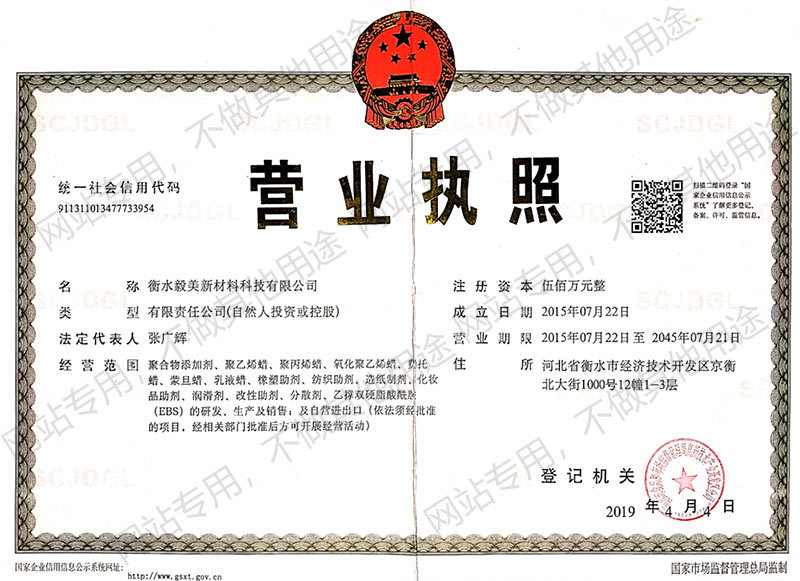
About UsHengshui yi mei new material technology co., ltd. was founded in 2015, is a collection of product development, production, sales and service as one of the high and new technology enterprises, yi mei company focused on deep processing of wax products, determined to become china's professional wax products supplier

-
ProductsThe company mainly produces and sells: polyethylene wax, oxidized polyethylene wax, synthetic Fischer-Tropsch wax, oxidized Fischer-Tropsch wax, maleic anhydride grafted wax, polypropylene wax, micro-powder wax, high-end composite wax and other eight series of dozens of models of high quality products.
-
NewsAt the beginning of its establishment, Yimei Company invested in the establishment of the "Polymer Additive R & D Center", insisting on scientific and technological innovation as the life force of enterprise development. Concentrate funds, technology, and talents in the company's scientific and technological innovation activities, focus on scientific research, public relations and technological breakthroughs of new products, new technologies, and new processes, and resolutely master core technologies.
-
SupportAt the beginning of its establishment, Yimei Company invested in the establishment of the "Polymer Additive R & D Center", insisting on scientific and technological innovation as the life force of enterprise development. Concentrate funds, technology, and talents in the company's scientific and technological innovation activities, focus on scientific research, public relations and technological breakthroughs of new products, new technologies, and new processes, and resolutely master core technologies.
-
RecruitmentOur company always adheres to the talent concept of "people-oriented", actively creates an atmosphere of respect, understanding, integrity and friendship, respects people's knowledge and talents, selects and develops mechanisms, and provides a growth platform for talents. make talents become a strong support for the sustainable development of enterprises, and realize the common growth and development of enterprises and talents.


Exploring the Different Types of PVC Lead Based Compound Stabilizers: A Comprehensive Guide
Release time:
2024-11-03
Exploring the Different Types of PVC Lead Based Compound Stabilizers Table of Contents 1. Introduction to PVC Lead Based Compound Stabilizers 2. Understanding PVC: Properties and Importance 3. What Are Lead Based Stabilizers? 4. Types of Lead Based Stabilizers 4.1 Calcium Lead Stabilizers 4.2 Barium Lead Stabilizers 4.3 Lead Soap Stabilizers 5. Application
Exploring the Different Types of PVC Lead Based Compound Stabilizers
Table of Contents
- 1. Introduction to PVC Lead Based Compound Stabilizers
- 2. Understanding PVC: Properties and Importance
- 3. What Are Lead Based Stabilizers?
- 4. Types of Lead Based Stabilizers
- 5. Applications of PVC Lead Based Stabilizers
- 6. Advantages of Using Lead Based Stabilizers
- 7. Environmental Impact of Lead Based Stabilizers
- 8. Regulatory Standards and Guidelines
- 9. Frequently Asked Questions
- 10. Conclusion
1. Introduction to PVC Lead Based Compound Stabilizers
In the realm of chemical engineering, **PVC (Polyvinyl Chloride)** has emerged as one of the most widely used thermoplastic materials. Its versatility is enhanced through the use of stabilizers, particularly lead-based compounds. This article delves into the various types of **PVC lead-based compound stabilizers**, exploring their functions, applications, and the implications of their use in industrial processes.
2. Understanding PVC: Properties and Importance
PVC is a synthetic polymer known for its durability, cost-effectiveness, and resistance to environmental factors. Its inherent properties make it suitable for a myriad of applications ranging from construction materials to automotive components. However, to ensure the longevity and performance of PVC products, stabilizers are essential as they prevent degradation caused by heat, light, and other environmental stressors.
3. What Are Lead Based Stabilizers?
Lead-based stabilizers play a critical role in enhancing the stability of PVC during processing and throughout its lifecycle. These stabilizers work by deactivating the chlorine radicals formed during PVC thermal degradation, thereby preventing discoloration and deterioration of the material. The use of lead in these stabilizers, however, raises concerns regarding health and environmental safety, necessitating a careful examination of their use in modern applications.
4. Types of Lead Based Stabilizers
Lead-based stabilizers can be categorized into various types, each with distinct properties and applications.
4.1 Calcium Lead Stabilizers
Calcium lead stabilizers are composed of calcium salts combined with lead compounds. They are often favored for their effectiveness in providing thermal stability while minimizing the risk of migration. These stabilizers are commonly used in **soft PVC applications**, such as flexible tubing and flooring products.
4.2 Barium Lead Stabilizers
Barium lead stabilizers consist of barium salts combined with lead. They are known for their superior heat stability and resistance to UV degradation. These stabilizers are particularly suitable for applications that require a high degree of clarity and color retention, such as transparent or colored PVC products.
4.3 Lead Soap Stabilizers
Lead soap stabilizers are a blend of lead salts with fatty acids. They are effective in providing long-lasting thermal stability and improving the processing characteristics of PVC. These stabilizers are often used in rigid PVC applications, including pipes, fittings, and profiles.
5. Applications of PVC Lead Based Stabilizers
PVC lead-based compound stabilizers find use in various industries due to their effective performance. Some of the primary applications include:
- **Construction**: In the construction industry, PVC products such as windows, doors, and roofing materials utilize lead-based stabilizers to enhance durability and weather resistance.
- **Electrical**: Insulation of electrical cables often incorporates PVC with lead stabilizers, ensuring long-lasting performance under various environmental conditions.
- **Packaging**: Flexible PVC films used in packaging benefit from lead-based stabilizers, providing clarity and flexibility essential for product display.
6. Advantages of Using Lead Based Stabilizers
The use of lead-based stabilizers offers several advantages for PVC products:
- **Enhanced Thermal Stability**: Lead-based stabilizers significantly improve the thermal stability of PVC during processing, reducing the risk of degradation.
- **Color Retention**: These stabilizers help maintain the color and clarity of PVC products, making them more visually appealing.
- **Cost-Effectiveness**: Lead-based stabilizers are often more economical compared to alternative stabilizers, making them a cost-effective choice for manufacturers.
7. Environmental Impact of Lead Based Stabilizers
Despite their advantages, the use of lead-based stabilizers poses potential environmental and health risks. Lead is a toxic metal, and its presence in PVC products can lead to contamination and adverse health effects. As a result, many countries have implemented regulations to limit the use of lead in consumer products. Manufacturers must be vigilant in assessing the environmental impact of their products and considering alternative stabilizers that are safer and more sustainable.
8. Regulatory Standards and Guidelines
Regulatory bodies worldwide have established guidelines to govern the use of lead-based stabilizers in PVC manufacturing. Agreements such as the **EU Restriction of Hazardous Substances (RoHS)** directive and the **US Environmental Protection Agency (EPA)** regulations set strict limits on lead content in consumer products. Compliance with these regulations is essential for manufacturers to ensure market access and consumer safety.
9. Frequently Asked Questions
1. What are the main types of PVC lead-based stabilizers?
The most common types include calcium lead stabilizers, barium lead stabilizers, and lead soap stabilizers.
2. Are lead-based stabilizers safe to use?
While they provide excellent stability, lead-based stabilizers can pose health and environmental risks. Many regulations aim to limit their use in consumer products.
3. What industries utilize PVC lead-based stabilizers?
They are widely used in construction, electrical applications, and packaging industries.
4. What are the alternatives to lead-based stabilizers?
Alternatives include calcium-zinc stabilizers, organic stabilizers, and other non-toxic options that are gaining popularity.
5. How do lead-based stabilizers affect the performance of PVC products?
They enhance thermal stability, color retention, and processing characteristics, contributing to the overall performance of PVC products.
10. Conclusion
In summary, **PVC lead-based compound stabilizers** play a vital role in enhancing the performance and longevity of PVC products across various industries. Understanding the different types of stabilizers, their applications, advantages, and environmental implications is crucial for professionals in the chemical industry. As regulations evolve and the demand for safer alternatives increases, manufacturers must adapt their practices to align with sustainability goals while maintaining product integrity. By staying informed and proactive, we can navigate the complexities of lead-based stabilizers to ensure a safer and more sustainable future for PVC applications.
Key words:
PVC Lead Based Compound Stabilizer
recommend reading