Yimei New Material-Professional Wax Product Solution Supplier


-
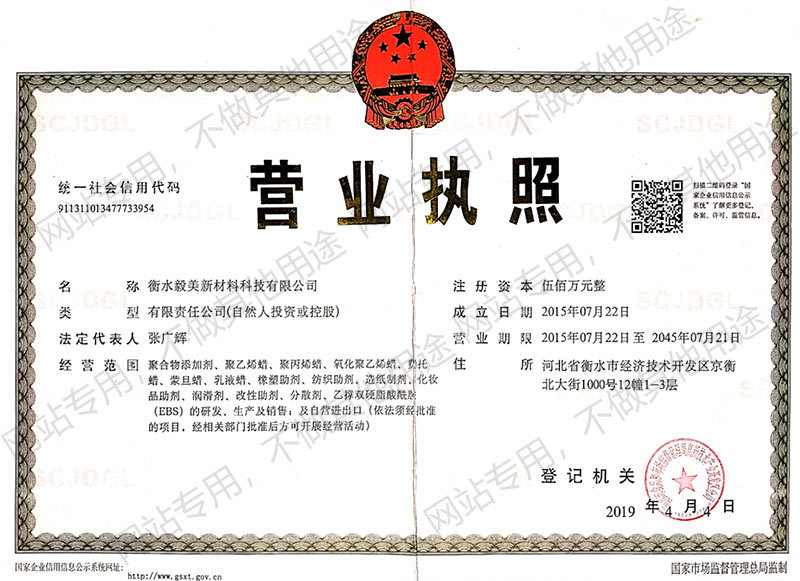
About UsHengshui yi mei new material technology co., ltd. was founded in 2015, is a collection of product development, production, sales and service as one of the high and new technology enterprises, yi mei company focused on deep processing of wax products, determined to become china's professional wax products supplier

-
ProductsThe company mainly produces and sells: polyethylene wax, oxidized polyethylene wax, synthetic Fischer-Tropsch wax, oxidized Fischer-Tropsch wax, maleic anhydride grafted wax, polypropylene wax, micro-powder wax, high-end composite wax and other eight series of dozens of models of high quality products.
-
NewsAt the beginning of its establishment, Yimei Company invested in the establishment of the "Polymer Additive R & D Center", insisting on scientific and technological innovation as the life force of enterprise development. Concentrate funds, technology, and talents in the company's scientific and technological innovation activities, focus on scientific research, public relations and technological breakthroughs of new products, new technologies, and new processes, and resolutely master core technologies.
-
SupportAt the beginning of its establishment, Yimei Company invested in the establishment of the "Polymer Additive R & D Center", insisting on scientific and technological innovation as the life force of enterprise development. Concentrate funds, technology, and talents in the company's scientific and technological innovation activities, focus on scientific research, public relations and technological breakthroughs of new products, new technologies, and new processes, and resolutely master core technologies.
-
RecruitmentOur company always adheres to the talent concept of "people-oriented", actively creates an atmosphere of respect, understanding, integrity and friendship, respects people's knowledge and talents, selects and develops mechanisms, and provides a growth platform for talents. make talents become a strong support for the sustainable development of enterprises, and realize the common growth and development of enterprises and talents.


Understanding Fischer Tropsch Wax: Applications and Benefits in Chemical Production
Release time:
2024-08-05
Fischer Tropsch wax is a synthetic product derived from the Fischer-Tropsch synthesis process, which converts carbon monoxide and hydrogen into hydrocarbons. This process is typically used to produce liquid fuels and various chemical feedstocks. Fischer Tropsch wax, specifically, is a high-melting-point wax that is known for its unique properties, making it an important material in the chemical in
Fischer Tropsch wax is a synthetic product derived from the Fischer-Tropsch synthesis process, which converts carbon monoxide and hydrogen into hydrocarbons. This process is typically used to produce liquid fuels and various chemical feedstocks. Fischer Tropsch wax, specifically, is a high-melting-point wax that is known for its unique properties, making it an important material in the chemical industry.
One of the standout features of Fischer Tropsch wax is its exceptional purity. Unlike naturally derived waxes, which may contain impurities or varying compositions, Fischer Tropsch wax boasts a consistent chemical structure. This purity ensures that it can be used in a wide range of applications without the risk of contamination or variability, making it a preferred choice for manufacturers looking for reliability in their products.
In the context of industrial applications, Fischer Tropsch wax serves multiple purposes. It is often utilized in the formulation of candles, cosmetics, and personal care products due to its smooth texture and ability to enhance the product's feel and appearance. Additionally, it is commonly found in the production of coatings, adhesives, and sealants, where its excellent thermal and chemical resistance properties contribute to the durability and performance of these formulations.
Moreover, Fischer Tropsch wax can also play a significant role in enhancing the efficiency of various processes. For instance, its application in lubricants can reduce friction and wear in machinery, extending the lifespan of equipment and improving overall operational efficiency. In the realm of plastics and polymer production, Fischer Tropsch wax can act as an effective processing aid, facilitating smoother processing and improving final product characteristics.
Sustainability is increasingly becoming a key consideration in chemical manufacturing, and Fischer Tropsch wax aligns well with this trend. As it is produced from syngas derived from natural gas, biomass, or even waste materials, it can contribute to a lower carbon footprint compared to traditional waxes sourced from fossil fuels. This attribute not only meets the growing demand for sustainable products but also helps companies comply with environmental regulations and standards.
In summary, Fischer Tropsch wax is a versatile and high-quality synthetic wax that offers numerous benefits across various applications in the chemical industry. Its superior purity, multifunctional properties, and alignment with sustainability goals make it an attractive option for manufacturers looking to enhance their product offerings and operational efficiency. By incorporating Fischer Tropsch wax into formulations, businesses can achieve both performance and environmental benefits, positioning themselves favorably in a competitive market.
One of the standout features of Fischer Tropsch wax is its exceptional purity. Unlike naturally derived waxes, which may contain impurities or varying compositions, Fischer Tropsch wax boasts a consistent chemical structure. This purity ensures that it can be used in a wide range of applications without the risk of contamination or variability, making it a preferred choice for manufacturers looking for reliability in their products.
In the context of industrial applications, Fischer Tropsch wax serves multiple purposes. It is often utilized in the formulation of candles, cosmetics, and personal care products due to its smooth texture and ability to enhance the product's feel and appearance. Additionally, it is commonly found in the production of coatings, adhesives, and sealants, where its excellent thermal and chemical resistance properties contribute to the durability and performance of these formulations.
Moreover, Fischer Tropsch wax can also play a significant role in enhancing the efficiency of various processes. For instance, its application in lubricants can reduce friction and wear in machinery, extending the lifespan of equipment and improving overall operational efficiency. In the realm of plastics and polymer production, Fischer Tropsch wax can act as an effective processing aid, facilitating smoother processing and improving final product characteristics.
Sustainability is increasingly becoming a key consideration in chemical manufacturing, and Fischer Tropsch wax aligns well with this trend. As it is produced from syngas derived from natural gas, biomass, or even waste materials, it can contribute to a lower carbon footprint compared to traditional waxes sourced from fossil fuels. This attribute not only meets the growing demand for sustainable products but also helps companies comply with environmental regulations and standards.
In summary, Fischer Tropsch wax is a versatile and high-quality synthetic wax that offers numerous benefits across various applications in the chemical industry. Its superior purity, multifunctional properties, and alignment with sustainability goals make it an attractive option for manufacturers looking to enhance their product offerings and operational efficiency. By incorporating Fischer Tropsch wax into formulations, businesses can achieve both performance and environmental benefits, positioning themselves favorably in a competitive market.
Key words:
Fischer tropsch wax
Previous article
recommend reading