Yimei New Material-Professional Wax Product Solution Supplier


-
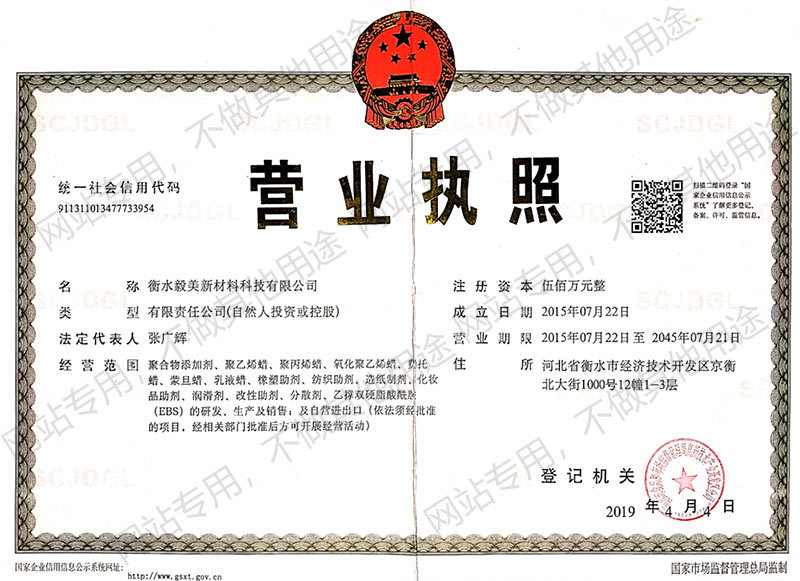
About UsHengshui yi mei new material technology co., ltd. was founded in 2015, is a collection of product development, production, sales and service as one of the high and new technology enterprises, yi mei company focused on deep processing of wax products, determined to become china's professional wax products supplier

-
ProductsThe company mainly produces and sells: polyethylene wax, oxidized polyethylene wax, synthetic Fischer-Tropsch wax, oxidized Fischer-Tropsch wax, maleic anhydride grafted wax, polypropylene wax, micro-powder wax, high-end composite wax and other eight series of dozens of models of high quality products.
-
NewsAt the beginning of its establishment, Yimei Company invested in the establishment of the "Polymer Additive R & D Center", insisting on scientific and technological innovation as the life force of enterprise development. Concentrate funds, technology, and talents in the company's scientific and technological innovation activities, focus on scientific research, public relations and technological breakthroughs of new products, new technologies, and new processes, and resolutely master core technologies.
-
SupportAt the beginning of its establishment, Yimei Company invested in the establishment of the "Polymer Additive R & D Center", insisting on scientific and technological innovation as the life force of enterprise development. Concentrate funds, technology, and talents in the company's scientific and technological innovation activities, focus on scientific research, public relations and technological breakthroughs of new products, new technologies, and new processes, and resolutely master core technologies.
-
RecruitmentOur company always adheres to the talent concept of "people-oriented", actively creates an atmosphere of respect, understanding, integrity and friendship, respects people's knowledge and talents, selects and develops mechanisms, and provides a growth platform for talents. make talents become a strong support for the sustainable development of enterprises, and realize the common growth and development of enterprises and talents.


Exploring the Versatile Applications of Lead-Based Compound Stabilizers in Modern Industries
Release time:
2024-10-11
Lead-based stabilizers have been utilized for decades, primarily due to their effectiveness in enhancing the durability and performance of various materials. As the demand for high-quality, long-lasting products increases, the role of these stabilizers becomes even more significant. They are particularly essential in applications where heat stability and resistance to degradation are crucial.
Lead-based stabilizers have been utilized for decades, primarily due to their effectiveness in enhancing the durability and performance of various materials. As the demand for high-quality, long-lasting products increases, the role of these stabilizers becomes even more significant. They are particularly essential in applications where heat stability and resistance to degradation are crucial.
Lead-based stabilizers, primarily lead stearate, lead phthalate, and lead oxide, exhibit excellent thermal stability and UV resistance. These chemical compounds function by inhibiting the degradation of polymers during processing and usage, thus extending the lifespan of the end products. Their ability to stabilize materials under high temperatures makes them a preferred choice in various manufacturing processes.
In the construction sector, lead-based stabilizers are primarily utilized in PVC products, such as pipes, profiles, and sheeting. Their ability to withstand harsh environmental conditions makes them ideal for outdoor applications. Additionally, these stabilizers contribute to fire resistance, making them a critical component in building materials.
The automotive industry relies on lead-based stabilizers for various components, including electrical wiring insulation, dashboards, and other plastic parts. These stabilizers ensure that automotive materials maintain their structural integrity while exposed to heat and UV light, thus enhancing the safety and durability of vehicles.
Lead-based stabilizers are widely used in the electrical and electronics sector to produce cables and other components. Their superior thermal and electrical properties make them essential for ensuring the reliability of electrical devices. These stabilizers help prevent degradation over time, maintaining the performance of the products.
In the textile industry, lead-based stabilizers are applied to enhance the durability of synthetic fabrics. They provide UV protection and improve the color retention of dyed materials, which is essential for outdoor textiles and fashion applications.
While the benefits of lead-based stabilizers are significant, safety concerns surrounding lead exposure cannot be overlooked. Regulatory bodies have established guidelines to manage the use of lead in industrial applications. Companies must adhere to these regulations to mitigate risks associated with lead exposure for both workers and consumers.
The increasing awareness of environmental and health risks associated with lead has prompted research into alternative stabilizers. Several non-toxic and eco-friendly stabilizers are being developed as replacements for lead-based compounds. These alternatives aim to provide similar benefits without the associated risks, paving the way for a safer future in material production.
Lead-based compound stabilizers have established themselves as invaluable components in modern manufacturing across various industries. Their unique properties contribute to the durability, safety, and performance of a wide range of products. However, the potential health risks associated with lead necessitate strict regulatory compliance and ongoing research into safer alternatives. As industries evolve and prioritize sustainability, the future of lead-based stabilizers will likely shift towards more eco-friendly solutions, ensuring that the benefits of material stabilization continue without compromising health and safety.
Key words:
Lead Based Compound Stabilizer
Previous article
Previous article
recommend reading