Yimei New Material-Professional Wax Product Solution Supplier


-
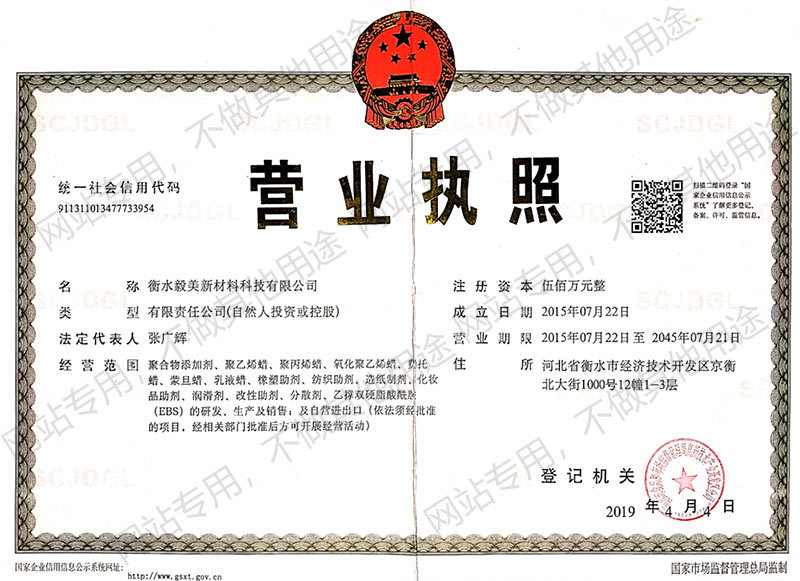
About UsHengshui yi mei new material technology co., ltd. was founded in 2015, is a collection of product development, production, sales and service as one of the high and new technology enterprises, yi mei company focused on deep processing of wax products, determined to become china's professional wax products supplier

-
ProductsThe company mainly produces and sells: polyethylene wax, oxidized polyethylene wax, synthetic Fischer-Tropsch wax, oxidized Fischer-Tropsch wax, maleic anhydride grafted wax, polypropylene wax, micro-powder wax, high-end composite wax and other eight series of dozens of models of high quality products.
-
NewsAt the beginning of its establishment, Yimei Company invested in the establishment of the "Polymer Additive R & D Center", insisting on scientific and technological innovation as the life force of enterprise development. Concentrate funds, technology, and talents in the company's scientific and technological innovation activities, focus on scientific research, public relations and technological breakthroughs of new products, new technologies, and new processes, and resolutely master core technologies.
-
SupportAt the beginning of its establishment, Yimei Company invested in the establishment of the "Polymer Additive R & D Center", insisting on scientific and technological innovation as the life force of enterprise development. Concentrate funds, technology, and talents in the company's scientific and technological innovation activities, focus on scientific research, public relations and technological breakthroughs of new products, new technologies, and new processes, and resolutely master core technologies.
-
RecruitmentOur company always adheres to the talent concept of "people-oriented", actively creates an atmosphere of respect, understanding, integrity and friendship, respects people's knowledge and talents, selects and develops mechanisms, and provides a growth platform for talents. make talents become a strong support for the sustainable development of enterprises, and realize the common growth and development of enterprises and talents.


The Environmental Impact of Lead Based Compound Stabilizers
Release time:
2024-10-10
The Environmental Impact of Lead Based Compound Stabilizers Table of Contents 1. Introduction to Lead Based Compound Stabilizers 2. The Chemistry of Lead Based Stabilizers 3. Applications of Lead Based Compound Stabilizers in Industry 4. The Environmental Impact of Lead Based Compound Stabilizers 5. Health Risks Associated with Lead Exposure 6. Regulations Governing Lead Based Stabili
The Environmental Impact of Lead Based Compound Stabilizers
Table of Contents
- 1. Introduction to Lead Based Compound Stabilizers
- 2. The Chemistry of Lead Based Stabilizers
- 3. Applications of Lead Based Compound Stabilizers in Industry
- 4. The Environmental Impact of Lead Based Compound Stabilizers
- 5. Health Risks Associated with Lead Exposure
- 6. Regulations Governing Lead Based Stabilizers
- 7. Alternatives to Lead Based Compound Stabilizers
- 8. Future Trends in Stabilizer Use
- 9. Conclusion
- 10. Frequently Asked Questions
1. Introduction to Lead Based Compound Stabilizers
Lead based compound stabilizers have played a significant role in various manufacturing processes, particularly in the production of polyvinyl chloride (PVC) products. These compounds serve to enhance the thermal stability and durability of plastics, making them an essential component in industries ranging from construction to automotive manufacturing. However, the environmental repercussions of using lead as a stabilizer raise critical concerns. Understanding these impacts is vital as we navigate toward sustainable practices in the chemical industry.
2. The Chemistry of Lead Based Stabilizers
Lead-based stabilizers primarily consist of lead salts, such as lead stearate and lead acetate. These compounds interact with the polymer matrix, preventing degradation during processing and extending the lifespan of the final products. The chemistry behind lead-based stabilizers lies in their ability to neutralize the acidic byproducts formed during the thermal degradation of PVC. While effective, the use of lead introduces significant environmental hazards, particularly when products containing these stabilizers reach the end of their life cycle.
2.1 Mechanism of Action
The mechanism through which lead compounds stabilize PVC involves the formation of complexes that inhibit the breakdown of the polymer chains. This process significantly prolongs the material's usability but also poses risks of lead leaching into the environment over time, particularly in landfill conditions.
3. Applications of Lead Based Compound Stabilizers in Industry
Lead based stabilizers are predominantly used in the production of PVC, which is abundant in construction materials, plumbing systems, electrical cables, and consumer goods. Understanding where these stabilizers are applied helps in assessing their environmental footprint.
3.1 Construction Industry
In the construction sector, lead stabilizers enhance the durability and resistance of PVC pipes and fittings against heat and mechanical stress, making them a preferred choice for plumbing and electrical conduits.
3.2 Automotive Sector
Lead based stabilizers are also utilized in automotive components, such as dashboards and wiring, providing the necessary stability and longevity in these high-demand applications.
4. The Environmental Impact of Lead Based Compound Stabilizers
The environmental impact of lead based stabilizers is profound and multifaceted. One of the primary concerns is the potential for lead contamination in soil and water sources.
4.1 Leaching and Contamination
Products manufactured with lead stabilizers have a finite lifespan, after which they often end up in landfills. Over time, environmental factors can cause lead to leach from these materials, contaminating surrounding soil and groundwater. This leaching poses significant ecological risks, particularly to aquatic ecosystems.
4.2 Bioaccumulation in Food Chains
Lead can bioaccumulate in organisms, leading to toxic effects as it moves up the food chain. This process not only affects wildlife but can also pose risks to human health through the consumption of contaminated water and food sources.
5. Health Risks Associated with Lead Exposure
Exposure to lead is linked to numerous health issues, making it a significant public health concern.
5.1 Acute and Chronic Health Effects
Acute exposure to high levels of lead can result in immediate symptoms such as abdominal pain, headache, and fatigue. Chronic exposure, even at lower levels, is associated with developmental delays in children, reproductive issues, and neurological impairments in adults.
5.2 Vulnerable Populations
Children and pregnant women are particularly vulnerable to the harmful effects of lead. Even minimal exposure can have detrimental effects on cognitive development in children.
6. Regulations Governing Lead Based Stabilizers
In response to the adverse effects of lead, numerous regulations have been enacted globally to limit its use in consumer products.
6.1 International Regulations
The European Union’s REACH (Registration, Evaluation, Authorisation and Restriction of Chemicals) regulation restricts the use of lead in various applications, especially in consumer goods. Similarly, the United States Environmental Protection Agency (EPA) has established guidelines to mitigate lead exposure.
6.2 Industry Compliance
Companies are compelled to comply with these regulations, often leading to the phasing out of lead based stabilizers in favor of safer alternatives.
7. Alternatives to Lead Based Compound Stabilizers
As the industry moves away from lead based stabilizers, several alternatives have emerged.
7.1 Calcium-Zinc Stabilizers
Calcium-zinc stabilizers are increasingly used as a safer alternative, providing similar performance without the associated environmental and health risks. These stabilizers maintain the thermal stability of PVC while being less harmful to human health and the environment.
7.2 Organic Stabilizers
Organic stabilizers, such as those based on fatty acids, offer another viable option. They are biodegradable and present minimal risk of leaching harmful substances into the environment.
8. Future Trends in Stabilizer Use
The future of stabilizer use in the chemical industry is leaning towards sustainability. As regulations tighten and public awareness grows, companies are innovating.
8.1 Sustainable Practices
Developing and implementing sustainable practices in manufacturing processes will be crucial. By prioritizing eco-friendly materials, the industry can significantly reduce its environmental impact.
8.2 Research and Development
Investing in research and development of new stabilizers that are both effective and environmentally friendly will be key to the future of chemical manufacturing.
9. Conclusion
The environmental impact of lead based compound stabilizers cannot be underestimated. While they have provided significant benefits in various applications, the long-term consequences of their use raise urgent concerns. Transitioning to safer alternatives is not only a regulatory requirement but also a moral imperative to protect public health and preserve our environment. As industries adapt to these changes, the focus must remain on sustainable practices that ensure a healthier planet for future generations.
10. Frequently Asked Questions
What are lead based compound stabilizers?
Lead based compound stabilizers are chemicals used in the production of PVC to enhance its thermal stability and durability.
Why are lead based stabilizers a concern?
They pose significant environmental and health risks due to lead contamination and exposure affecting both ecosystems and human populations.
What are some alternatives to lead based stabilizers?
Calcium-zinc and organic stabilizers are considered safer alternatives that do not have the same harmful effects as lead.
How does lead exposure affect human health?
Lead exposure can lead to acute and chronic health issues, particularly developmental impairments in children and reproductive issues in adults.
What regulations exist regarding the use of lead based stabilizers?
Regulations like REACH in the EU and guidelines from the EPA in the US restrict the use of lead in consumer products, promoting safer alternatives.
Key words:
Lead Based Compound Stabilizer
recommend reading