Yimei New Material-Professional Wax Product Solution Supplier


-
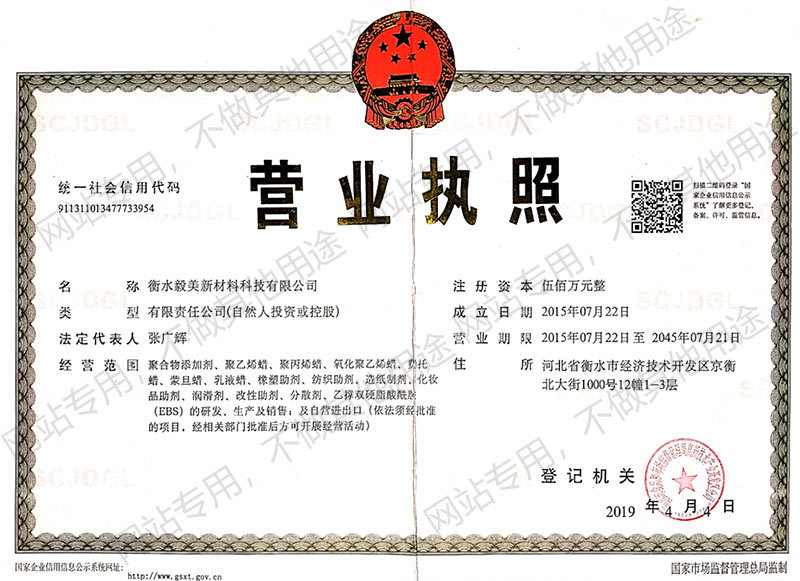
About UsHengshui yi mei new material technology co., ltd. was founded in 2015, is a collection of product development, production, sales and service as one of the high and new technology enterprises, yi mei company focused on deep processing of wax products, determined to become china's professional wax products supplier

-
ProductsThe company mainly produces and sells: polyethylene wax, oxidized polyethylene wax, synthetic Fischer-Tropsch wax, oxidized Fischer-Tropsch wax, maleic anhydride grafted wax, polypropylene wax, micro-powder wax, high-end composite wax and other eight series of dozens of models of high quality products.
-
NewsAt the beginning of its establishment, Yimei Company invested in the establishment of the "Polymer Additive R & D Center", insisting on scientific and technological innovation as the life force of enterprise development. Concentrate funds, technology, and talents in the company's scientific and technological innovation activities, focus on scientific research, public relations and technological breakthroughs of new products, new technologies, and new processes, and resolutely master core technologies.
-
SupportAt the beginning of its establishment, Yimei Company invested in the establishment of the "Polymer Additive R & D Center", insisting on scientific and technological innovation as the life force of enterprise development. Concentrate funds, technology, and talents in the company's scientific and technological innovation activities, focus on scientific research, public relations and technological breakthroughs of new products, new technologies, and new processes, and resolutely master core technologies.
-
RecruitmentOur company always adheres to the talent concept of "people-oriented", actively creates an atmosphere of respect, understanding, integrity and friendship, respects people's knowledge and talents, selects and develops mechanisms, and provides a growth platform for talents. make talents become a strong support for the sustainable development of enterprises, and realize the common growth and development of enterprises and talents.


Understanding Lead Stearate: Applications and Properties
Release time:
2024-10-22
Lead Stearate is a chemical compound that falls under the category of metal stearates, composed of lead and stearic acid. This compound is primarily known for its role as a lubricant and stabilizer in various applications. One of the primary attributes of Lead Stearate is its ability to enhance the processing of plastics, particularly during the production of polyvinyl chloride (PVC). It serves as
Lead Stearate is a chemical compound that falls under the category of metal stearates, composed of lead and stearic acid. This compound is primarily known for its role as a lubricant and stabilizer in various applications. One of the primary attributes of Lead Stearate is its ability to enhance the processing of plastics, particularly during the production of polyvinyl chloride (PVC). It serves as a heat stabilizer, preventing degradation of the PVC during processing, which ultimately contributes to the longevity and durability of the final product.
In addition to its use in PVC manufacturing, Lead Stearate also finds applications in the production of rubber and other polymers. It works effectively as a release agent, facilitating the easy removal of finished products from molds. This property not only improves manufacturing efficiency but also reduces wear and tear on equipment, making it a valuable addition to the production line.
Another significant application of Lead Stearate is in the cosmetic and personal care industry. It is used as an emulsifier and stabilizer in various formulations, ensuring a consistent texture and enhanced performance of cosmetic products. Its ability to blend oil and water-based ingredients makes it an essential component in lotions, creams, and makeup products.
Moreover, Lead Stearate can be utilized in the paint and coatings industry. It acts as a drying agent in alkyd resins, promoting faster drying times and improving the overall quality of the coating. This characteristic is particularly beneficial for manufacturers seeking to enhance productivity without compromising on the quality of the finished products.
While Lead Stearate has numerous advantages, it is essential to consider handling and safety precautions. Given that lead compounds can pose health risks, it is crucial to follow appropriate safety guidelines during production and application. Proper protective equipment should be used, and exposure to the compound should be minimized to ensure worker safety and environmental protection.
In conclusion, Lead Stearate is a multifaceted compound with diverse applications across various industries. Its role as a lubricant, stabilizer, and emulsifier makes it invaluable in the production of plastics, cosmetics, and coatings. Understanding the properties and uses of Lead Stearate can aid professionals in the chemical sector in making informed decisions about its applications, while also emphasizing the importance of safety in handling lead compounds. As industries continue to evolve, the relevance of Lead Stearate in enhancing product quality and manufacturing efficiency remains significant.
Key words:
Lead Stearate
recommend reading