Yimei New Material-Professional Wax Product Solution Supplier


-
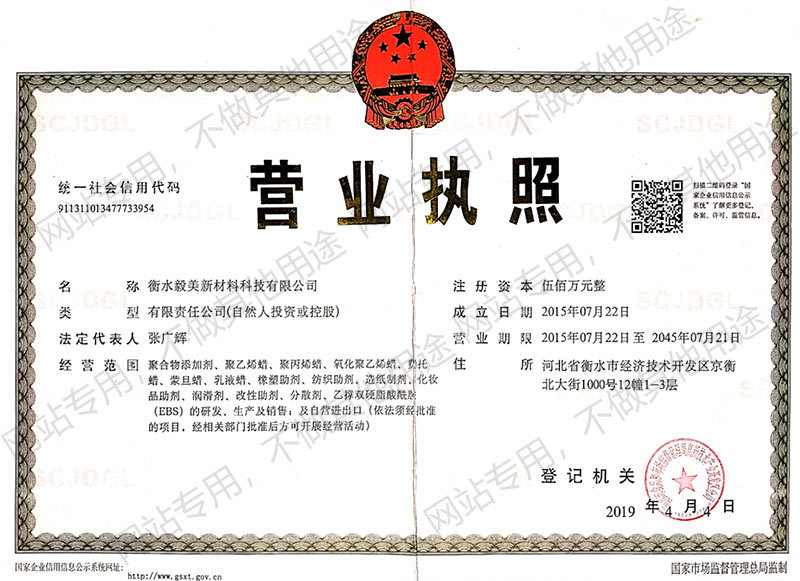
About UsHengshui yi mei new material technology co., ltd. was founded in 2015, is a collection of product development, production, sales and service as one of the high and new technology enterprises, yi mei company focused on deep processing of wax products, determined to become china's professional wax products supplier

-
ProductsThe company mainly produces and sells: polyethylene wax, oxidized polyethylene wax, synthetic Fischer-Tropsch wax, oxidized Fischer-Tropsch wax, maleic anhydride grafted wax, polypropylene wax, micro-powder wax, high-end composite wax and other eight series of dozens of models of high quality products.
-
NewsAt the beginning of its establishment, Yimei Company invested in the establishment of the "Polymer Additive R & D Center", insisting on scientific and technological innovation as the life force of enterprise development. Concentrate funds, technology, and talents in the company's scientific and technological innovation activities, focus on scientific research, public relations and technological breakthroughs of new products, new technologies, and new processes, and resolutely master core technologies.
-
SupportAt the beginning of its establishment, Yimei Company invested in the establishment of the "Polymer Additive R & D Center", insisting on scientific and technological innovation as the life force of enterprise development. Concentrate funds, technology, and talents in the company's scientific and technological innovation activities, focus on scientific research, public relations and technological breakthroughs of new products, new technologies, and new processes, and resolutely master core technologies.
-
RecruitmentOur company always adheres to the talent concept of "people-oriented", actively creates an atmosphere of respect, understanding, integrity and friendship, respects people's knowledge and talents, selects and develops mechanisms, and provides a growth platform for talents. make talents become a strong support for the sustainable development of enterprises, and realize the common growth and development of enterprises and talents.


Unlocking the Potential of Polyethylene Wax in Various Industries
Release time:
2026-05-17
Discover the versatile applications of polyethylene wax in different industries and how it enhances product performance.
Introduction to Polyethylene Wax
Have you ever wondered what makes certain products so much smoother, shinier, or more durable? Enter polyethylene wax! This unsung hero is making waves across various industries, adding value and enhancing the performance of a multitude of products. Buckle up as we explore the intriguing world of polyethylene wax and its industry applications!
What is Polyethylene Wax?
Polyethylene wax is a low molecular weight polymer derived from polyethylene. This compound is often utilized as an additive in coatings, inks, and plastics. Now, you may be thinking, "Why should I care?" Well, this wax provides excellent lubricity, enhances gloss, and offers remarkable thermal stability. Talk about a triple threat!
Applications in the Coatings Industry
In the coatings sector, polyethylene wax plays a pivotal role in improving surface properties. For instance, it can enhance scratch resistance and reduce friction in paints and varnishes. So, whether you're painting a fence or a Ferrari, polyethylene wax can make that finish pop and last longer. Just imagine the satisfaction of seeing your project shine!
Case Study: Automotive Paints
Take automotive paints, for example. Manufacturers have increasingly turned to polyethylene wax to achieve that glossy, showroom-worthy finish. By incorporating this wax, they're not just improving aesthetics but also enhancing durability against environmental wear and tear. Who wouldn't want their car looking fresh for a longer time?
Polyethylene Wax in Plastics
Let's shift gears to the plastics industry. Here, polyethylene wax acts as a processing aid and lubricant. It helps in reducing friction during the manufacturing process, which ultimately leads to higher efficiency and lower energy consumption. That's a win-win situation!
Case Study: Film Production
For instance, in the production of plastic films, the addition of polyethylene wax can improve the flow characteristics. This means that manufacturers can produce thinner, more flexible films without sacrificing quality. This innovation has been a game-changer for packaging solutions!
Ink Applications
Ever thought about how your favorite magazine achieves that glossy finish? You guessed it—polyethylene wax! In the ink industry, this compound helps achieve better dispersion and stability, leading to vibrant and long-lasting prints. It's like the secret sauce that makes everything better!
Case Study: High-Quality Printing
In high-quality printing applications, polyethylene wax can be used to enhance the gloss of printed materials. This extra sheen not only makes the product visually appealing but also improves its overall durability. So, next time you flip through a glossy magazine, remember there's a little polyethylene wax magic at play!
Conclusion: Why Polyethylene Wax Matters
In conclusion, polyethylene wax is more than just a simple additive; it's a powerhouse ingredient that enhances performance across a variety of industries. From coatings to plastics and inks, its versatility is truly remarkable. So, the next time you enjoy a product with a smooth finish or vibrant colors, take a moment to appreciate the role of polyethylene wax in that experience!
In the ever-evolving world of manufacturing and production, polyethylene wax stands as a testament to innovation and improvement. It's not just about making things look good; it's about making them last and perform better. Cheers to that!
Key words:
Polyethylene wax
Previous article
Next article
Previous article
Next article
recommend reading