Yimei New Material-Professional Wax Product Solution Supplier


-
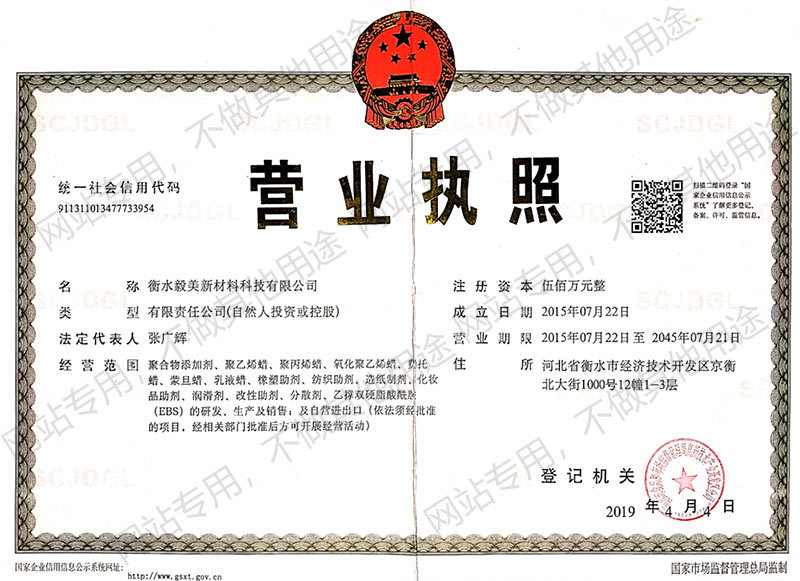
About UsHengshui yi mei new material technology co., ltd. was founded in 2015, is a collection of product development, production, sales and service as one of the high and new technology enterprises, yi mei company focused on deep processing of wax products, determined to become china's professional wax products supplier

-
ProductsThe company mainly produces and sells: polyethylene wax, oxidized polyethylene wax, synthetic Fischer-Tropsch wax, oxidized Fischer-Tropsch wax, maleic anhydride grafted wax, polypropylene wax, micro-powder wax, high-end composite wax and other eight series of dozens of models of high quality products.
-
NewsAt the beginning of its establishment, Yimei Company invested in the establishment of the "Polymer Additive R & D Center", insisting on scientific and technological innovation as the life force of enterprise development. Concentrate funds, technology, and talents in the company's scientific and technological innovation activities, focus on scientific research, public relations and technological breakthroughs of new products, new technologies, and new processes, and resolutely master core technologies.
-
SupportAt the beginning of its establishment, Yimei Company invested in the establishment of the "Polymer Additive R & D Center", insisting on scientific and technological innovation as the life force of enterprise development. Concentrate funds, technology, and talents in the company's scientific and technological innovation activities, focus on scientific research, public relations and technological breakthroughs of new products, new technologies, and new processes, and resolutely master core technologies.
-
RecruitmentOur company always adheres to the talent concept of "people-oriented", actively creates an atmosphere of respect, understanding, integrity and friendship, respects people's knowledge and talents, selects and develops mechanisms, and provides a growth platform for talents. make talents become a strong support for the sustainable development of enterprises, and realize the common growth and development of enterprises and talents.


Exploring the Intricate Chemical Properties of Oxidized Polyethylene Wax: A Comprehensive Guide
Release time:
2024-12-14
Exploring the Chemical Properties of Oxidized Polyethylene Wax Introduction to Oxidized Polyethylene Wax Oxidized polyethylene wax (OPE wax) is a versatile chemical compound characterized by its unique properties that make it suitable for a variety of industrial applications. Derived from the oxidation of polyethylene, this wax has gained prominence in various sectors, including coatings, plastics
Exploring the Chemical Properties of Oxidized Polyethylene Wax
Introduction to Oxidized Polyethylene Wax
Oxidized polyethylene wax (OPE wax) is a versatile chemical compound characterized by its unique properties that make it suitable for a variety of industrial applications. Derived from the oxidation of polyethylene, this wax has gained prominence in various sectors, including coatings, plastics, and cosmetics. Understanding its chemical properties is crucial for leveraging its potential in diverse applications.
What is Oxidized Polyethylene Wax?
Oxidized polyethylene wax is a modified form of polyethylene, created through a controlled oxidative process. This transformation alters the molecular structure of polyethylene, resulting in enhanced properties such as improved adhesion, increased melting point, and heightened compatibility with other materials. OPE wax exhibits a distinct blend of hydrophilic and hydrophobic characteristics, making it an attractive option for numerous industries.
Chemical Structure of Oxidized Polyethylene Wax
The chemical structure of oxidized polyethylene wax primarily consists of long hydrocarbon chains, interspersed with carbonyl (C=O) and hydroxyl (–OH) functional groups introduced during the oxidation process. These modifications impart specific characteristics to the wax, such as increased polarity. Additionally, the molecular weight of OPE wax can vary significantly, influencing its physical and chemical behavior.
Key Chemical Properties
Understanding the key chemical properties of oxidized polyethylene wax is essential for its effective use in various applications. Here are some of the most notable properties:
1. Molecular Weight and Viscosity
The molecular weight of oxidized polyethylene wax can range from 1,000 to 10,000 g/mol. Higher molecular weights generally lead to increased viscosity, making OPE wax suitable for applications that require thicker formulations, such as paints and coatings.
2. Melting Point
OPE wax exhibits a relatively high melting point, typically between 80°C and 110°C. This property is beneficial for applications that require thermal stability, such as in the production of hot melt adhesives and sealants.
3. Solubility
Unlike regular polyethylene wax, which is hydrophobic, oxidized polyethylene wax demonstrates improved solubility in polar solvents. This increased solubility enhances its compatibility with various formulations, including water-based systems.
4. Adhesion Properties
The presence of polar functional groups in OPE wax significantly boosts its adhesion properties. This makes it an excellent additive for improving the adhesion of paints, coatings, and inks to various substrates, including plastics and metals.
5. Surface Activity
OPE wax exhibits excellent surface-active properties, making it a popular choice in formulations where surface tension reduction is critical. This feature is particularly advantageous in applications involving emulsions and dispersions.
Applications of Oxidized Polyethylene Wax
The unique chemical properties of oxidized polyethylene wax open up a wide range of applications across various industries. Some notable uses include:
1. Coatings and Paints
OPE wax is widely used in the coatings industry due to its ability to enhance surface properties, improve flow, and provide a smoother finish. Its compatibility with various resins makes it a preferred choice in both solvent-based and water-based formulations.
2. Plastics and Polymers
In the plastics industry, oxidized polyethylene wax serves as a lubricant and processing aid. It helps to reduce friction during the manufacturing process, enhancing the flow of materials and improving overall production efficiency.
3. Hot Melt Adhesives
The high melting point and thermal stability of OPE wax make it a valuable component in hot melt adhesive formulations. It contributes to the strength and durability of the adhesive while maintaining flexibility.
4. Cosmetics and Personal Care Products
OPE wax finds applications in cosmetics and personal care products, where it acts as a thickening agent and emollient. Its non-toxic nature makes it ideal for formulations used on the skin.
5. Agriculture
In agricultural applications, oxidized polyethylene wax is used as a coating for fertilizers and pesticides. This enhances the release of active ingredients and improves adherence to plant surfaces.
Benefits of Using Oxidized Polyethylene Wax
Utilizing oxidized polyethylene wax in various formulations offers several advantages:
1. Enhanced Performance
The unique chemical properties of OPE wax contribute to improved performance in paints, coatings, and adhesives. This results in better durability, adhesion, and resistance to environmental factors.
2. Versatility
OPE wax's compatibility with a wide range of materials makes it an incredibly versatile additive. It can be tailored for specific applications, whether in industrial coatings or cosmetic formulations.
3. Improved Processing
In manufacturing processes, oxidized polyethylene wax helps improve the flow of materials, reducing the risk of defects during production. This leads to lower scrap rates and increased efficiency.
4. Cost-Effectiveness
Incorporating OPE wax into formulations can reduce overall costs by enhancing product performance and extending shelf life, minimizing the need for additional additives.
Safety and Handling of Oxidized Polyethylene Wax
While oxidized polyethylene wax is generally considered safe for use in various applications, proper handling and safety measures are essential. Here’s what you need to know:
1. Safety Data Sheet (SDS)
Always refer to the Safety Data Sheet (SDS) provided by the manufacturer for specific handling and safety guidelines. The SDS includes essential information regarding potential hazards, first aid measures, and protective equipment.
2. Personal Protective Equipment (PPE)
When working with OPE wax in industrial settings, it is advisable to wear appropriate personal protective equipment, such as gloves, goggles, and masks, to prevent skin and eye contact.
3. Environmental Considerations
Oxidized polyethylene wax is considered to have a low environmental impact; however, proper disposal methods should be followed according to local regulations to prevent contamination.
FAQs about Oxidized Polyethylene Wax
1. What is the difference between polyethylene wax and oxidized polyethylene wax?
Polyethylene wax is a non-polar, hydrophobic material, while oxidized polyethylene wax has undergone a chemical transformation that introduces polar functional groups, enhancing its solubility and adhesion properties.
2. Can oxidized polyethylene wax be used in food packaging?
While oxidized polyethylene wax is considered safe for many applications, it is advised to consult regulatory guidelines before using it in food packaging to ensure compliance with safety standards.
3. How does oxidized polyethylene wax improve adhesion in coatings?
The polar functional groups in OPE wax enhance its interaction with substrates, leading to improved adhesion and better performance of coatings and paints.
4. Is oxidized polyethylene wax biodegradable?
Oxidized polyethylene wax is not biodegradable, but it has a low environmental impact and can be recycled in specific applications.
5. What industries benefit the most from oxidized polyethylene wax?
Industries such as coatings, plastics, cosmetics, and agriculture significantly benefit from the unique properties of oxidized polyethylene wax, utilizing it in various formulations and applications.
Conclusion
In conclusion, oxidized polyethylene wax stands out as a multifaceted chemical compound with a range of beneficial properties that make it invaluable across various industries. Its unique chemical structure not only enhances adhesion and improves performance but also contributes to cost-effectiveness and versatility in formulations. By understanding the intricate chemical properties and applications of OPE wax, industry professionals can leverage its potential to develop innovative products that meet market demands. Whether in coatings, plastics, cosmetics, or agriculture, oxidized polyethylene wax continues to play a pivotal role in modern industrial applications, making it a subject worth exploring in greater depth.
Key words:
oxidized polyethylene wax
recommend reading