Yimei New Material-Professional Wax Product Solution Supplier


-
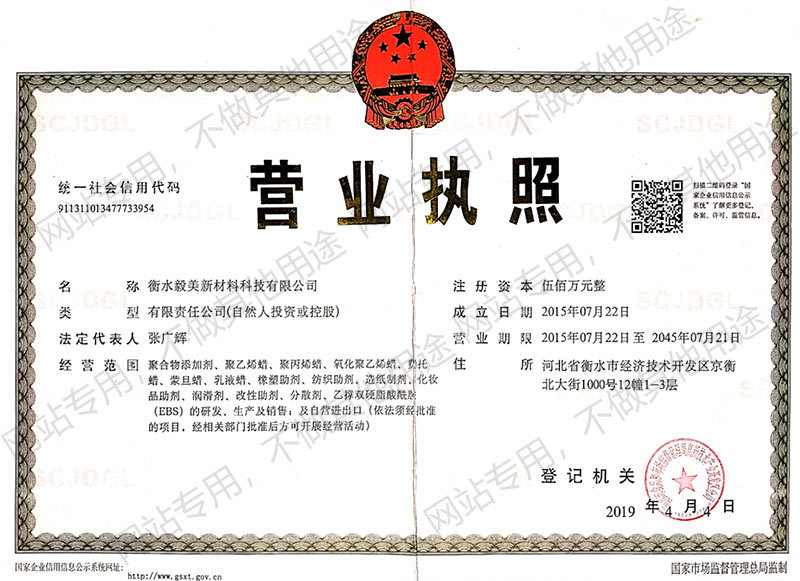
About UsHengshui yi mei new material technology co., ltd. was founded in 2015, is a collection of product development, production, sales and service as one of the high and new technology enterprises, yi mei company focused on deep processing of wax products, determined to become china's professional wax products supplier

-
ProductsThe company mainly produces and sells: polyethylene wax, oxidized polyethylene wax, synthetic Fischer-Tropsch wax, oxidized Fischer-Tropsch wax, maleic anhydride grafted wax, polypropylene wax, micro-powder wax, high-end composite wax and other eight series of dozens of models of high quality products.
-
NewsAt the beginning of its establishment, Yimei Company invested in the establishment of the "Polymer Additive R & D Center", insisting on scientific and technological innovation as the life force of enterprise development. Concentrate funds, technology, and talents in the company's scientific and technological innovation activities, focus on scientific research, public relations and technological breakthroughs of new products, new technologies, and new processes, and resolutely master core technologies.
-
SupportAt the beginning of its establishment, Yimei Company invested in the establishment of the "Polymer Additive R & D Center", insisting on scientific and technological innovation as the life force of enterprise development. Concentrate funds, technology, and talents in the company's scientific and technological innovation activities, focus on scientific research, public relations and technological breakthroughs of new products, new technologies, and new processes, and resolutely master core technologies.
-
RecruitmentOur company always adheres to the talent concept of "people-oriented", actively creates an atmosphere of respect, understanding, integrity and friendship, respects people's knowledge and talents, selects and develops mechanisms, and provides a growth platform for talents. make talents become a strong support for the sustainable development of enterprises, and realize the common growth and development of enterprises and talents.


Driving Efficiency: Harnessing PVC Processing Aids for Sustainable Production
Release time:
2024-11-08
Driving Efficiency: Harnessing PVC Processing Aids for Sustainable Production Table of Contents 1. Introduction to PVC Processing Aids 2. The Role of PVC in Modern Manufacturing 3. Benefits of Utilizing PVC Processing Aids 3.1 Enhancing Production Efficiency 3.2 Reducing Environmental Impact 3.3 Cost-Effectiveness and Resource Optimization 4. Key Applications of PVC Processing Aids 4.1 Constructio
Driving Efficiency: Harnessing PVC Processing Aids for Sustainable Production
Table of Contents
1. Introduction to PVC Processing Aids
2. The Role of PVC in Modern Manufacturing
3. Benefits of Utilizing PVC Processing Aids
3.1 Enhancing Production Efficiency
3.2 Reducing Environmental Impact
3.3 Cost-Effectiveness and Resource Optimization
4. Key Applications of PVC Processing Aids
4.1 Construction Industry
4.2 Automotive Sector
4.3 Packaging Solutions
5. Innovations in PVC Processing Aids
5.1 Recent Developments
5.2 Future Trends in PVC Additives
6. Best Practices for Implementing PVC Processing Aids
6.1 Selecting the Right Processing Aid
6.2 Integration into Manufacturing Processes
7. Frequently Asked Questions (FAQs)
8. Conclusion
1. Introduction to PVC Processing Aids
Polyvinyl Chloride (PVC) is one of the most widely used thermoplastics in the world today. It finds extensive applications in various industries, from construction to consumer goods. PVC processing aids are additives that enhance the processing of PVC materials, improving their handling characteristics and end-product quality. These aids play a crucial role in optimizing production processes, which ultimately leads to sustainable manufacturing practices.
2. The Role of PVC in Modern Manufacturing
The chemical industry relies heavily on PVC due to its versatility, durability, and cost-effectiveness. PVC products are utilized in pipes, flooring, window frames, and many other applications. However, producing high-quality PVC products requires specialized knowledge and techniques. PVC processing aids facilitate this process by improving flow properties and thermal stability, resulting in smoother production and reduced waste.
3. Benefits of Utilizing PVC Processing Aids
3.1 Enhancing Production Efficiency
One of the primary advantages of PVC processing aids is their ability to enhance production efficiency. By modifying the viscosity of the PVC melt, processing aids allow for easier flow through processing equipment. This improved flow can lead to faster cycle times, reducing overall production time and increasing output.
3.2 Reducing Environmental Impact
As industries strive for more sustainable practices, PVC processing aids contribute significantly by minimizing waste and energy consumption. These additives improve the processing of recycled PVC, enabling manufacturers to incorporate post-consumer materials back into production. This not only reduces landfill waste but also conserves valuable resources.
3.3 Cost-Effectiveness and Resource Optimization
Utilizing PVC processing aids can lead to significant cost savings. By optimizing formulations and reducing processing times, manufacturers can lower energy costs and raw material usage. This resource optimization translates into a more sustainable production model that benefits both the environment and the bottom line.
4. Key Applications of PVC Processing Aids
4.1 Construction Industry
The construction industry is one of the largest consumers of PVC products. PVC processing aids improve the performance of materials used in window frames, siding, and plumbing systems. By ensuring better flow and processing characteristics, these aids enhance the durability and lifespan of construction products.
4.2 Automotive Sector
In the automotive sector, PVC is used for interior and exterior components. Processing aids improve the appearance and functionality of these parts, ensuring they meet stringent industry standards. Improved durability and reduced weight of PVC components due to processing aids enhance vehicle performance and fuel efficiency.
4.3 Packaging Solutions
PVC is widely used in packaging for its lightweight and protective properties. The incorporation of processing aids allows for thinner films without compromising strength, leading to less material usage and reduced environmental impact. Additionally, these aids facilitate better sealing and barrier properties, enhancing product preservation.
5. Innovations in PVC Processing Aids
5.1 Recent Developments
Emerging technologies and research in PVC processing aids are driving innovation in the chemical industry. Recent developments focus on creating bio-based and biodegradable processing aids that align with global sustainability goals. These innovations aim to reduce reliance on fossil fuels and minimize toxic byproducts.
5.2 Future Trends in PVC Additives
The future of PVC processing aids appears promising with advancements in nanotechnology and smart additives. These technologies aim to enhance performance characteristics while maintaining environmental sustainability. The trend towards circular economy models will also drive the development of processing aids that facilitate recycling and reusability.
6. Best Practices for Implementing PVC Processing Aids
6.1 Selecting the Right Processing Aid
Choosing the appropriate PVC processing aid is crucial for achieving desired results. Factors such as compatibility with resin types, desired processing temperature, and end-use application must be considered. Consulting with suppliers and conducting trials can help identify the most effective aids for specific applications.
6.2 Integration into Manufacturing Processes
Effective integration of PVC processing aids into manufacturing processes is essential for realizing their benefits. This involves training personnel on proper handling and usage, as well as monitoring production parameters to optimize performance. Continuous evaluation and adjustment of formulations can lead to significant improvements in efficiency and sustainability.
7. Frequently Asked Questions (FAQs)
What are PVC processing aids?
PVC processing aids are additives used to enhance the processing of PVC materials, improving flow, stability, and product quality during manufacturing.
How do PVC processing aids improve production efficiency?
They modify the viscosity of the PVC melt, allowing for easier flow through processing equipment, which reduces cycle times and increases output.
What industries benefit from PVC processing aids?
Key industries include construction, automotive, and packaging, where PVC is widely utilized for various applications.
Are PVC processing aids environmentally friendly?
Many processing aids are being developed to be more sustainable, including bio-based and recyclable options that reduce environmental impact.
How can manufacturers choose the right PVC processing aid?
Manufacturers should consider factors such as compatibility with resin types, desired processing temperature, and specific application requirements when selecting processing aids.
8. Conclusion
The use of PVC processing aids is pivotal for enhancing production efficiency and promoting sustainability in the chemical industry. By optimizing manufacturing processes, reducing waste, and conserving resources, these additives contribute significantly to a more sustainable future. As innovations continue to emerge in this field, PVC processing aids will play an even more crucial role in driving efficiency and minimizing environmental impact. Embracing these technologies will not only benefit manufacturers but also contribute to a greener planet.
Key words:
PVC Processing Aids
Previous article
Previous article
recommend reading