Yimei New Material-Professional Wax Product Solution Supplier


-
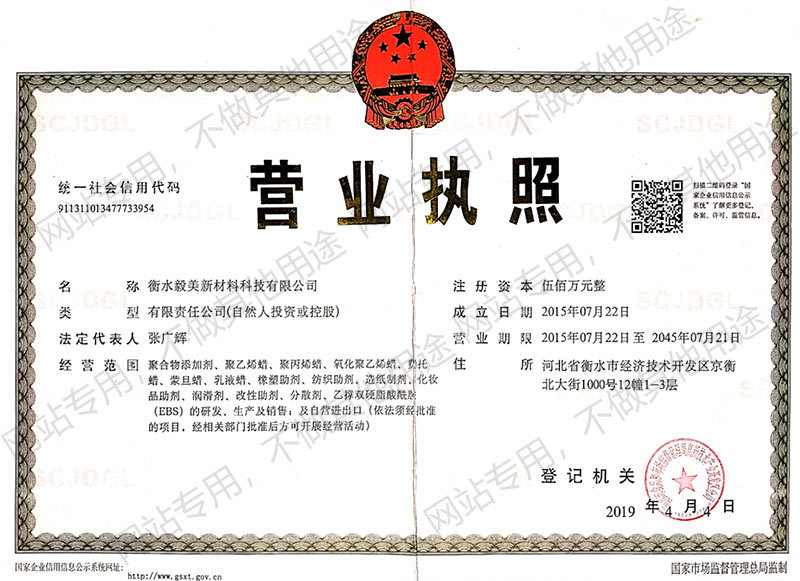
About UsHengshui yi mei new material technology co., ltd. was founded in 2015, is a collection of product development, production, sales and service as one of the high and new technology enterprises, yi mei company focused on deep processing of wax products, determined to become china's professional wax products supplier

-
ProductsThe company mainly produces and sells: polyethylene wax, oxidized polyethylene wax, synthetic Fischer-Tropsch wax, oxidized Fischer-Tropsch wax, maleic anhydride grafted wax, polypropylene wax, micro-powder wax, high-end composite wax and other eight series of dozens of models of high quality products.
-
NewsAt the beginning of its establishment, Yimei Company invested in the establishment of the "Polymer Additive R & D Center", insisting on scientific and technological innovation as the life force of enterprise development. Concentrate funds, technology, and talents in the company's scientific and technological innovation activities, focus on scientific research, public relations and technological breakthroughs of new products, new technologies, and new processes, and resolutely master core technologies.
-
SupportAt the beginning of its establishment, Yimei Company invested in the establishment of the "Polymer Additive R & D Center", insisting on scientific and technological innovation as the life force of enterprise development. Concentrate funds, technology, and talents in the company's scientific and technological innovation activities, focus on scientific research, public relations and technological breakthroughs of new products, new technologies, and new processes, and resolutely master core technologies.
-
RecruitmentOur company always adheres to the talent concept of "people-oriented", actively creates an atmosphere of respect, understanding, integrity and friendship, respects people's knowledge and talents, selects and develops mechanisms, and provides a growth platform for talents. make talents become a strong support for the sustainable development of enterprises, and realize the common growth and development of enterprises and talents.


Optimizing Chemical Processes with FT Wax: A Comprehensive Guide
Release time:
2024-09-29
Optimizing Chemical Processes with FT Wax: A Comprehensive Guide Table of Contents 1. Introduction to FT Wax in Chemical Processes 2. What is FT Wax? 3. Benefits of Using FT Wax in Chemical Processes 4. Applications of FT Wax in Various Industries 5. How to Optimize Chemical Processes with FT Wax 6. Best Practices for Implementing FT Wax 7. Challenges and Solutions in Using FT Wax
Optimizing Chemical Processes with FT Wax: A Comprehensive Guide
Table of Contents
- 1. Introduction to FT Wax in Chemical Processes
- 2. What is FT Wax?
- 3. Benefits of Using FT Wax in Chemical Processes
- 4. Applications of FT Wax in Various Industries
- 5. How to Optimize Chemical Processes with FT Wax
- 6. Best Practices for Implementing FT Wax
- 7. Challenges and Solutions in Using FT Wax
- 8. The Future of FT Wax in Chemical Engineering
- 9. Frequently Asked Questions
- 10. Conclusion
1. Introduction to FT Wax in Chemical Processes
FT Wax, derived from Fischer-Tropsch synthesis, represents a significant advancement in the optimization of chemical processes. Its unique properties make it a versatile agent in various applications, enhancing efficiency, sustainability, and product quality. This article delves into the fundamental aspects of FT Wax, exploring its benefits, applications, and how it can be effectively implemented in chemical processes.
2. What is FT Wax?
FT Wax is a synthetic wax produced through the Fischer-Tropsch process, which converts carbon monoxide and hydrogen into liquid hydrocarbons. This wax is characterized by its high melting point, excellent thermal stability, and low viscosity. It consists primarily of long-chain hydrocarbons, making it suitable for a myriad of applications, particularly in industries such as lubricants, coatings, and plastics.
2.1 The Fischer-Tropsch Process Explained
The Fischer-Tropsch process involves several steps, including the synthesis of syngas (a mixture of hydrogen and carbon monoxide) and the subsequent conversion of this syngas into liquid hydrocarbons through catalytic reactions. The resultant FT Wax is a high-purity product, free from impurities found in conventional petroleum-based waxes. This purity enhances its functionality across various applications, contributing to improved performance and efficiency.
3. Benefits of Using FT Wax in Chemical Processes
Implementing FT Wax in chemical processes presents numerous advantages, positioning it as a preferred choice for industries aiming for optimization and innovation.
3.1 Enhanced Performance
FT Wax's unique chemical structure contributes to superior performance in various applications. Its high melting point allows for stable operation at elevated temperatures, making it ideal for thermal applications.
3.2 Improved Efficiency
The low viscosity of FT Wax facilitates easier processing and handling, which can significantly reduce energy consumption during manufacturing. This efficiency leads to cost savings and increased output in chemical processes.
3.3 Environmental Benefits
FT Wax is derived from renewable sources, aligning with sustainable practices in chemical manufacturing. Its use reduces reliance on fossil fuels, minimizing the environmental footprint of industrial operations.
4. Applications of FT Wax in Various Industries
FT Wax finds applications across multiple sectors, showcasing its versatility and effectiveness in improving chemical processes.
4.1 In the Lubricants Industry
In lubricant formulations, FT Wax acts as a thickener, enhancing viscosity stability and improving lubrication properties. This results in reduced wear and tear in machinery, prolonging equipment lifespan.
4.2 In the Coatings Sector
FT Wax is utilized in coatings to enhance gloss and improve surface characteristics. Its ability to reduce surface tension leads to better wetting and leveling properties, ensuring a smooth and durable finish.
4.3 In Plastics Production
The plastics industry benefits from FT Wax as a processing aid, enhancing flow properties during molding and extrusion processes. This results in improved product quality and reduced defects in plastic components.
5. How to Optimize Chemical Processes with FT Wax
Maximizing the benefits of FT Wax in chemical processes requires a strategic approach.
5.1 Selecting the Right Grade of FT Wax
Choosing the appropriate grade of FT Wax is crucial. Different grades offer varying properties suited for specific applications. Conducting thorough research and trials can help identify the optimal grade for your process.
5.2 Adjusting Process Parameters
To fully leverage the advantages of FT Wax, adjusting process parameters like temperature and pressure is essential. Fine-tuning these variables can enhance the overall efficiency of the chemical process.
5.3 Conducting Regular Performance Evaluations
Implementing a system for regular performance evaluations allows for the identification of areas for improvement. Analyzing data related to the use of FT Wax can help refine processes and optimize outcomes.
6. Best Practices for Implementing FT Wax
Successful implementation of FT Wax in chemical processes involves several best practices.
6.1 Training and Education
Investing in training for personnel involved in the handling and processing of FT Wax is vital. Understanding its properties and applications ensures safe and effective use.
6.2 Collaborating with Suppliers
Partnering with reputable suppliers can provide access to high-quality FT Wax and technical support. This collaboration can be instrumental in optimizing process performance.
6.3 Monitoring Quality Control
Establishing stringent quality control measures ensures that the FT Wax used in processes meets the required specifications. Regular testing and monitoring can help maintain product consistency and reliability.
7. Challenges and Solutions in Using FT Wax
While FT Wax offers numerous benefits, challenges may arise during its implementation.
7.1 Supply Chain Issues
Disruptions in the supply chain can impact the availability of FT Wax. Establishing diverse supplier relationships can mitigate this risk and ensure a steady supply.
7.2 Compatibility with Existing Processes
Integrating FT Wax into established chemical processes may present compatibility issues. Conducting thorough assessments and pilot tests can help address these challenges effectively.
7.3 Cost Considerations
Although FT Wax can reduce overall production costs, the initial investment may be higher than traditional alternatives. A detailed cost-benefit analysis can help justify the transition to FT Wax.
8. The Future of FT Wax in Chemical Engineering
The future of FT Wax in chemical engineering appears promising, with ongoing research and innovation focusing on enhancing its properties and applications. As industries increasingly prioritize sustainability, the demand for FT Wax is likely to grow, driving advancements in production methods and formulations.
8.1 Innovations in Production Techniques
Emerging technologies may lead to more efficient production methods for FT Wax, further reducing costs and enhancing availability. Continuous innovation will play a critical role in maintaining its competitive edge in the chemical market.
8.2 Expanding Applications
As new applications for FT Wax are discovered, its versatility will position it as a key player in the future of chemical processes. Industries such as cosmetics and personal care may also benefit from its unique properties.
9. Frequently Asked Questions
9.1 What are the primary benefits of using FT Wax?
FT Wax offers enhanced performance, improved efficiency, and environmental benefits due to its renewable sourcing.
9.2 In which industries is FT Wax commonly used?
FT Wax is widely used in lubricants, coatings, plastics, cosmetics, and personal care products.
9.3 How does FT Wax compare to traditional waxes?
FT Wax provides higher purity and superior performance characteristics, making it a more effective choice for various applications.
9.4 What considerations should be made when implementing FT Wax?
Considerations include selecting the right grade, adjusting process parameters, and conducting regular performance evaluations.
9.5 Are there any challenges associated with FT Wax?
Challenges may include supply chain issues, compatibility with existing processes, and initial cost implications.
10. Conclusion
In summary, FT Wax represents a transformative solution for optimizing chemical processes across various industries. Its unique properties, coupled with the potential for enhanced efficiency and sustainability, make it an invaluable asset in modern chemical engineering. By understanding how to implement FT Wax effectively and addressing the associated challenges, companies can unlock significant benefits and position themselves for future growth and success. Embracing FT Wax not only enhances operational performance but also contributes to a more sustainable and innovative chemical industry.
Key words:
FT wax
recommend reading