Yimei New Material-Professional Wax Product Solution Supplier


-
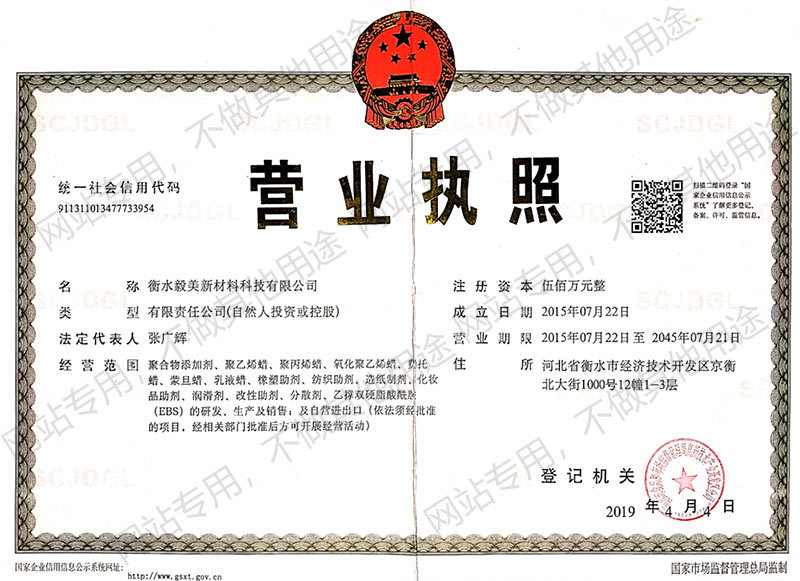
About UsHengshui yi mei new material technology co., ltd. was founded in 2015, is a collection of product development, production, sales and service as one of the high and new technology enterprises, yi mei company focused on deep processing of wax products, determined to become china's professional wax products supplier

-
ProductsThe company mainly produces and sells: polyethylene wax, oxidized polyethylene wax, synthetic Fischer-Tropsch wax, oxidized Fischer-Tropsch wax, maleic anhydride grafted wax, polypropylene wax, micro-powder wax, high-end composite wax and other eight series of dozens of models of high quality products.
-
NewsAt the beginning of its establishment, Yimei Company invested in the establishment of the "Polymer Additive R & D Center", insisting on scientific and technological innovation as the life force of enterprise development. Concentrate funds, technology, and talents in the company's scientific and technological innovation activities, focus on scientific research, public relations and technological breakthroughs of new products, new technologies, and new processes, and resolutely master core technologies.
-
SupportAt the beginning of its establishment, Yimei Company invested in the establishment of the "Polymer Additive R & D Center", insisting on scientific and technological innovation as the life force of enterprise development. Concentrate funds, technology, and talents in the company's scientific and technological innovation activities, focus on scientific research, public relations and technological breakthroughs of new products, new technologies, and new processes, and resolutely master core technologies.
-
RecruitmentOur company always adheres to the talent concept of "people-oriented", actively creates an atmosphere of respect, understanding, integrity and friendship, respects people's knowledge and talents, selects and develops mechanisms, and provides a growth platform for talents. make talents become a strong support for the sustainable development of enterprises, and realize the common growth and development of enterprises and talents.


Polyethylene Wax: Revolutionizing the Chemical Industry
Release time:
2024-09-27
Polyethylene Wax: Revolutionizing the Chemical Industry Table of Contents What is Polyethylene Wax? History of Polyethylene Wax Production Process of Polyethylene Wax Properties and Advantages of Polyethylene Wax Applications of Polyethylene Wax in Various Industries Polyethylene Wax vs. Other Waxes: A Comparative Analysis Environmental Impact of Polyethylene Wax The Future of Polyethylene Wax in
Polyethylene Wax: Revolutionizing the Chemical Industry
Table of Contents
- What is Polyethylene Wax?
- History of Polyethylene Wax
- Production Process of Polyethylene Wax
- Properties and Advantages of Polyethylene Wax
- Applications of Polyethylene Wax in Various Industries
- Polyethylene Wax vs. Other Waxes: A Comparative Analysis
- Environmental Impact of Polyethylene Wax
- The Future of Polyethylene Wax in the Chemical Industry
- Frequently Asked Questions
- Conclusion
What is Polyethylene Wax?
Polyethylene wax is a type of synthetic wax derived from low molecular weight polyethylene. It is characterized by its low viscosity, high melting point, and chemical stability, making it an essential ingredient in various industrial applications. Polyethylene wax is produced through a process of polymerization of ethylene, resulting in a wax-like substance that is solid at room temperature yet melts easily when heated. This unique property allows it to be utilized across a spectrum of applications, from coatings and lubricants to additives in plastics and rubber.
History of Polyethylene Wax
The development of polyethylene wax can be traced back to the early 20th century when polyethylene was first synthesized. Initially used in packaging materials, the versatility of polyethylene was soon recognized, leading to the exploration of its wax form in the 1950s. As industries began seeking alternatives to natural waxes, polyethylene wax emerged as a reliable and cost-effective substitute. Over the decades, advancements in production techniques and an increasing awareness of its benefits have significantly expanded its market presence.
Production Process of Polyethylene Wax
The production of polyethylene wax involves several key steps:
1. Polymerization of Ethylene
The process begins with the polymerization of ethylene gas, which is typically derived from natural gas or crude oil. This reaction occurs under controlled conditions using catalysts to produce low molecular weight polyethylene.
2. Thermal Treatment
Following polymerization, the polyethylene is subjected to thermal treatment. This step enhances the wax-like properties by breaking down the high molecular weight chains into lower molecular weight fractions.
3. Cooling and Solidification
The molten polyethylene is then cooled and solidified into a wax form. This can be done either by pouring the liquid into molds or allowing it to solidify on cooling surfaces.
4. Milling and Grinding
The solidified wax is subsequently milled and ground into fine powders or granules, depending on the intended application.
Properties and Advantages of Polyethylene Wax
Polyethylene wax boasts several remarkable properties that contribute to its widespread use:
1. Chemical Stability
Its high chemical stability ensures that polyethylene wax does not react adversely with other chemical substances, making it safe for various industrial applications.
2. Low Viscosity
The low viscosity of polyethylene wax allows it to blend easily with other materials, enhancing its effectiveness as a lubricant and additive.
3. High Melting Point
With a high melting point, polyethylene wax can withstand elevated temperatures without degrading, which is crucial in applications like coatings and adhesives.
4. Non-Toxicity
Being non-toxic and environmentally friendly, polyethylene wax is a preferred choice in industries requiring stringent safety standards.
5. Versatile Applications
Its versatility allows for usage in a variety of sectors, from packaging to cosmetics, demonstrating its broad appeal in the market.
Applications of Polyethylene Wax in Various Industries
The applications of polyethylene wax span multiple industries:
1. Coatings and Inks
In the coatings industry, polyethylene wax is used to enhance durability and gloss, providing a protective layer to surfaces. It is also employed as a slip agent in inks for improved print quality.
2. Plastics and Polymers
As an additive in plastics, polyethylene wax improves flow properties during processing, reduces friction, and enhances the overall quality of plastic products.
3. Rubber Industry
In the rubber industry, polyethylene wax serves as a processing aid, enhancing the flow of materials and improving the finish of rubber products.
4. Cosmetics and Personal Care
Polyethylene wax is used in cosmetics for its binding properties, enhancing the texture and stability of products like lipsticks and creams.
5. Food Industry
Food-grade polyethylene wax finds its application in food packaging, providing moisture barrier properties and improving the shelf life of products.
Polyethylene Wax vs. Other Waxes: A Comparative Analysis
When comparing polyethylene wax to other types of waxes, several distinctions arise:
1. Synthetic vs. Natural
Unlike natural waxes, polyethylene wax is synthetic, offering more consistency in quality and performance.
2. Cost-Effectiveness
Polyethylene wax tends to be more cost-effective than natural alternatives, making it a preferred choice for manufacturers looking to optimize production costs.
3. Performance Characteristics
Polyethylene wax exhibits superior performance characteristics, such as higher melting points and greater stability, compared to paraffin or beeswax.
Environmental Impact of Polyethylene Wax
As the chemical industry moves toward sustainability, the environmental impact of polyethylene wax is a crucial consideration:
1. Biodegradability
While polyethylene wax is derived from fossil fuels, ongoing research aims to improve its biodegradability and reduce its environmental footprint.
2. Recycling Potential
Polyethylene wax has recycling potential, aligning with global efforts to manage plastic waste effectively.
3. Regulations and Compliance
Manufacturers are increasingly focusing on meeting environmental regulations, ensuring that polyethylene wax production processes are sustainable and compliant with industry standards.
The Future of Polyethylene Wax in the Chemical Industry
The future of polyethylene wax looks promising, with ongoing innovations and research driving growth in several areas:
1. Advances in Production Techniques
Advancements in production techniques will likely lead to more efficient manufacturing processes and higher quality products.
2. Expanding Applications
As industries continue to evolve, the applications of polyethylene wax are expected to expand, particularly in emerging markets focused on sustainability.
3. Research and Development
Investment in research and development will foster innovation, leading to new formulations and applications that leverage the unique properties of polyethylene wax.
Frequently Asked Questions
1. What is the primary use of polyethylene wax?
The primary use of polyethylene wax is as an additive in various industries, including coatings, plastics, and cosmetics, to enhance properties like durability, slip, and gloss.
2. Is polyethylene wax safe for food packaging?
Yes, food-grade polyethylene wax is deemed safe for food packaging, providing moisture barrier properties without contaminating food products.
3. How does polyethylene wax compare to natural wax?
Polyethylene wax is more consistent in quality, cost-effective, and exhibits superior performance characteristics compared to natural waxes like paraffin or beeswax.
4. What are the environmental concerns associated with polyethylene wax?
Concerns include its biodegradability and overall environmental impact, but ongoing research is focused on improving these aspects.
5. Can polyethylene wax be recycled?
Yes, polyethylene wax can potentially be recycled, and efforts are being made to enhance recycling processes within the industry.
Conclusion
In summary, polyethylene wax is a revolutionary product in the chemical industry, offering a myriad of benefits across various applications. Its unique properties, coupled with ongoing advancements in production and sustainability efforts, position polyethylene wax as a crucial component in modern manufacturing. As industries evolve and demand for efficient, high-quality materials continues to grow, we can anticipate an even more prominent role for polyethylene wax in the future.
Key words:
polyethylene wax
recommend reading