Yimei New Material-Professional Wax Product Solution Supplier


-
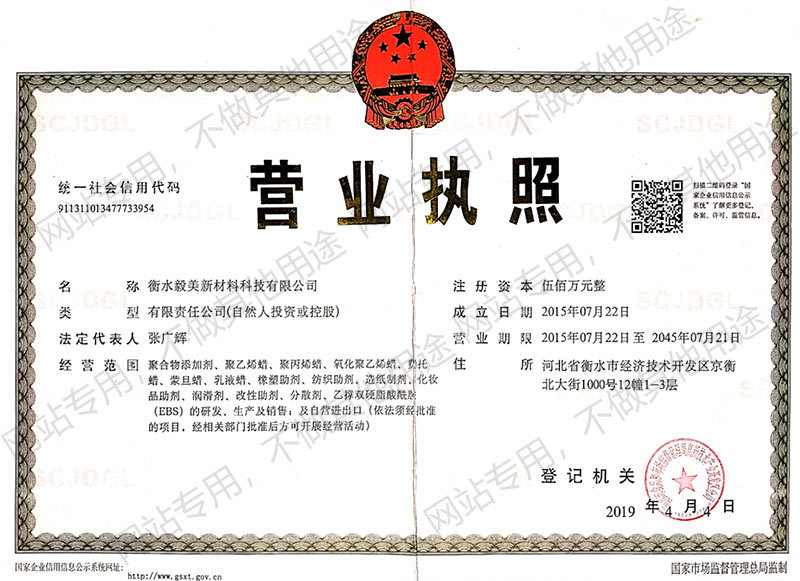
About UsHengshui yi mei new material technology co., ltd. was founded in 2015, is a collection of product development, production, sales and service as one of the high and new technology enterprises, yi mei company focused on deep processing of wax products, determined to become china's professional wax products supplier

-
ProductsThe company mainly produces and sells: polyethylene wax, oxidized polyethylene wax, synthetic Fischer-Tropsch wax, oxidized Fischer-Tropsch wax, maleic anhydride grafted wax, polypropylene wax, micro-powder wax, high-end composite wax and other eight series of dozens of models of high quality products.
-
NewsAt the beginning of its establishment, Yimei Company invested in the establishment of the "Polymer Additive R & D Center", insisting on scientific and technological innovation as the life force of enterprise development. Concentrate funds, technology, and talents in the company's scientific and technological innovation activities, focus on scientific research, public relations and technological breakthroughs of new products, new technologies, and new processes, and resolutely master core technologies.
-
SupportAt the beginning of its establishment, Yimei Company invested in the establishment of the "Polymer Additive R & D Center", insisting on scientific and technological innovation as the life force of enterprise development. Concentrate funds, technology, and talents in the company's scientific and technological innovation activities, focus on scientific research, public relations and technological breakthroughs of new products, new technologies, and new processes, and resolutely master core technologies.
-
RecruitmentOur company always adheres to the talent concept of "people-oriented", actively creates an atmosphere of respect, understanding, integrity and friendship, respects people's knowledge and talents, selects and develops mechanisms, and provides a growth platform for talents. make talents become a strong support for the sustainable development of enterprises, and realize the common growth and development of enterprises and talents.


Enhance Your Product Quality with Premium PE Wax Flake: The Ultimate Guide
Release time:
2024-08-24
Enhance Your Product Quality with Premium PE Wax Flake Table of Contents Introduction to PE Wax Flake What is PE Wax Flake? Benefits of Using Premium PE Wax Flake Applications of PE Wax Flake in Various Industries How to Use PE Wax Flake Effectively Comparison of PE Wax Flake with Other Types of Waxes Sourcing Quality Premium PE Wax Flake Frequently Asked Questions
Enhance Your Product Quality with Premium PE Wax Flake
Table of Contents
- Introduction to PE Wax Flake
- What is PE Wax Flake?
- Benefits of Using Premium PE Wax Flake
- Applications of PE Wax Flake in Various Industries
- How to Use PE Wax Flake Effectively
- Comparison of PE Wax Flake with Other Types of Waxes
- Sourcing Quality Premium PE Wax Flake
- Frequently Asked Questions (FAQs)
- Conclusion
Introduction to PE Wax Flake
In the ever-evolving world of manufacturing and industrial applications, the quest for product quality is paramount. One of the most effective ways to enhance product performance is through the incorporation of premium materials. **Polyethylene (PE) wax flake** has emerged as a leading choice among manufacturers looking to improve their products. This article aims to provide a thorough understanding of PE wax flake, its benefits, applications, and best practices for use, ensuring you have all the information needed to make informed decisions for your business.
What is PE Wax Flake?
PE wax flake is derived from the polymerization of ethylene, resulting in a high-performance wax known for its versatility and effectiveness. It appears as small, solid flakes, which can be easily incorporated into various formulations. **PE wax flake** exhibits a low molecular weight, which contributes to its exceptional properties, such as excellent slip and anti-blocking capabilities. It is widely recognized for its role in improving the quality of coatings, inks, plastics, and other industrial products.
Key Characteristics of PE Wax Flake
1. **Low Density**: The low density of PE wax flake enables easy blending with other materials without significantly altering their properties.
2. **High Melting Point**: This characteristic ensures that PE wax flake maintains stability under heat, making it suitable for high-temperature applications.
3. **Chemical Resistance**: PE wax flake is resistant to various chemicals, which enhances the durability of the final products.
4. **Non-Toxic**: It is a safe option for applications that require materials in contact with food or sensitive environments.
Benefits of Using Premium PE Wax Flake
Incorporating premium PE wax flake into your products can yield significant benefits. Here are some of the key advantages:
1. Enhanced Surface Properties
PE wax flake provides an improved surface finish on coatings and inks, resulting in a visually appealing product. The addition of PE wax flake enhances gloss, smoothness, and overall aesthetic quality.
2. Improved Slip and Anti-Blocking Performance
One of the most notable benefits of PE wax flake is its superior slip and anti-blocking properties. This means that products can be easily handled and packaged without sticking together, thus reducing operational challenges.
3. Increased Durability and Longevity
The application of PE wax flake can significantly increase the durability of products. Its chemical resistance and stability under heat ensure that products can withstand various environmental conditions without degrading.
4. Versatility in Applications
PE wax flake can be used across a wide range of applications, making it a versatile choice for manufacturers in different industries. From coatings and inks to plastics and rubber, its adaptability is a major advantage.
Applications of PE Wax Flake in Various Industries
PE wax flake is utilized in numerous industries due to its diverse functionality. Here are some of the primary applications:
1. Coatings and Paints
In the coatings industry, PE wax flake is added to enhance the surface quality, improve scratch resistance, and provide a required slip. It ensures that the coatings maintain their aesthetic and functional properties over time.
2. Plastics and Polymers
Manufacturers employ PE wax flake as a processing aid to improve the flow and release properties of plastics. Its incorporation helps in minimizing defects and waste during the production process.
3. Inks and Printing
In ink formulations, PE wax flake aids in improving gloss, adhesion, and resistance to wear. This results in prints that are not only vibrant but also long-lasting.
4. Cosmetics and Personal Care Products
The cosmetic industry also benefits from PE wax flake, where it is used to enhance texture and stability in formulations, ensuring a smooth application and improved product performance.
5. Rubber and Adhesives
PE wax flake is utilized in rubber production and adhesive formulations, adding to their slip properties and enhancing their performance characteristics.
How to Use PE Wax Flake Effectively
To maximize the benefits of PE wax flake in your production processes, it is essential to understand the best practices for its application.
1. Determine the Right Dosage
The effectiveness of PE wax flake depends on its concentration in the formulation. Conduct trials to determine the optimal dosage that balances performance and cost-effectiveness.
2. Incorporation Methods
PE wax flake can be incorporated into formulations through various methods, including dry mixing, melt blending or during the grinding process. Choose the method that suits your manufacturing process best.
3. Compatibility Testing
Conduct compatibility tests with other materials to ensure that PE wax flake does not adversely affect other components in your formulation. This helps prevent any negative interactions that could impact product performance.
4. Quality Control
Implement strict quality control measures to ensure that the PE wax flake maintains consistent properties throughout the production process. This will help guarantee that the final product meets quality standards.
Comparison of PE Wax Flake with Other Types of Waxes
When considering the use of waxes in manufacturing, it is crucial to compare PE wax flake with other available options, such as paraffin wax, microcrystalline wax, and carnauba wax.
1. PE Wax Flake vs. Paraffin Wax
Paraffin wax is commonly used, but it lacks the chemical resistance and high melting point found in PE wax flake. This makes PE wax flake a better choice for high-performance applications.
2. PE Wax Flake vs. Microcrystalline Wax
While microcrystalline wax offers flexibility, it may not provide the same level of surface enhancement as PE wax flake. Additionally, PE wax flake is often more cost-effective.
3. PE Wax Flake vs. Carnauba Wax
Carnauba wax is a natural option but is significantly more expensive than PE wax flake. For industries looking to optimize costs without compromising quality, PE wax flake is a preferable alternative.
Sourcing Quality Premium PE Wax Flake
To achieve the best results with PE wax flake, it is vital to source high-quality products. Here are some tips for sourcing reliable PE wax flake:
1. Research Reputable Suppliers
Conduct thorough research to identify reputable suppliers with a proven track record in providing high-quality PE wax flake. Look for customer reviews and industry certifications.
2. Verify Product Specifications
Request detailed product specifications from suppliers to ensure that their PE wax flake meets your required standards. This includes checking for purity levels, melting point, and other critical properties.
3. Request Samples
Before committing to a bulk purchase, request samples to test the wax in your specific applications. This ensures compatibility and performance before finalizing your supplier choice.
4. Assess Cost-Effectiveness
Compare prices from different suppliers, but do not compromise on quality for the sake of cost. Ensure that you receive the best value for your investment.
Frequently Asked Questions (FAQs)
1. What industries use PE wax flake?
PE wax flake is utilized across various industries, including coatings, plastics, inks, cosmetics, and rubber, enhancing product performance and quality.
2. Is PE wax flake environmentally friendly?
PE wax flake is considered a safe and non-toxic material. However, environmental impact depends on sourcing practices and product formulations.
3. How does PE wax flake improve product quality?
PE wax flake enhances surface properties, improves slip and anti-blocking performance, increases durability, and provides versatility across applications.
4. Can PE wax flake be used in food-related products?
Yes, PE wax flake is non-toxic and can be used in formulations for food-related products, but always ensure compliance with local regulations.
5. How should PE wax flake be stored?
PE wax flake should be stored in a cool, dry place away from heat sources and direct sunlight to maintain its quality and effectiveness.
Conclusion
Incorporating **premium PE wax flake** into your manufacturing processes can significantly enhance product quality across a variety of applications. Its unique properties, including improved surface finish, slip and anti-blocking performance, and versatility, make it an ideal choice for manufacturers seeking to elevate their products. By understanding its characteristics, applications, and best practices for use, you can leverage the full potential of PE wax flake to ensure your products stand out in the competitive market. Invest in premium PE wax flake today to revolutionize your product quality and performance.
Key words:
PE wax flake
recommend reading