Yimei New Material-Professional Wax Product Solution Supplier


-
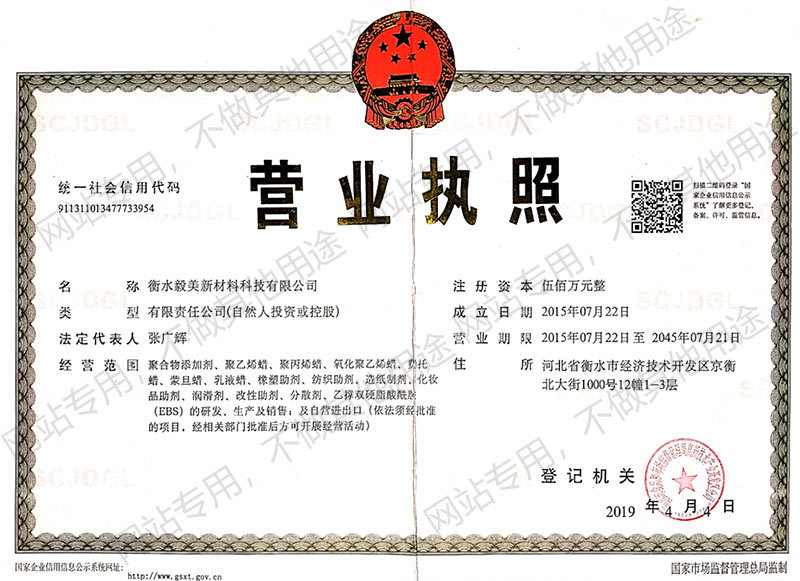
About UsHengshui yi mei new material technology co., ltd. was founded in 2015, is a collection of product development, production, sales and service as one of the high and new technology enterprises, yi mei company focused on deep processing of wax products, determined to become china's professional wax products supplier

-
ProductsThe company mainly produces and sells: polyethylene wax, oxidized polyethylene wax, synthetic Fischer-Tropsch wax, oxidized Fischer-Tropsch wax, maleic anhydride grafted wax, polypropylene wax, micro-powder wax, high-end composite wax and other eight series of dozens of models of high quality products.
-
NewsAt the beginning of its establishment, Yimei Company invested in the establishment of the "Polymer Additive R & D Center", insisting on scientific and technological innovation as the life force of enterprise development. Concentrate funds, technology, and talents in the company's scientific and technological innovation activities, focus on scientific research, public relations and technological breakthroughs of new products, new technologies, and new processes, and resolutely master core technologies.
-
SupportAt the beginning of its establishment, Yimei Company invested in the establishment of the "Polymer Additive R & D Center", insisting on scientific and technological innovation as the life force of enterprise development. Concentrate funds, technology, and talents in the company's scientific and technological innovation activities, focus on scientific research, public relations and technological breakthroughs of new products, new technologies, and new processes, and resolutely master core technologies.
-
RecruitmentOur company always adheres to the talent concept of "people-oriented", actively creates an atmosphere of respect, understanding, integrity and friendship, respects people's knowledge and talents, selects and develops mechanisms, and provides a growth platform for talents. make talents become a strong support for the sustainable development of enterprises, and realize the common growth and development of enterprises and talents.


Exploring the Versatility of LDPE Wax in Various Chemical Applications
Release time:
2024-08-12
Exploring the Versatility of LDPE Wax in Various Chemical Applications Introduction to LDPE Wax Low-Density Polyethylene (LDPE) wax is a remarkable product derived from the polymerization of ethylene. Known for its unique properties such as flexibility, low density, and chemical resistance, LDPE wax has become a crucial ingredient in various industrial applications. Its versatility allows for usag
Exploring the Versatility of LDPE Wax in Various Chemical Applications
Introduction to LDPE Wax
Low-Density Polyethylene (LDPE) wax is a remarkable product derived from the polymerization of ethylene. Known for its unique properties such as flexibility, low density, and chemical resistance, LDPE wax has become a crucial ingredient in various industrial applications. Its versatility allows for usage across multiple sectors including coatings, adhesives, plastics, and even cosmetics. In this article, we will explore the numerous applications of LDPE wax and why it is becoming a staple in the chemical industry.
What is LDPE Wax?
LDPE wax is a waxy white powder or solid that is produced by the thermal degradation of low-density polyethylene. Characterized by its low molecular weight, this material boasts a variety of beneficial properties such as excellent barrier performance, low viscosity, and strong adhesion qualities. These attributes make LDPE wax an attractive option for manufacturers seeking to enhance product performance in diverse applications.
Physical and Chemical Properties of LDPE Wax
Understanding the physical and chemical properties of LDPE wax is essential for comprehending its applications. Some key properties include:
- Melting Point: Typically around 100-120°C, enabling its use in formulations requiring specific processing temperatures.
- Density: Ranges from 0.90 to 0.94 g/cm³, making it lightweight and easy to work with.
- Solubility: Insoluble in water but soluble in organic solvents, which broadens its application scope.
- Viscosity: Its low viscosity allows for easy incorporation into various formulations without altering the overall product consistency.
Common Applications of LDPE Wax
LDPE wax has found a significant place in various industries due to its adaptability. Below are some of the primary applications in which this material shines.
1. Coatings and Paints
One of the most prominent applications of LDPE wax is in the coatings and paint industry. It serves as a slip agent, improving surface smoothness and enhancing durability. When added to coatings, LDPE wax helps in reducing friction and increasing scratch resistance, thereby extending product life and maintaining aesthetic appeal.
2. Adhesives and Sealants
LDPE wax plays a vital role in adhesives and sealants formulations. Its inclusion improves adhesion properties and enhances performance under varying environmental conditions. Additionally, it helps in achieving better cohesion and enhances the final product's resistance to water and chemicals.
3. Plastics and Films
In the plastic manufacturing sector, LDPE wax is utilized as a lubricant during processing. Its ability to reduce friction between plastic and machine parts leads to enhanced production efficiency. Furthermore, it contributes to improved surface properties of films, making them more attractive and functional.
4. Cosmetics and Personal Care Products
The cosmetic industry has also embraced LDPE wax due to its skin-friendly properties. It is commonly used in lip balms, ointments, and creams, providing a desirable texture and enhancing product stability. Moreover, its non-toxic nature makes it a preferred choice for formulations aimed at sensitive skin.
5. Agricultural Applications
In agriculture, LDPE wax is often employed in the formulation of pesticides and herbicides. It aids in improving the spreadability and adhesion of these products, ensuring effective coverage on plant surfaces. This application not only boosts efficacy but also minimizes environmental impact by reducing excess runoff.
Benefits of Using LDPE Wax
LDPE wax offers numerous advantages that make it a go-to choice in various applications:
1. Enhanced Performance
Whether used in coatings or adhesives, LDPE wax improves overall product performance. Its unique properties contribute to increased durability and functionality, elevating the end-user experience.
2. Cost-Effectiveness
LDPE wax is a cost-effective option for manufacturers looking to enhance their products without significantly increasing production costs. Its ability to improve formulation efficiency translates to savings in the long run.
3. Environmentally Friendly
As an environmentally sustainable option, LDPE wax contributes to greener formulations. Its non-toxic nature and ability to reduce waste in applications make it an attractive choice for eco-conscious manufacturers.
4. Versatility
The versatility of LDPE wax ensures it can be adapted to various formulations, allowing manufacturers to create tailored products that meet specific market demands.
Future Trends in LDPE Wax Applications
The evolving landscape of the chemical industry continues to steer innovations in LDPE wax applications. As manufacturers strive for sustainable solutions, we can expect to see:
1. Increased Demand for Eco-Friendly Products
With growing awareness regarding environmental issues, manufacturers are likely to prioritize eco-friendly formulations. LDPE wax, being a sustainable option, will see expanded usage as a cornerstone ingredient in various products.
2. Technological Advancements
Ongoing research and development will lead to enhanced formulations of LDPE wax that offer even better performance characteristics. This will open new avenues for applications in diverse sectors.
3. Customization of LDPE Wax Properties
As industries demand more specialized products, the customization of LDPE wax properties will become increasingly common. Tailored solutions that meet specific performance requirements will drive innovation in this space.
FAQs about LDPE Wax
1. What is LDPE wax made from?
LDPE wax is produced through the polymerization of ethylene, resulting in a low-density polyethylene material that is then processed into a wax form.
2. Can LDPE wax be used in food packaging?
Yes, LDPE wax is commonly used in food packaging due to its excellent barrier properties and non-toxic nature, making it safe for food contact.
3. How does LDPE wax improve adhesive performance?
LDPE wax enhances adhesive performance by improving adhesion properties and environmental resistance, making the adhesives more durable and effective.
4. Is LDPE wax biodegradable?
While LDPE wax is considered recyclable, it is not biodegradable. However, its properties allow for environmentally friendly formulations when used in various products.
5. What are the safety considerations when handling LDPE wax?
LDPE wax is generally safe to handle. However, standard safety precautions, such as wearing gloves and ensuring good ventilation, should be observed during processing.
Conclusion
LDPE wax stands out as a versatile and essential component in the modern chemical industry. Its unique properties and adaptability allow it to be utilized across a wide array of applications, from coatings and adhesives to cosmetics and agriculture. As we move forward, the emphasis on sustainability and technological advancement will continue to drive the demand for LDPE wax, solidifying its role in creating innovative and eco-friendly products. Manufacturers looking for solutions to enhance their formulations would do well to consider LDPE wax an integral part of their production processes.
Key words:
LDPE wax
recommend reading