Yimei New Material-Professional Wax Product Solution Supplier


-
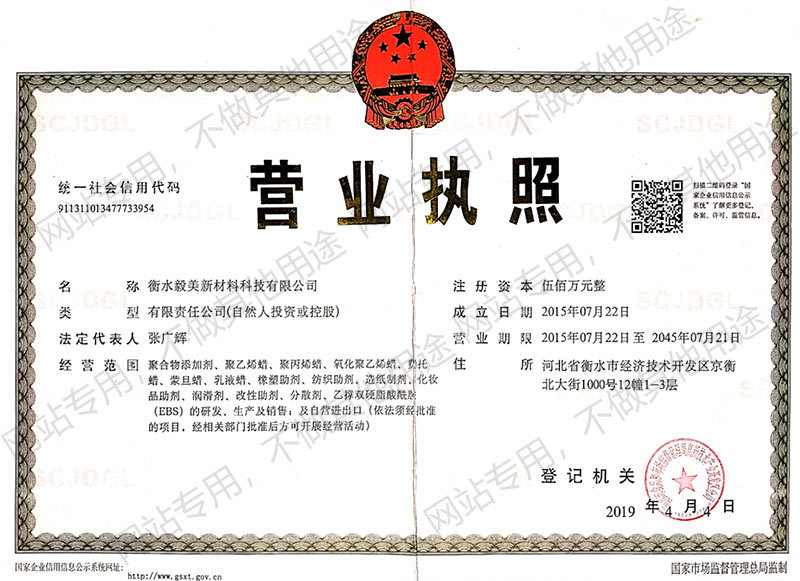
About UsHengshui yi mei new material technology co., ltd. was founded in 2015, is a collection of product development, production, sales and service as one of the high and new technology enterprises, yi mei company focused on deep processing of wax products, determined to become china's professional wax products supplier

-
ProductsThe company mainly produces and sells: polyethylene wax, oxidized polyethylene wax, synthetic Fischer-Tropsch wax, oxidized Fischer-Tropsch wax, maleic anhydride grafted wax, polypropylene wax, micro-powder wax, high-end composite wax and other eight series of dozens of models of high quality products.
-
NewsAt the beginning of its establishment, Yimei Company invested in the establishment of the "Polymer Additive R & D Center", insisting on scientific and technological innovation as the life force of enterprise development. Concentrate funds, technology, and talents in the company's scientific and technological innovation activities, focus on scientific research, public relations and technological breakthroughs of new products, new technologies, and new processes, and resolutely master core technologies.
-
SupportAt the beginning of its establishment, Yimei Company invested in the establishment of the "Polymer Additive R & D Center", insisting on scientific and technological innovation as the life force of enterprise development. Concentrate funds, technology, and talents in the company's scientific and technological innovation activities, focus on scientific research, public relations and technological breakthroughs of new products, new technologies, and new processes, and resolutely master core technologies.
-
RecruitmentOur company always adheres to the talent concept of "people-oriented", actively creates an atmosphere of respect, understanding, integrity and friendship, respects people's knowledge and talents, selects and develops mechanisms, and provides a growth platform for talents. make talents become a strong support for the sustainable development of enterprises, and realize the common growth and development of enterprises and talents.


The Role of Polypropylene Wax in the Adhesive and Sealant Industry
Release time:
2024-07-29
**Introduction** Polypropylene wax is a vital ingredient in the adhesive and sealant industry, playing a significant role in enhancing the performance of these products. Its unique properties make it a versatile material that provides various benefits, such as improving product properties and increasing manufacturing efficiency. In this article, we will explore the essential role of polypropylene
**Introduction**
Polypropylene wax is a vital ingredient in the adhesive and sealant industry, playing a significant role in enhancing the performance of these products. Its unique properties make it a versatile material that provides various benefits, such as improving product properties and increasing manufacturing efficiency. In this article, we will explore the essential role of polypropylene wax in the adhesive and sealant industry, highlighting its numerous advantages and applications.
**What is Polypropylene Wax?**
Polypropylene wax is a type of synthetic wax derived from the polymerization of propylene. It is a low molecular weight polymer that exhibits excellent lubricating and dispersing properties. Polypropylene wax is widely used in various industries, including adhesives, sealants, coatings, and plastics, due to its unique characteristics and benefits.
**Benefits of Polypropylene Wax in Adhesives and Sealants**
Polypropylene wax offers several advantages when used in adhesives and sealants. One of the key benefits is its ability to improve the adhesion properties of the product, ensuring a strong bond between substrates. Additionally, polypropylene wax enhances the flexibility and durability of adhesives and sealants, making them more resistant to environmental factors and wear.
**Applications of Polypropylene Wax in the Adhesive Industry**
Polypropylene wax is commonly used in various adhesive formulations to enhance their performance. It is particularly effective in hot melt adhesives, where it acts as a processing aid and improves the flow and leveling properties of the adhesive. Polypropylene wax is also used in pressure-sensitive adhesives to enhance tackiness and adhesion to different surfaces.
**Role of Polypropylene Wax in Sealants**
In the sealant industry, polypropylene wax is used to improve the moisture resistance and adhesion properties of sealant products. It helps sealants adhere to different surfaces and provides a protective barrier against water, chemicals, and other environmental factors. Polypropylene wax also enhances the flexibility and durability of sealants, making them more long-lasting and reliable.
**Benefits of Using Polypropylene Wax in Manufacturing**
The use of polypropylene wax in the manufacturing process offers several benefits, such as improving product properties and increasing efficiency. By incorporating polypropylene wax into adhesive and sealant formulations, manufacturers can enhance product performance, reduce production costs, and achieve better results in various applications.
**FAQs**
1. What are the main properties of polypropylene wax?
Polypropylene wax exhibits excellent lubricating and dispersing properties, making it an ideal additive in adhesives and sealants.
2. How does polypropylene wax enhance the performance of adhesives?
Polypropylene wax improves the adhesion, flexibility, and durability of adhesives, resulting in stronger and more reliable bonds.
3. What are the common applications of polypropylene wax in the adhesive industry?
Polypropylene wax is used in hot melt adhesives and pressure-sensitive adhesives to improve flow, tackiness, and adhesion properties.
4. How does polypropylene wax benefit sealants?
Polypropylene wax enhances the moisture resistance, adhesion, and durability of sealants, making them more effective in sealing and protecting surfaces.
5. What are the advantages of using polypropylene wax in manufacturing?
Polypropylene wax helps improve product properties, increase manufacturing efficiency, and reduce production costs in the adhesive and sealant industry.
**Conclusion**
Polypropylene wax plays a crucial role in the adhesive and sealant industry, offering numerous benefits and applications for manufacturers. Its unique properties enhance product performance, increase efficiency, and improve the overall quality of adhesives and sealants. By understanding the role of polypropylene wax and its benefits, manufacturers can optimize their formulations and achieve better results in various applications.
Polypropylene wax is a vital ingredient in the adhesive and sealant industry, playing a significant role in enhancing the performance of these products. Its unique properties make it a versatile material that provides various benefits, such as improving product properties and increasing manufacturing efficiency. In this article, we will explore the essential role of polypropylene wax in the adhesive and sealant industry, highlighting its numerous advantages and applications.
**What is Polypropylene Wax?**
Polypropylene wax is a type of synthetic wax derived from the polymerization of propylene. It is a low molecular weight polymer that exhibits excellent lubricating and dispersing properties. Polypropylene wax is widely used in various industries, including adhesives, sealants, coatings, and plastics, due to its unique characteristics and benefits.
**Benefits of Polypropylene Wax in Adhesives and Sealants**
Polypropylene wax offers several advantages when used in adhesives and sealants. One of the key benefits is its ability to improve the adhesion properties of the product, ensuring a strong bond between substrates. Additionally, polypropylene wax enhances the flexibility and durability of adhesives and sealants, making them more resistant to environmental factors and wear.
**Applications of Polypropylene Wax in the Adhesive Industry**
Polypropylene wax is commonly used in various adhesive formulations to enhance their performance. It is particularly effective in hot melt adhesives, where it acts as a processing aid and improves the flow and leveling properties of the adhesive. Polypropylene wax is also used in pressure-sensitive adhesives to enhance tackiness and adhesion to different surfaces.
**Role of Polypropylene Wax in Sealants**
In the sealant industry, polypropylene wax is used to improve the moisture resistance and adhesion properties of sealant products. It helps sealants adhere to different surfaces and provides a protective barrier against water, chemicals, and other environmental factors. Polypropylene wax also enhances the flexibility and durability of sealants, making them more long-lasting and reliable.
**Benefits of Using Polypropylene Wax in Manufacturing**
The use of polypropylene wax in the manufacturing process offers several benefits, such as improving product properties and increasing efficiency. By incorporating polypropylene wax into adhesive and sealant formulations, manufacturers can enhance product performance, reduce production costs, and achieve better results in various applications.
**FAQs**
1. What are the main properties of polypropylene wax?
Polypropylene wax exhibits excellent lubricating and dispersing properties, making it an ideal additive in adhesives and sealants.
2. How does polypropylene wax enhance the performance of adhesives?
Polypropylene wax improves the adhesion, flexibility, and durability of adhesives, resulting in stronger and more reliable bonds.
3. What are the common applications of polypropylene wax in the adhesive industry?
Polypropylene wax is used in hot melt adhesives and pressure-sensitive adhesives to improve flow, tackiness, and adhesion properties.
4. How does polypropylene wax benefit sealants?
Polypropylene wax enhances the moisture resistance, adhesion, and durability of sealants, making them more effective in sealing and protecting surfaces.
5. What are the advantages of using polypropylene wax in manufacturing?
Polypropylene wax helps improve product properties, increase manufacturing efficiency, and reduce production costs in the adhesive and sealant industry.
**Conclusion**
Polypropylene wax plays a crucial role in the adhesive and sealant industry, offering numerous benefits and applications for manufacturers. Its unique properties enhance product performance, increase efficiency, and improve the overall quality of adhesives and sealants. By understanding the role of polypropylene wax and its benefits, manufacturers can optimize their formulations and achieve better results in various applications.
Key words:
Polypropylenwachs wax
Previous article
recommend reading