Yimei New Material-Professional Wax Product Solution Supplier


-
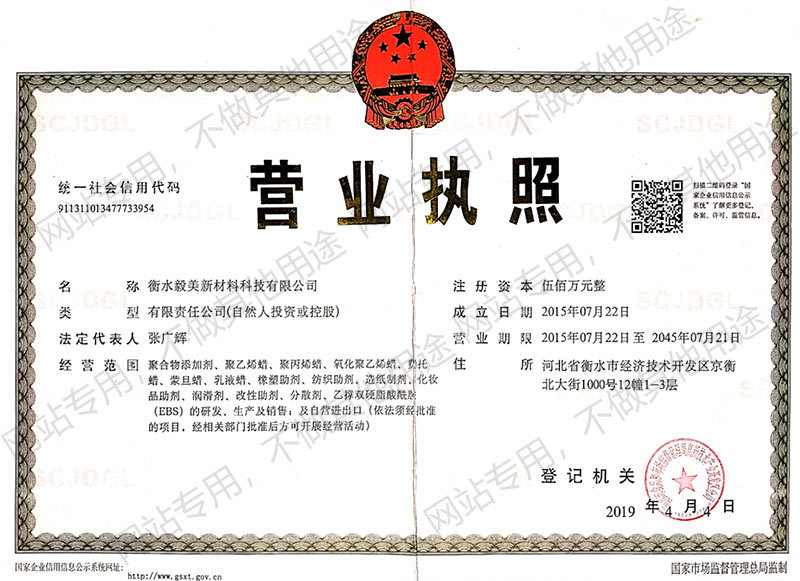
About UsHengshui yi mei new material technology co., ltd. was founded in 2015, is a collection of product development, production, sales and service as one of the high and new technology enterprises, yi mei company focused on deep processing of wax products, determined to become china's professional wax products supplier

-
ProductsThe company mainly produces and sells: polyethylene wax, oxidized polyethylene wax, synthetic Fischer-Tropsch wax, oxidized Fischer-Tropsch wax, maleic anhydride grafted wax, polypropylene wax, micro-powder wax, high-end composite wax and other eight series of dozens of models of high quality products.
-
NewsAt the beginning of its establishment, Yimei Company invested in the establishment of the "Polymer Additive R & D Center", insisting on scientific and technological innovation as the life force of enterprise development. Concentrate funds, technology, and talents in the company's scientific and technological innovation activities, focus on scientific research, public relations and technological breakthroughs of new products, new technologies, and new processes, and resolutely master core technologies.
-
SupportAt the beginning of its establishment, Yimei Company invested in the establishment of the "Polymer Additive R & D Center", insisting on scientific and technological innovation as the life force of enterprise development. Concentrate funds, technology, and talents in the company's scientific and technological innovation activities, focus on scientific research, public relations and technological breakthroughs of new products, new technologies, and new processes, and resolutely master core technologies.
-
RecruitmentOur company always adheres to the talent concept of "people-oriented", actively creates an atmosphere of respect, understanding, integrity and friendship, respects people's knowledge and talents, selects and develops mechanisms, and provides a growth platform for talents. make talents become a strong support for the sustainable development of enterprises, and realize the common growth and development of enterprises and talents.


Polypropylene Wax in Agriculture: Enhancing Crop Yield and Protection
Release time:
2024-07-28
--- **Table of Contents** 1. Introduction to Polypropylene Wax 2. Benefits of Polypropylene Wax in Agriculture 3. How Polypropylene Wax Enhances Crop Yield 4. Protection Against Environmental Stressors 5. Application Methods of Polypropylene Wax in Agriculture 6. Frequently Asked Questions about Polypropylene Wax 7. Conclusion --- ### 1. Introduction to Polypropylene Wax Polypropylene wax is a typ
---
**Table of Contents**
1. Introduction to Polypropylene Wax
2. Benefits of Polypropylene Wax in Agriculture
3. How Polypropylene Wax Enhances Crop Yield
4. Protection Against Environmental Stressors
5. Application Methods of Polypropylene Wax in Agriculture
6. Frequently Asked Questions about Polypropylene Wax
7. Conclusion
---
### 1. Introduction to Polypropylene Wax
Polypropylene wax is a type of synthetic wax derived from polypropylene, a polymer commonly used in various industries. In agriculture, polypropylene wax has gained popularity for its ability to improve crop quality and increase yield.
### 2. Benefits of Polypropylene Wax in Agriculture
Polypropylene wax offers numerous benefits to farmers, including increased water retention in soil, improved nutrient uptake by plants, and enhanced resistance to pests and diseases. By applying polypropylene wax to crops, farmers can expect healthier plants and higher yields.
### 3. How Polypropylene Wax Enhances Crop Yield
The use of polypropylene wax in agriculture can significantly enhance crop yield by promoting better plant growth and development. The wax forms a protective barrier on the plant's surface, reducing water loss and increasing photosynthesis efficiency. This results in greater biomass production and ultimately higher crop yields.
### 4. Protection Against Environmental Stressors
Polypropylene wax acts as a shield against environmental stressors such as extreme temperatures, UV radiation, and drought. By forming a protective layer on plant surfaces, the wax helps plants withstand adverse conditions and thrive in challenging environments.
### 5. Application Methods of Polypropylene Wax in Agriculture
There are various application methods for using polypropylene wax in agriculture, including foliar sprays, seed coatings, and soil amendments. Each method offers unique benefits and can be tailored to specific crop types and growing conditions.
### 6. Frequently Asked Questions about Polypropylene Wax
**Q: Is polypropylene wax safe for use in agriculture?**
A: Yes, polypropylene wax is considered safe for use in agriculture and has been approved for organic farming practices.
**Q: How often should polypropylene wax be applied to crops?**
A: The frequency of application depends on factors such as crop type, growth stage, and environmental conditions. It is recommended to follow the manufacturer's guidelines for optimal results.
**Q: Can polypropylene wax be used in conjunction with other agricultural inputs?**
A: Yes, polypropylene wax can be used in combination with fertilizers, pesticides, and other agricultural inputs to maximize crop performance.
**Q: Does polypropylene wax leave a residue on crops?**
A: Polypropylene wax is designed to form a thin, invisible layer on plant surfaces and does not leave visible residues on crops.
**Q: How long does the protective effect of polypropylene wax last on plants?**
A: The protective effect of polypropylene wax can last for several weeks, depending on environmental conditions and the application method used.
### 7. Conclusion
Polypropylene wax holds great potential for revolutionizing agriculture by enhancing crop yield and providing protection against environmental stressors. By incorporating polypropylene wax into farming practices, farmers can improve crop quality, increase yields, and ensure the long-term sustainability of their operations.
**Table of Contents**
1. Introduction to Polypropylene Wax
2. Benefits of Polypropylene Wax in Agriculture
3. How Polypropylene Wax Enhances Crop Yield
4. Protection Against Environmental Stressors
5. Application Methods of Polypropylene Wax in Agriculture
6. Frequently Asked Questions about Polypropylene Wax
7. Conclusion
---
### 1. Introduction to Polypropylene Wax
Polypropylene wax is a type of synthetic wax derived from polypropylene, a polymer commonly used in various industries. In agriculture, polypropylene wax has gained popularity for its ability to improve crop quality and increase yield.
### 2. Benefits of Polypropylene Wax in Agriculture
Polypropylene wax offers numerous benefits to farmers, including increased water retention in soil, improved nutrient uptake by plants, and enhanced resistance to pests and diseases. By applying polypropylene wax to crops, farmers can expect healthier plants and higher yields.
### 3. How Polypropylene Wax Enhances Crop Yield
The use of polypropylene wax in agriculture can significantly enhance crop yield by promoting better plant growth and development. The wax forms a protective barrier on the plant's surface, reducing water loss and increasing photosynthesis efficiency. This results in greater biomass production and ultimately higher crop yields.
### 4. Protection Against Environmental Stressors
Polypropylene wax acts as a shield against environmental stressors such as extreme temperatures, UV radiation, and drought. By forming a protective layer on plant surfaces, the wax helps plants withstand adverse conditions and thrive in challenging environments.
### 5. Application Methods of Polypropylene Wax in Agriculture
There are various application methods for using polypropylene wax in agriculture, including foliar sprays, seed coatings, and soil amendments. Each method offers unique benefits and can be tailored to specific crop types and growing conditions.
### 6. Frequently Asked Questions about Polypropylene Wax
**Q: Is polypropylene wax safe for use in agriculture?**
A: Yes, polypropylene wax is considered safe for use in agriculture and has been approved for organic farming practices.
**Q: How often should polypropylene wax be applied to crops?**
A: The frequency of application depends on factors such as crop type, growth stage, and environmental conditions. It is recommended to follow the manufacturer's guidelines for optimal results.
**Q: Can polypropylene wax be used in conjunction with other agricultural inputs?**
A: Yes, polypropylene wax can be used in combination with fertilizers, pesticides, and other agricultural inputs to maximize crop performance.
**Q: Does polypropylene wax leave a residue on crops?**
A: Polypropylene wax is designed to form a thin, invisible layer on plant surfaces and does not leave visible residues on crops.
**Q: How long does the protective effect of polypropylene wax last on plants?**
A: The protective effect of polypropylene wax can last for several weeks, depending on environmental conditions and the application method used.
### 7. Conclusion
Polypropylene wax holds great potential for revolutionizing agriculture by enhancing crop yield and providing protection against environmental stressors. By incorporating polypropylene wax into farming practices, farmers can improve crop quality, increase yields, and ensure the long-term sustainability of their operations.
Key words:
Polypropylenwachs wax
Previous article
recommend reading