Yimei New Material-Professional Wax Product Solution Supplier


-
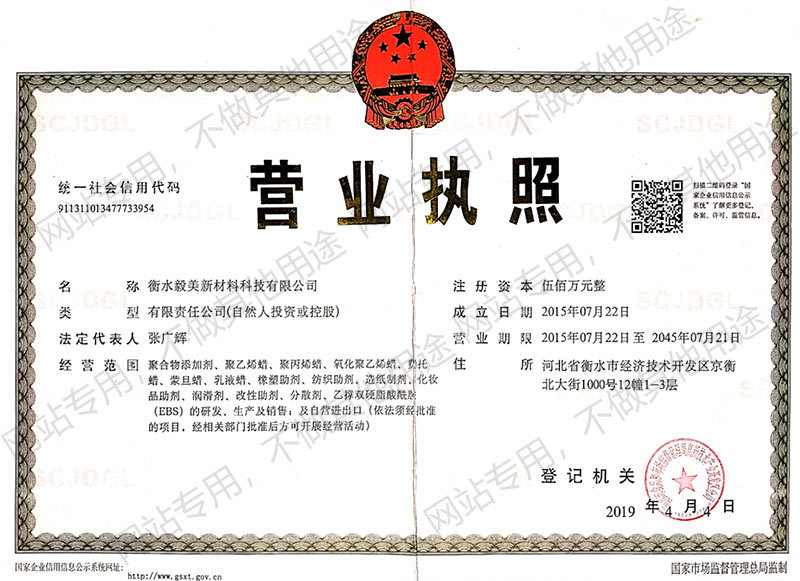
About UsHengshui yi mei new material technology co., ltd. was founded in 2015, is a collection of product development, production, sales and service as one of the high and new technology enterprises, yi mei company focused on deep processing of wax products, determined to become china's professional wax products supplier

-
ProductsThe company mainly produces and sells: polyethylene wax, oxidized polyethylene wax, synthetic Fischer-Tropsch wax, oxidized Fischer-Tropsch wax, maleic anhydride grafted wax, polypropylene wax, micro-powder wax, high-end composite wax and other eight series of dozens of models of high quality products.
-
NewsAt the beginning of its establishment, Yimei Company invested in the establishment of the "Polymer Additive R & D Center", insisting on scientific and technological innovation as the life force of enterprise development. Concentrate funds, technology, and talents in the company's scientific and technological innovation activities, focus on scientific research, public relations and technological breakthroughs of new products, new technologies, and new processes, and resolutely master core technologies.
-
SupportAt the beginning of its establishment, Yimei Company invested in the establishment of the "Polymer Additive R & D Center", insisting on scientific and technological innovation as the life force of enterprise development. Concentrate funds, technology, and talents in the company's scientific and technological innovation activities, focus on scientific research, public relations and technological breakthroughs of new products, new technologies, and new processes, and resolutely master core technologies.
-
RecruitmentOur company always adheres to the talent concept of "people-oriented", actively creates an atmosphere of respect, understanding, integrity and friendship, respects people's knowledge and talents, selects and develops mechanisms, and provides a growth platform for talents. make talents become a strong support for the sustainable development of enterprises, and realize the common growth and development of enterprises and talents.


Understanding the Production Process of Polyethylene Wax: A Comprehensive Guide
Release time:
2025-02-12
Understanding the Production Process of Polyethylene Wax Polyethylene wax is a versatile product used across various industries, including plastics, coatings, and cosmetics. Recognizing the intricacies of its production process is essential for manufacturers and consumers alike. This article will guide you through the stages of polyethylene wax production, its applications, and the factors that in
Understanding the Production Process of Polyethylene Wax
Polyethylene wax is a versatile product used across various industries, including plastics, coatings, and cosmetics. Recognizing the intricacies of its production process is essential for manufacturers and consumers alike. This article will guide you through the stages of polyethylene wax production, its applications, and the factors that influence its quality.
What is Polyethylene Wax?
Polyethylene wax is a low molecular weight polyethylene that is solid at room temperature. It is characterized by its waxy texture and is often used as a processing aid, lubricant, and additive in several applications. The unique properties of polyethylene wax, such as its thermal stability, chemical resistance, and low viscosity, make it an ideal choice for many industrial processes.
The Importance of Polyethylene Wax in Various Industries
Polyethylene wax serves a variety of functions across different sectors.
1. In the Plastics Industry
In plastics manufacturing, polyethylene wax is commonly used as a processing aid. It enhances the flow of molten plastics, reduces friction, and improves demolding properties. This leads to higher-quality finished products and increased production efficiency.
2. In Coatings and Inks
The coatings and ink industries benefit from polyethylene wax due to its ability to enhance gloss, improve scratch resistance, and provide a smooth finish. It acts as an additive, modifying the surface properties of paints and coatings.
3. In Personal Care Products
In personal care formulations, polyethylene wax acts as a thickener and emollient. It improves the texture of creams and lotions, offering a luxurious feel while ensuring stability in the formulation.
The Production Process of Polyethylene Wax
The production of polyethylene wax involves a series of systematic steps, each crucial to ensuring the quality and consistency of the final product.
1. Raw Material Selection
The primary raw material for producing polyethylene wax is ethylene, a gaseous hydrocarbon. Ethylene is typically derived from natural gas or petroleum through a process called steam cracking. Selecting high-purity ethylene is vital for producing high-quality polyethylene wax.
2. Polymerization Process
The polymerization process is where ethylene undergoes transformation into polyethylene. This can occur via several methods, including:
a. High-Pressure Polymerization
In high-pressure polymerization, ethylene gas is subjected to high pressure and temperature in the presence of free radical initiators. This method results in low molecular weight polyethylene, ideal for wax production.
b. Low-Pressure Polymerization
Low-pressure polymerization uses catalysts to facilitate the polymerization reaction under controlled temperatures and pressures. This method allows for greater control over the molecular weight and properties of the polyethylene produced.
3. Degradation Process
Once polyethylene is generated, it must undergo a degradation process to achieve the desired molecular weight for wax applications. This can be accomplished through thermal degradation or chemical degradation, where high molecular weight polymers are broken down into lower molecular weights.
4. Refinement and Filtration
After degradation, the polyethylene wax undergoes refinement to remove impurities and enhance its properties. This process typically involves filtration to eliminate any unreacted materials and catalysts. The resulting product is then subjected to further purification methods, such as distillation or adsorption, to ensure its quality.
5. Cooling and Solidification
After purification, the polyethylene wax is cooled and allowed to solidify. This step is crucial for obtaining the desired physical characteristics, such as hardness and melting point. The cooling process can be controlled to produce different grades of wax, depending on the intended application.
6. Packaging and Distribution
Once solidified, the polyethylene wax is packaged in suitable containers, ready for distribution. Proper packaging is essential to maintain the wax's quality and prevent contamination during transport.
Quality Control Measures in Polyethylene Wax Production
Ensuring the quality of polyethylene wax is paramount for its diverse applications. Several quality control measures are implemented throughout the production process.
1. Raw Material Testing
Before production begins, raw materials, particularly ethylene, are subjected to rigorous testing. Assessing the purity and compositional stability of ethylene ensures that the resulting polyethylene wax meets industry standards.
2. In-Process Monitoring
During polymerization and degradation, in-process monitoring is crucial. Parameters such as temperature, pressure, and reaction time are continuously tracked to ensure optimal conditions are maintained.
3. Final Product Testing
Once production is complete, the final polyethylene wax undergoes a series of tests, including:
a. Molecular Weight Analysis
The molecular weight of the wax is measured to determine its suitability for specific applications. This is often done using techniques such as gel permeation chromatography (GPC).
b. Thermal Properties Testing
The melting point and thermal stability of the wax are assessed, providing insights into its performance in various industrial applications.
c. Purity Testing
Final purity assessments ensure that the polyethylene wax is free from contaminants and meets the required specifications.
Applications of Polyethylene Wax in Detail
Polyethylene wax finds a multitude of applications across different industries due to its favorable properties.
1. In the Paints and Coatings Sector
In paints, polyethylene wax serves as a matting agent, providing a matte finish while improving the paint’s durability and resistance to scratching and staining. Its low viscosity ensures easy incorporation into formulations.
2. In the Rubber Industry
Polyethylene wax is used as a processing aid in rubber compounding, enhancing flow properties and reducing friction during processing. This ultimately leads to improved product quality.
3. In the Adhesives and Sealants Industry
Polyethylene wax enhances the performance of adhesives and sealants, providing better water resistance and improved bonding strength.
4. In the Food Industry
Food-grade polyethylene wax is utilized for coating fruits and vegetables, helping to retain moisture and extend shelf life while providing a glossy appearance.
Challenges in Polyethylene Wax Production
Despite its many benefits, the production of polyethylene wax faces several challenges.
1. Environmental Concerns
The production process can have environmental impacts, particularly regarding emissions and waste management. Manufacturers are increasingly focused on adopting sustainable practices to minimize their carbon footprint.
2. Raw Material Volatility
The cost and availability of raw materials, particularly petroleum-derived ethylene, can fluctuate significantly, impacting production costs.
Future Trends in Polyethylene Wax Production
As industries evolve, so does the demand for polyethylene wax. Future trends include:
1. Sustainable Alternatives
There is a growing interest in bio-based polyethylene wax, derived from renewable resources. This shift is driven by environmental concerns and the need for sustainable sourcing.
2. Innovations in Processing Technologies
Advancements in polymerization and degradation technologies can lead to more efficient production processes, enhancing the quality and performance of polyethylene wax.
Frequently Asked Questions (FAQs)
1. What is the primary use of polyethylene wax?
Polyethylene wax is primarily used as a processing aid in plastics, coatings, and personal care products, enhancing properties such as flow, gloss, and stability.
2. How is polyethylene wax different from paraffin wax?
Polyethylene wax is a synthetic wax derived from polyethylene, while paraffin wax is a natural wax obtained from petroleum. Their chemical structures and properties differ significantly.
3. Is polyethylene wax safe for food contact?
Yes, food-grade polyethylene wax is safe for food contact and is commonly used to coat fruits and vegetables to preserve freshness.
4. What are the environmental impacts of polyethylene wax production?
The production process can produce emissions and waste, leading to environmental concerns; however, many manufacturers are adopting sustainable practices to mitigate this impact.
5. Can polyethylene wax be recycled?
Polyethylene wax is recyclable; however, the recycling process depends on local facilities and regulations.
Conclusion
Understanding the production process of polyethylene wax provides valuable insights into its applications and the factors that influence its quality. As industries continue to evolve, the demand for high-quality polyethylene wax will persist, driving innovations and sustainable practices within the production process. By staying informed about these developments, stakeholders in various sectors can make better choices and improve their products.
Key words:
polyethylene wax
recommend reading