Yimei New Material-Professional Wax Product Solution Supplier


-
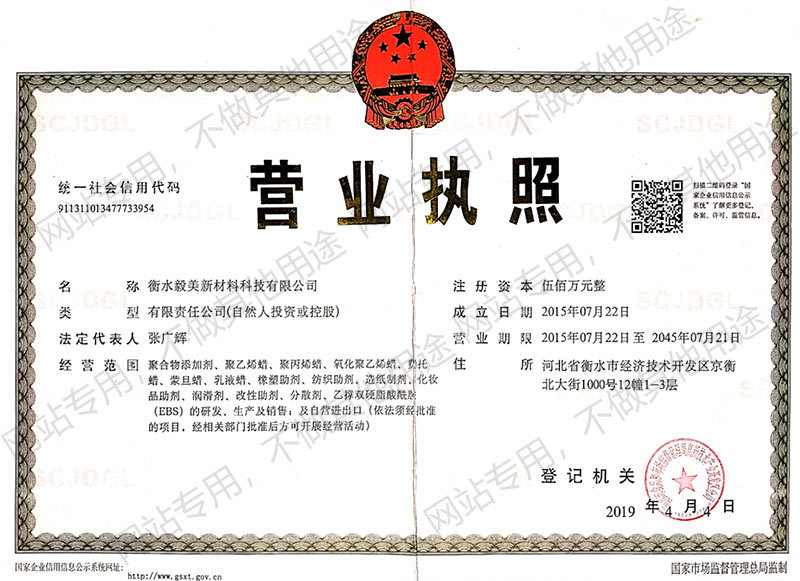
About UsHengshui yi mei new material technology co., ltd. was founded in 2015, is a collection of product development, production, sales and service as one of the high and new technology enterprises, yi mei company focused on deep processing of wax products, determined to become china's professional wax products supplier

-
ProductsThe company mainly produces and sells: polyethylene wax, oxidized polyethylene wax, synthetic Fischer-Tropsch wax, oxidized Fischer-Tropsch wax, maleic anhydride grafted wax, polypropylene wax, micro-powder wax, high-end composite wax and other eight series of dozens of models of high quality products.
-
NewsAt the beginning of its establishment, Yimei Company invested in the establishment of the "Polymer Additive R & D Center", insisting on scientific and technological innovation as the life force of enterprise development. Concentrate funds, technology, and talents in the company's scientific and technological innovation activities, focus on scientific research, public relations and technological breakthroughs of new products, new technologies, and new processes, and resolutely master core technologies.
-
SupportAt the beginning of its establishment, Yimei Company invested in the establishment of the "Polymer Additive R & D Center", insisting on scientific and technological innovation as the life force of enterprise development. Concentrate funds, technology, and talents in the company's scientific and technological innovation activities, focus on scientific research, public relations and technological breakthroughs of new products, new technologies, and new processes, and resolutely master core technologies.
-
RecruitmentOur company always adheres to the talent concept of "people-oriented", actively creates an atmosphere of respect, understanding, integrity and friendship, respects people's knowledge and talents, selects and develops mechanisms, and provides a growth platform for talents. make talents become a strong support for the sustainable development of enterprises, and realize the common growth and development of enterprises and talents.


Maximizing the Efficiency of Chemical Processes with Polypropylene Wax
Release time:
2025-01-01
Maximizing the Efficiency of Chemical Processes with Polypropylene Wax Table of Contents Introduction to Polypropylene Wax in Chemical Processes Understanding Polypropylene Wax: A Comprehensive Overview Applications of Polypropylene Wax in the Chemical Industry Benefits of Using Polypropylene Wax for Chemical Processes Strategies for Maximizing Efficiency with Polypropylene Wa
Maximizing the Efficiency of Chemical Processes with Polypropylene Wax
Table of Contents
- Introduction to Polypropylene Wax in Chemical Processes
- Understanding Polypropylene Wax: A Comprehensive Overview
- Applications of Polypropylene Wax in the Chemical Industry
- Benefits of Using Polypropylene Wax for Chemical Processes
- Strategies for Maximizing Efficiency with Polypropylene Wax
- Case Studies: Real-World Applications of Polypropylene Wax
- Best Practices for Implementing Polypropylene Wax
- Future Trends in the Use of Polypropylene Wax
- Frequently Asked Questions
- Conclusion: The Future of Chemical Processes with Polypropylene Wax
Introduction to Polypropylene Wax in Chemical Processes
In the ever-evolving landscape of the chemical industry, efficiency and cost-effectiveness remain paramount. **Polypropylene wax** emerges as a versatile solution that enhances various chemical processes. This article delves into the characteristics of polypropylene wax, its applications in the chemical sector, and strategies for maximizing process efficiency.
Understanding Polypropylene Wax: A Comprehensive Overview
Polypropylene wax is a type of synthetic wax derived from the polymerization of propylene. It possesses unique physical and chemical properties, making it suitable for multiple industrial applications.
Key Characteristics of Polypropylene Wax
- **Low Molecular Weight**: This property gives polypropylene wax its excellent flow characteristics, making it ideal for use as a lubricant and processing aid.
- **Thermal Stability**: It exhibits high thermal stability, which is essential for processes that require high temperatures.
- **Chemical Resistance**: Polypropylene wax is resistant to acids, bases, and solvents, ensuring durability in various environments.
Types of Polypropylene Wax
1. **Hard Polypropylene Wax**: Often used in high-temperature applications, providing rigidity and strength.
2. **Soft Polypropylene Wax**: Utilized for its flexibility, commonly found in formulations that require softer characteristics.
Applications of Polypropylene Wax in the Chemical Industry
Polypropylene wax finds extensive use across several chemical processes. Its applications include:
1. Coatings and Inks
Polypropylene wax improves the flow and leveling properties of coatings, enhancing their gloss and durability. Its incorporation reduces surface tension, promoting better adhesion and spreading.
2. Plastics and Polymers
In plastic manufacturing, polypropylene wax serves as a processing aid, reducing friction during extrusion and injection molding. This results in improved production efficiency and surface quality.
3. Adhesives and Sealants
As a component in adhesives, polypropylene wax enhances the flexibility and durability of the final product. It also aids in achieving the desired viscosity, making the application process easier.
4. Masterbatches and Compounding
Polypropylene wax is frequently used in masterbatch formulations to improve dispersion and processing characteristics of colorants and additives.
Benefits of Using Polypropylene Wax for Chemical Processes
Integrating polypropylene wax into chemical processes offers numerous advantages:
1. Improved Process Efficiency
The unique flow characteristics of polypropylene wax enhance the efficiency of various processing operations, reducing cycle times and energy consumption.
2. Enhanced Product Quality
By promoting better dispersion and reducing defects, polypropylene wax contributes to higher-quality end products that meet industry standards.
3. Cost-Effectiveness
The use of polypropylene wax can lead to significant cost savings by reducing material waste and lowering energy costs during production.
4. Environmental Benefits
Polypropylene wax is often produced from sustainable sources, making it an environmentally friendly choice in chemical formulations.
Strategies for Maximizing Efficiency with Polypropylene Wax
To fully harness the benefits of polypropylene wax, companies should consider the following strategies:
1. Optimize Formulation Ratios
Conduct thorough testing to determine the optimal ratio of polypropylene wax in formulations. This ensures that the desired properties are achieved without unnecessary cost.
2. Continuous Process Improvement
Implement a continuous improvement program that includes regular assessments of the role of polypropylene wax in production. This helps in identifying potential areas for enhancement.
3. Employee Training
Invest in training programs for employees to understand the properties and applications of polypropylene wax. Well-informed staff can make better decisions on its use in various processes.
4. Collaboration with Suppliers
Work closely with suppliers of polypropylene wax to gain insights into the latest developments and best practices for its application.
Case Studies: Real-World Applications of Polypropylene Wax
Examining real-world applications provides valuable insights into the effectiveness of polypropylene wax in enhancing chemical processes.
Case Study 1: Coatings Industry
A leading coatings manufacturer integrated polypropylene wax into their formulations, resulting in a 20% increase in production efficiency and a 15% reduction in material costs.
Case Study 2: Plastics Production
A major plastic manufacturer implemented polypropylene wax as a processing aid, achieving a 30% reduction in cycle times and a notable improvement in surface finish quality.
Best Practices for Implementing Polypropylene Wax
To ensure successful integration, consider the following best practices:
1. Conduct Pilot Tests
Before full-scale implementation, conduct pilot tests to evaluate the performance of polypropylene wax in specific applications.
2. Monitor Performance Metrics
Regularly track performance metrics such as cycle times, product quality, and cost-effectiveness to assess the impact of polypropylene wax.
3. Stay Updated on Industry Trends
Keep abreast of advancements in polypropylene wax technology to leverage new opportunities for efficiency enhancements.
Future Trends in the Use of Polypropylene Wax
As the chemical industry evolves, several trends are emerging:
1. Increased Focus on Sustainability
The demand for sustainable chemicals will likely drive the adoption of eco-friendly polypropylene wax formulations in various applications.
2. Advancements in Polymer Technology
Ongoing research into polymer science may lead to the development of new grades of polypropylene wax with enhanced properties.
3. Integration of Smart Manufacturing
Incorporating Smart manufacturing technologies may enable real-time monitoring and adjustment of polypropylene wax use in production processes, optimizing efficiency further.
Frequently Asked Questions
1. What is polypropylene wax?
Polypropylene wax is a synthetic wax derived from the polymerization of propylene, known for its low molecular weight, thermal stability, and chemical resistance.
2. How is polypropylene wax used in coatings?
In coatings, polypropylene wax improves flow and leveling properties, enhances gloss, and increases durability, ultimately leading to superior adhesion.
3. What advantages does polypropylene wax offer in plastic manufacturing?
Polypropylene wax reduces friction during processing, resulting in improved efficiency, lower cycle times, and enhanced surface quality in plastic products.
4. Can polypropylene wax help reduce production costs?
Yes, by optimizing material usage and energy consumption, polypropylene wax can lead to significant cost savings in production processes.
5. What future developments can we expect in polypropylene wax technology?
Future developments may include more sustainable formulations, advancements in polymer technology, and the integration of smart manufacturing solutions.
Conclusion: The Future of Chemical Processes with Polypropylene Wax
In conclusion, polypropylene wax stands out as a powerful tool for maximizing the efficiency of chemical processes. Its diverse applications and numerous benefits make it an invaluable asset in the chemical industry. By adopting best practices and staying informed on emerging trends, companies can leverage the advantages of polypropylene wax to enhance their processes, reduce costs, and achieve higher product quality, paving the way for a more efficient and sustainable future.
Key words:
Polypropylene wax
recommend reading