Yimei New Material-Professional Wax Product Solution Supplier


-
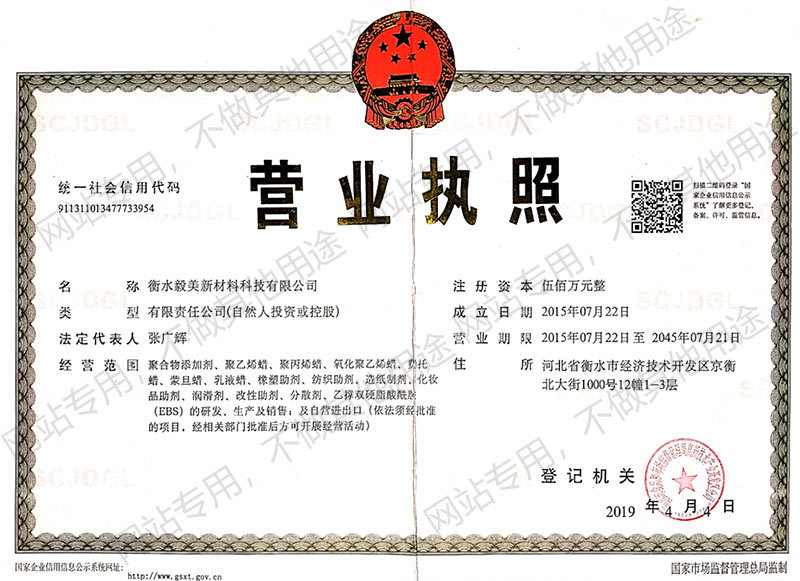
About UsHengshui yi mei new material technology co., ltd. was founded in 2015, is a collection of product development, production, sales and service as one of the high and new technology enterprises, yi mei company focused on deep processing of wax products, determined to become china's professional wax products supplier

-
ProductsThe company mainly produces and sells: polyethylene wax, oxidized polyethylene wax, synthetic Fischer-Tropsch wax, oxidized Fischer-Tropsch wax, maleic anhydride grafted wax, polypropylene wax, micro-powder wax, high-end composite wax and other eight series of dozens of models of high quality products.
-
NewsAt the beginning of its establishment, Yimei Company invested in the establishment of the "Polymer Additive R & D Center", insisting on scientific and technological innovation as the life force of enterprise development. Concentrate funds, technology, and talents in the company's scientific and technological innovation activities, focus on scientific research, public relations and technological breakthroughs of new products, new technologies, and new processes, and resolutely master core technologies.
-
SupportAt the beginning of its establishment, Yimei Company invested in the establishment of the "Polymer Additive R & D Center", insisting on scientific and technological innovation as the life force of enterprise development. Concentrate funds, technology, and talents in the company's scientific and technological innovation activities, focus on scientific research, public relations and technological breakthroughs of new products, new technologies, and new processes, and resolutely master core technologies.
-
RecruitmentOur company always adheres to the talent concept of "people-oriented", actively creates an atmosphere of respect, understanding, integrity and friendship, respects people's knowledge and talents, selects and develops mechanisms, and provides a growth platform for talents. make talents become a strong support for the sustainable development of enterprises, and realize the common growth and development of enterprises and talents.


Why Polypropylene Wax is Essential for Improving the Durability of Chemical Products
Release time:
2024-12-26
Why Polypropylene Wax is Essential for Improving the Durability of Chemical Products Table of Contents Introduction to Polypropylene Wax Understanding Polypropylene Wax Properties of Polypropylene Wax Applications in the Chemical Industry Benefits of Using Polypropylene Wax Polypropylene Wax vs. Other Waxes Environmental Considerations The Future of Polypropylene W
Why Polypropylene Wax is Essential for Improving the Durability of Chemical Products
Table of Contents
- Introduction to Polypropylene Wax
- Understanding Polypropylene Wax
- Properties of Polypropylene Wax
- Applications in the Chemical Industry
- Benefits of Using Polypropylene Wax
- Polypropylene Wax vs. Other Waxes
- Environmental Considerations
- The Future of Polypropylene Wax in Chemical Products
- Frequently Asked Questions
- Conclusion
Introduction to Polypropylene Wax
Polypropylene wax is increasingly recognized as a critical component in the formulation of various chemical products. Its unique properties make it indispensable in enhancing durability, improving texture, and providing stability in numerous applications. In this article, we will explore how polypropylene wax contributes to the longevity and performance of chemical products, offering manufacturers a competitive edge in the market.
Understanding Polypropylene Wax
Polypropylene wax is a thermoplastic polymer that is derived from the polymerization of propylene monomers. It is characterized by its high melting point, excellent chemical resistance, and low viscosity. These attributes make it suitable for a wide range of applications, from coatings and adhesives to sealants and plastic formulations.
This wax is typically produced through two methods: the polymerization of propylene gas and the degradation of polypropylene. The resulting product is a white, odorless, and non-toxic wax that can be utilized in various formulations to enhance properties and performance.
Properties of Polypropylene Wax
The effectiveness of polypropylene wax in chemical applications can be attributed to several key properties:
1. High Melting Point
Polypropylene wax boasts a high melting point, typically ranging from 130°C to 160°C. This property allows it to maintain stability and integrity at elevated temperatures, making it ideal for applications that require heat resistance.
2. Low Viscosity
Its low viscosity facilitates easy dispersion in formulations, ensuring uniform distribution throughout the product. This characteristic is crucial in maintaining the consistency and quality of end products.
3. Chemical Resistance
Polypropylene wax exhibits excellent resistance to various chemicals, including acids, bases, and solvents. This property enhances the durability of products by preventing degradation and maintaining performance over time.
4. Non-toxic and Safe
Being non-toxic and safe for use, polypropylene wax is suitable for various applications, including those in the food and pharmaceutical industries. Its safety profile broadens its application scope significantly.
Applications in the Chemical Industry
Polypropylene wax finds its application in multiple sectors within the chemical industry. Here are some key areas where it is utilized:
1. Coatings and Paints
In coatings and paints, polypropylene wax is used to improve scratch resistance, gloss, and overall durability. It enhances the finish while preventing the formation of defects, ensuring a long-lasting surface.
2. Adhesives
Adhesives formulated with polypropylene wax exhibit superior bonding strength and resistance to moisture and heat. This enhances the longevity of the adhesive bonds in various applications, including construction and automotive industries.
3. Plastics
As an additive in plastic formulations, polypropylene wax improves processing characteristics, reduces friction, and enhances the surface quality of plastic products. This results in improved durability and performance of plastic items.
4. Sealants
Polypropylene wax is also used in sealants to provide flexibility and durability. Its chemical resistance contributes to the longevity of sealants in harsh environments, protecting structures and surfaces from moisture and pollutants.
Benefits of Using Polypropylene Wax
Integrating polypropylene wax into chemical formulations offers numerous benefits:
1. Enhanced Durability
One of the primary advantages of polypropylene wax is its ability to enhance the durability of products. By improving resistance to abrasion, chemicals, and temperature, it extends the lifespan of various chemical products.
2. Improved Texture and Appearance
Polypropylene wax contributes to a smoother texture and improved appearance. This is particularly important in coatings and paints, where aesthetic appeal is a significant consideration.
3. Cost-Effectiveness
Given its multifunctional properties, using polypropylene wax can lead to cost savings in production. It reduces the need for multiple additives, streamlining formulations while maintaining high performance.
4. Versatility
The versatility of polypropylene wax allows it to be tailored for specific applications, making it suitable for various industries. This adaptability is invaluable in a rapidly evolving market.
Polypropylene Wax vs. Other Waxes
While there are various types of waxes available, polypropylene wax stands out for several reasons:
1. Performance
Compared to other waxes, such as paraffin or beeswax, polypropylene wax offers superior thermal and chemical resistance. This makes it more effective in demanding applications.
2. Processing Ease
Polypropylene wax is easier to process than many traditional waxes due to its low viscosity. This property allows for smoother blending and application in formulations.
3. Stability
Polypropylene wax maintains its properties over a wide range of temperatures and environmental conditions, ensuring consistent performance in diverse applications.
Environmental Considerations
As industries increasingly focus on sustainability, the environmental impact of materials has become a significant concern. Polypropylene wax is considered more environmentally friendly compared to some alternatives due to its non-toxic nature and safety for human exposure.
Furthermore, advancements in the production methods of polypropylene wax have led to more sustainable practices, reducing energy consumption and waste. This aligns with global trends toward greener chemistry and sustainable manufacturing.
The Future of Polypropylene Wax in Chemical Products
The future of polypropylene wax in the chemical industry looks promising. With a continuous demand for durable, high-performance products, the versatility and effectiveness of polypropylene wax will likely lead to increased adoption across various applications.
Innovations in polymer chemistry and advances in manufacturing processes are expected to enhance the performance characteristics of polypropylene wax, making it even more appealing to manufacturers. As industries strive for sustainability, the non-toxic and environmentally friendly attributes of polypropylene wax position it favorably in the market.
Frequently Asked Questions
1. What is polypropylene wax made from?
Polypropylene wax is produced from the polymerization of propylene monomers or through the degradation of polypropylene.
2. Is polypropylene wax safe for use in food-related applications?
Yes, polypropylene wax is non-toxic and considered safe for use in food and pharmaceutical applications.
3. How does polypropylene wax improve the durability of chemical products?
Polypropylene wax enhances durability by providing increased resistance to abrasion, temperature, and chemical exposure.
4. Can polypropylene wax be used in coatings and paints?
Absolutely! Polypropylene wax is commonly used in coatings and paints to improve scratch resistance and overall durability.
5. What are the advantages of using polypropylene wax over other types of wax?
Polypropylene wax offers superior thermal and chemical resistance, ease of processing, and increased stability compared to other waxes.
Conclusion
Polypropylene wax plays a vital role in the formulation of durable and high-performance chemical products. Its unique properties, including high melting point, low viscosity, and chemical resistance, make it an invaluable addition across various applications in the chemical industry. As manufacturers continue to seek ways to enhance product longevity and reliability, the importance of polypropylene wax will undoubtedly grow. Its adaptability and safety profile position it as a leading choice for future innovations in chemical formulations, ensuring that it remains essential for improving the durability of chemical products.
Key words:
Polypropylene wax
Previous article
recommend reading