Yimei New Material-Professional Wax Product Solution Supplier


-
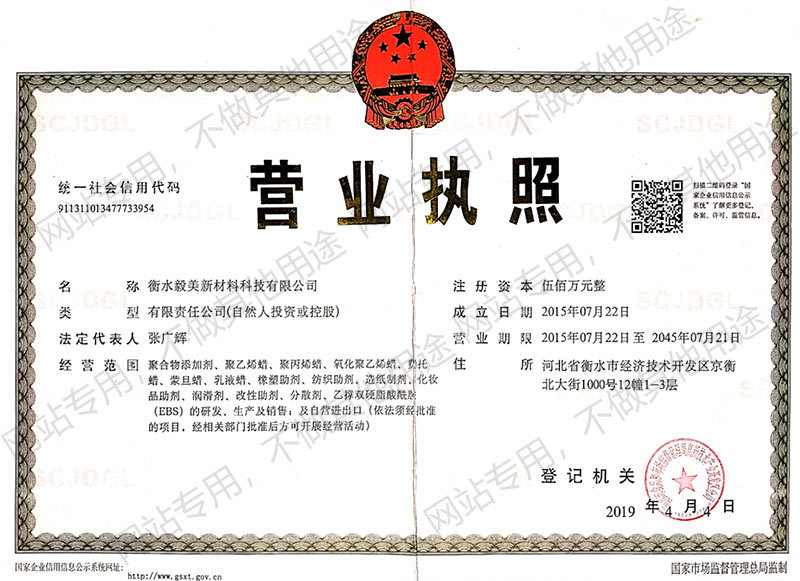
About UsHengshui yi mei new material technology co., ltd. was founded in 2015, is a collection of product development, production, sales and service as one of the high and new technology enterprises, yi mei company focused on deep processing of wax products, determined to become china's professional wax products supplier

-
ProductsThe company mainly produces and sells: polyethylene wax, oxidized polyethylene wax, synthetic Fischer-Tropsch wax, oxidized Fischer-Tropsch wax, maleic anhydride grafted wax, polypropylene wax, micro-powder wax, high-end composite wax and other eight series of dozens of models of high quality products.
-
NewsAt the beginning of its establishment, Yimei Company invested in the establishment of the "Polymer Additive R & D Center", insisting on scientific and technological innovation as the life force of enterprise development. Concentrate funds, technology, and talents in the company's scientific and technological innovation activities, focus on scientific research, public relations and technological breakthroughs of new products, new technologies, and new processes, and resolutely master core technologies.
-
SupportAt the beginning of its establishment, Yimei Company invested in the establishment of the "Polymer Additive R & D Center", insisting on scientific and technological innovation as the life force of enterprise development. Concentrate funds, technology, and talents in the company's scientific and technological innovation activities, focus on scientific research, public relations and technological breakthroughs of new products, new technologies, and new processes, and resolutely master core technologies.
-
RecruitmentOur company always adheres to the talent concept of "people-oriented", actively creates an atmosphere of respect, understanding, integrity and friendship, respects people's knowledge and talents, selects and develops mechanisms, and provides a growth platform for talents. make talents become a strong support for the sustainable development of enterprises, and realize the common growth and development of enterprises and talents.


The Power of Innovation: Unleashing the Potential of PVC Processing Aids Technology
Release time:
2024-11-10
The Power of Innovation: Unleashing the Potential of PVC Processing Aids Technology Table of Contents Introduction to PVC Processing Aids What Are PVC Processing Aids? Importance of PVC Processing Aids in the Industry Recent Advancements in PVC Processing Aids Technology Applications of PVC Processing Aids Sustainability and Environmental Impact of PVC Processing Aids
The Power of Innovation: Unleashing the Potential of PVC Processing Aids Technology
Table of Contents
- Introduction to PVC Processing Aids
- What Are PVC Processing Aids?
- Importance of PVC Processing Aids in the Industry
- Recent Advancements in PVC Processing Aids Technology
- Applications of PVC Processing Aids
- Sustainability and Environmental Impact of PVC Processing Aids
- Future Trends in PVC Processing Aids Technology
- Challenges and Solutions in PVC Processing Aids Development
- Conclusion
- Frequently Asked Questions
Introduction to PVC Processing Aids
Polyvinyl chloride (PVC) is one of the most versatile and widely used synthetic plastics in the world. Its applications range from construction materials to electrical insulation. However, the production of PVC can be complex, often requiring various additives to enhance its performance. This is where **PVC processing aids** come into play. These specialized additives improve the processing characteristics of PVC, making the production process more efficient and the end products more durable. In this article, we will explore the latest innovations in PVC processing aids technology, their applications, and their impact on sustainability in the chemical industry.
What Are PVC Processing Aids?
PVC processing aids are additives used during the manufacturing of PVC products to enhance processing performance. They improve the flow properties of the material, reduce melt viscosity, and enhance the overall quality of the final product. Typically, these aids can be categorized into several types, including:
- **Internal lubricants:** Reduce friction between the PVC and machinery during processing.
- **External lubricants:** Help in the smooth release of the final product from molds.
- **Impact modifiers:** Enhance the toughness and impact resistance of the final PVC product.
The integration of these aids into the PVC formulation is critical for optimizing production efficiency and achieving the desired product characteristics.
Importance of PVC Processing Aids in the Industry
The importance of PVC processing aids cannot be overstated. They play a vital role in:
- **Enhancing Processing Efficiency:** By improving the flow and reducing viscosity, processing aids allow for faster production rates and reduced energy consumption.
- **Improving Product Quality:** The right processing aids can significantly enhance the mechanical and aesthetic properties of PVC products.
- **Reducing Scrap and Waste:** Enhanced processing characteristics lead to less material wastage, promoting a more sustainable manufacturing process.
These factors ultimately contribute to lower production costs and higher profitability, making PVC processing aids indispensable in the industry.
Recent Advancements in PVC Processing Aids Technology
Recent advancements in PVC processing aids technology have focused on improving performance while maintaining environmental responsibility. Notable developments include:
- **Biodegradable Processing Aids:** The introduction of environmentally friendly additives that decompose naturally is transforming the industry. These aids not only enhance performance but also reduce the ecological footprint of PVC production.
- **Nanotechnology Integration:** The use of nanomaterials as processing aids is on the rise. These materials improve mechanical properties and processing efficiency while minimizing the quantity needed.
- **Smart Additives:** The development of responsive additives that can adjust to processing conditions in real-time is paving the way for more adaptable manufacturing processes.
These innovations are setting new standards for efficiency and sustainability in PVC production.
Applications of PVC Processing Aids
PVC processing aids are utilized across a wide range of applications, including:
Construction Materials
In the construction industry, PVC is often used for pipes, roofing, and siding. Processing aids improve the durability and impact resistance of these materials, ensuring they can withstand harsh environmental conditions.
Electrical Insulation
In electrical applications, PVC's insulating properties are enhanced by processing aids, making it ideal for cables and wires that require high performance under various conditions.
Automotive Components
PVC is increasingly being used in automotive applications, where processing aids contribute to lightweighting and improved energy efficiency, crucial for modern vehicles.
Consumer Products
From toys to household items, PVC processing aids enhance the aesthetic appeal and functionality of consumer products, ensuring they are safe and durable.
Sustainability and Environmental Impact of PVC Processing Aids
As the world shifts toward more sustainable practices, the chemical industry is not left behind. Recent advancements in PVC processing aids have emphasized reducing environmental impact. Key factors include:
- **Reduced Carbon Footprint:** Innovative processing aids are designed to lower energy consumption during production.
- **Biodegradability:** The development of biodegradable processing aids minimizes the long-term environmental effects of PVC products.
- **Recyclability:** New formulations of PVC processing aids promote easier recycling, facilitating a circular economy approach.
These sustainability initiatives reflect the industry's commitment to reducing its ecological footprint while maintaining product performance.
Future Trends in PVC Processing Aids Technology
The future of PVC processing aids technology looks promising, driven by innovation and sustainability. Expected trends include:
- **Increased Use of Alternative Raw Materials:** As the demand for eco-friendly products grows, manufacturers are likely to explore alternative, less harmful materials for processing aids.
- **Enhanced Regulatory Compliance:** Stricter regulations on chemical additives will push the industry toward more transparent and safer formulations.
- **Integration with IoT:** The application of Internet of Things (IoT) technology in monitoring and controlling processing can optimize the use of additives, leading to enhanced performance and reduced waste.
These trends indicate a shift towards more advanced, efficient, and sustainable PVC processing technologies.
Challenges and Solutions in PVC Processing Aids Development
Despite the advancements, challenges remain in the development and implementation of PVC processing aids. Key challenges include:
- **Compatibility Issues:** New processing aids must be compatible with existing PVC formulations, which can be challenging.
- **Cost Implications:** Innovative solutions often come with increased costs, which could deter manufacturers from adopting new technologies.
- **Regulatory Hurdles:** Meeting the evolving regulatory standards can be a complex and time-consuming process.
Solutions to these challenges involve collaborative efforts between manufacturers, researchers, and regulatory bodies to ensure the development of effective, safe, and compliant processing aids.
Conclusion
The advancements in PVC processing aids technology represent a significant leap forward for the chemical industry. By improving processing efficiency, enhancing product quality, and promoting sustainability, these innovations play a crucial role in the future of PVC production. As the industry continues to evolve, staying abreast of these developments will be essential for manufacturers looking to maintain a competitive edge in the market.
Frequently Asked Questions
1. What are the main functions of PVC processing aids?
PVC processing aids primarily enhance the flow properties, reduce viscosity, and improve the overall quality of PVC products during manufacturing.
2. How do recent advancements in PVC processing aids contribute to sustainability?
Recent advancements focus on developing biodegradable and recyclable processing aids, reducing energy consumption, and minimizing the environmental impact of PVC production.
3. What industries utilize PVC processing aids?
PVC processing aids are widely used in construction, automotive, electrical insulation, and consumer products, among others.
4. Are there any health concerns associated with PVC processing aids?
While many processing aids are safe, it's essential to comply with regulations and guidelines to ensure their safe use in PVC products.
5. What future innovations can we expect in PVC processing aids technology?
Future innovations may include the integration of IoT for optimization, increased use of alternative raw materials, and enhanced regulatory compliance efforts.
Key words:
PVC Processing Aids
recommend reading