Yimei New Material-Professional Wax Product Solution Supplier


-
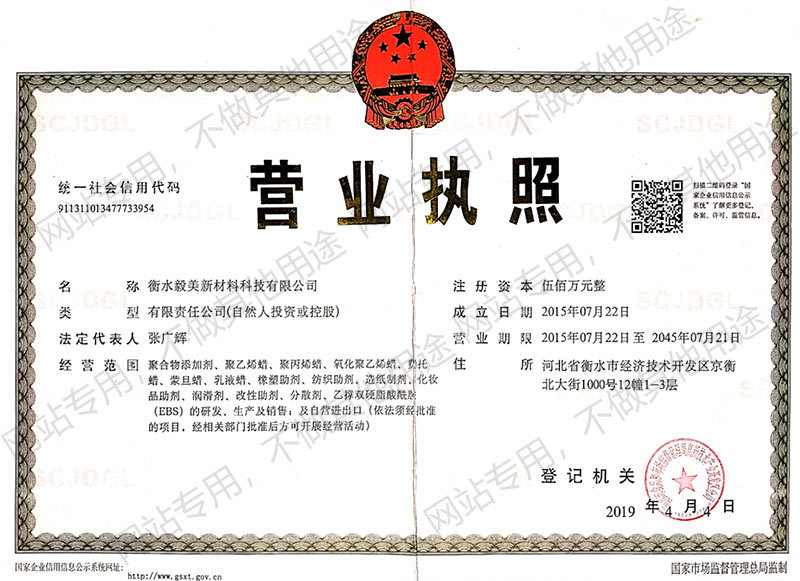
About UsHengshui yi mei new material technology co., ltd. was founded in 2015, is a collection of product development, production, sales and service as one of the high and new technology enterprises, yi mei company focused on deep processing of wax products, determined to become china's professional wax products supplier

-
ProductsThe company mainly produces and sells: polyethylene wax, oxidized polyethylene wax, synthetic Fischer-Tropsch wax, oxidized Fischer-Tropsch wax, maleic anhydride grafted wax, polypropylene wax, micro-powder wax, high-end composite wax and other eight series of dozens of models of high quality products.
-
NewsAt the beginning of its establishment, Yimei Company invested in the establishment of the "Polymer Additive R & D Center", insisting on scientific and technological innovation as the life force of enterprise development. Concentrate funds, technology, and talents in the company's scientific and technological innovation activities, focus on scientific research, public relations and technological breakthroughs of new products, new technologies, and new processes, and resolutely master core technologies.
-
SupportAt the beginning of its establishment, Yimei Company invested in the establishment of the "Polymer Additive R & D Center", insisting on scientific and technological innovation as the life force of enterprise development. Concentrate funds, technology, and talents in the company's scientific and technological innovation activities, focus on scientific research, public relations and technological breakthroughs of new products, new technologies, and new processes, and resolutely master core technologies.
-
RecruitmentOur company always adheres to the talent concept of "people-oriented", actively creates an atmosphere of respect, understanding, integrity and friendship, respects people's knowledge and talents, selects and develops mechanisms, and provides a growth platform for talents. make talents become a strong support for the sustainable development of enterprises, and realize the common growth and development of enterprises and talents.


How to Enhance Your Products with Micro Powder Wax Innovation
Release time:
2024-10-07
How to Enhance Your Products with Micro Powder Wax Innovation Introduction to Micro Powder Wax Micro powder wax is a cutting-edge innovation in the chemical industry, providing a unique solution to enhance product performance across various applications. By incorporating micro powder wax into your formulation, you can significantly improve the texture, feel, and durability of your products. In t
How to Enhance Your Products with Micro Powder Wax Innovation
Introduction to Micro Powder Wax
Micro powder wax is a cutting-edge innovation in the chemical industry, providing a unique solution to enhance product performance across various applications. By incorporating micro powder wax into your formulation, you can significantly improve the texture, feel, and durability of your products. In this article, we will explore the characteristics, benefits, and applications of micro powder wax, along with practical tips on how to seamlessly integrate it into your existing products.
Understanding Micro Powder Wax: Composition and Types
Micro powder wax is typically derived from natural or synthetic sources, with various formulations tailored to specific applications. The primary types of micro powder wax include:
1. Natural Micro Powder Waxes
These are derived from renewable sources and often consist of plant-based waxes. They are biodegradable and environmentally friendly, making them ideal for eco-conscious formulations.
2. Synthetic Micro Powder Waxes
Synthetic variants offer enhanced performance characteristics, such as increased water resistance and durability. They are commonly utilized in industrial applications where robust performance is crucial.
3. Hybrid Micro Powder Waxes
Combining both natural and synthetic components, hybrid micro powder waxes offer a balanced solution, blending sustainability with high performance.
The Benefits of Using Micro Powder Wax in Your Products
Incorporating micro powder wax into your formulations comes with a multitude of advantages:
1. Enhanced Aesthetics
Micro powder wax provides a smooth, velvety finish to products, enhancing their visual appeal. This is particularly important in cosmetics and personal care products, where texture plays a critical role in consumer satisfaction.
2. Improved Performance
Micro powder wax contributes to the overall performance of products by increasing wear resistance and reducing friction. This makes it ideal for use in coatings, adhesives, and sealants.
3. Increased Stability
The inclusion of micro powder wax can enhance the stability of your products, preventing separation and improving shelf life. This is especially beneficial for formulations prone to degradation over time.
4. Eco-Friendly Options
With a growing emphasis on sustainability, natural micro powder waxes allow companies to reduce their environmental impact. This can be a significant selling point for consumers looking for green alternatives.
5. Versatile Applications
Micro powder wax can be utilized across various industries, including cosmetics, automotive, coatings, and plastics. Its versatility makes it a valuable addition to any product line.
Applications of Micro Powder Wax Across Industries
Micro powder wax finds its application in numerous sectors, enhancing product quality and performance.
1. Cosmetics and Personal Care
In the beauty industry, micro powder wax is used in lipsticks, foundations, and lotions to improve texture and provide a luxurious feel. It helps create products that glide smoothly and adhere well to the skin.
2. Coatings and Inks
In industrial applications, micro powder wax is employed in coatings and inks to enhance scratch resistance and improve flow properties. This results in smoother finishes and longer-lasting products.
3. Adhesives and Sealants
In the realm of adhesives, micro powder wax can enhance bonding strength and reduce tackiness. This leads to improved performance in applications requiring strong adhesion.
4. Plastics and Composites
In plastic formulations, micro powder wax serves as a processing aid, improving the flow characteristics during manufacturing. It also enhances surface properties, making the final products more durable.
5. Automotive Applications
Micro powder wax is increasingly used in automotive products, such as paints and protective coatings, to enhance scratch resistance and improve visual appeal.
How to Integrate Micro Powder Wax into Your Products
Integrating micro powder wax into your formulations requires a strategic approach to maximize its benefits. Consider the following steps:
1. Selection of the Right Type
Choose the appropriate type of micro powder wax based on your specific application needs. Evaluate factors such as desired performance characteristics, environmental impact, and compatibility with other ingredients.
2. Determining the Optimal Concentration
Conduct trials to determine the ideal concentration of micro powder wax in your formulations. Too little may not yield the desired benefits, while too much can affect the product's overall performance.
3. Incorporation Techniques
Utilize effective incorporation techniques to ensure uniform distribution of micro powder wax throughout your formulation. Methods such as pre-blending or using high-shear mixing can enhance performance.
4. Stability Testing
Once integrated, conduct stability testing to ensure that the product maintains its desired characteristics over time. This step is crucial for quality assurance.
5. Consumer Feedback
After launching your product, gather consumer feedback to assess the impact of micro powder wax on user experience. This information can guide future formulations and improvements.
Challenges in Using Micro Powder Wax and How to Overcome Them
While the benefits of micro powder wax are significant, some challenges can arise during its integration:
1. Compatibility Issues
Micro powder wax may not be compatible with all ingredients. Conduct compatibility tests before full-scale production to identify any potential issues.
2. Processing Temperature
Some micro powder waxes may require specific processing temperatures to achieve optimal performance. Ensure that your manufacturing process accommodates these requirements.
3. Cost Considerations
High-quality micro powder wax can be more expensive than traditional waxes. Evaluate the long-term benefits against initial costs to determine if the investment is worthwhile.
Frequently Asked Questions (FAQs)
1. What is micro powder wax made of?
Micro powder wax can be derived from natural sources, such as plants, or synthesized chemically. The choice depends on the intended application and desired performance characteristics.
2. How does micro powder wax improve product texture?
Micro powder wax enhances product texture by providing a smooth, velvety feel, improving the overall sensory experience for users.
3. Can micro powder wax be used in food products?
While some micro powder waxes are food-grade, it is crucial to confirm their safety and compliance with food regulations before use in edible products.
4. Is micro powder wax eco-friendly?
Natural micro powder waxes are biodegradable and environmentally friendly, making them suitable for sustainable product formulations.
5. How can I test the performance of micro powder wax in my products?
Performance can be assessed through various tests, including stability testing, sensory evaluations, and consumer feedback after product launch.
Conclusion
Incorporating micro powder wax into your product formulations offers a pathway to enhance aesthetics, performance, and overall user satisfaction. By understanding the various types of micro powder wax, their applications, and the best practices for integration, you can ensure that your products stand out in the competitive landscape of the chemical industry. Investing in this innovative ingredient is not just about improving your product; it's about setting a new standard for quality and excellence. Embrace micro powder wax innovation today to elevate your offerings and meet the evolving demands of consumers.
Key words:
micro powder wax
recommend reading