Yimei New Material-Professional Wax Product Solution Supplier


-
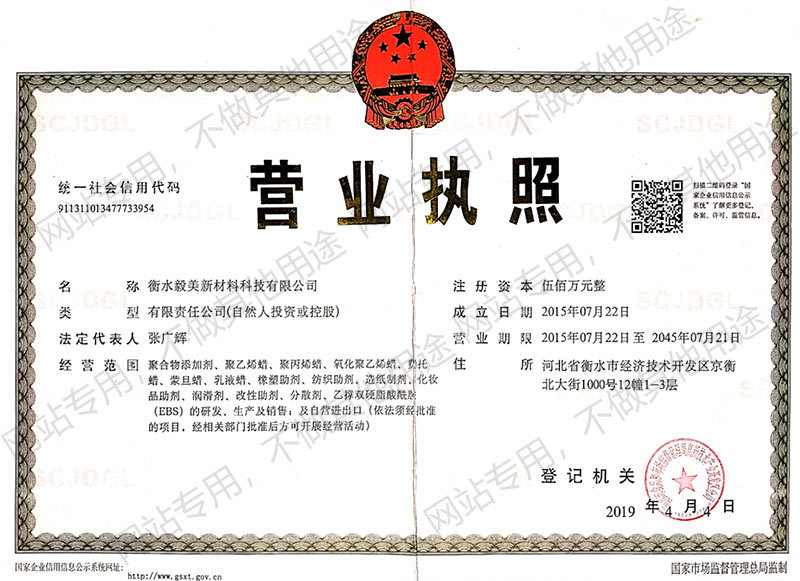
About UsHengshui yi mei new material technology co., ltd. was founded in 2015, is a collection of product development, production, sales and service as one of the high and new technology enterprises, yi mei company focused on deep processing of wax products, determined to become china's professional wax products supplier

-
ProductsThe company mainly produces and sells: polyethylene wax, oxidized polyethylene wax, synthetic Fischer-Tropsch wax, oxidized Fischer-Tropsch wax, maleic anhydride grafted wax, polypropylene wax, micro-powder wax, high-end composite wax and other eight series of dozens of models of high quality products.
-
NewsAt the beginning of its establishment, Yimei Company invested in the establishment of the "Polymer Additive R & D Center", insisting on scientific and technological innovation as the life force of enterprise development. Concentrate funds, technology, and talents in the company's scientific and technological innovation activities, focus on scientific research, public relations and technological breakthroughs of new products, new technologies, and new processes, and resolutely master core technologies.
-
SupportAt the beginning of its establishment, Yimei Company invested in the establishment of the "Polymer Additive R & D Center", insisting on scientific and technological innovation as the life force of enterprise development. Concentrate funds, technology, and talents in the company's scientific and technological innovation activities, focus on scientific research, public relations and technological breakthroughs of new products, new technologies, and new processes, and resolutely master core technologies.
-
RecruitmentOur company always adheres to the talent concept of "people-oriented", actively creates an atmosphere of respect, understanding, integrity and friendship, respects people's knowledge and talents, selects and develops mechanisms, and provides a growth platform for talents. make talents become a strong support for the sustainable development of enterprises, and realize the common growth and development of enterprises and talents.


Exploring Innovative Uses of PP Wax in the Textile Industry
Release time:
2024-10-05
Innovative Uses of PP Wax in the Textile Industry Table of Contents 1. Introduction to PP Wax and Its Properties 2. PP Wax: A Game Changer for Textile Production 3. Enhancing Fabric Properties with PP Wax 3.1 Improving Water Resistance in Textiles 3.2 Enhancing Durability and Strength 4. Eco-Friendly Solutions: PP Wax in Sustainable Textiles 4.1 Reducing Environmental Impact 4.2 Role in Recycling
Innovative Uses of PP Wax in the Textile Industry
Table of Contents
1. Introduction to PP Wax and Its Properties
2. PP Wax: A Game Changer for Textile Production
3. Enhancing Fabric Properties with PP Wax
3.1 Improving Water Resistance in Textiles
3.2 Enhancing Durability and Strength
4. Eco-Friendly Solutions: PP Wax in Sustainable Textiles
4.1 Reducing Environmental Impact
4.2 Role in Recycling Processes
5. Applications of PP Wax in Various Textile Segments
5.1 Use in Coatings and Finishes
5.2 Contributions in Non-Woven Fabrics
6. Future Trends: The Evolution of PP Wax in Textiles
7. Summary of Key Benefits and Advantages
8. Frequently Asked Questions (FAQs)
9. Conclusion
1. Introduction to PP Wax and Its Properties
Polypropylene (PP) wax is a high-performance polymer recognized for its versatility and unique properties. This compound is characterized by its low viscosity, high melting point, and exceptional chemical stability. These properties make PP wax an ideal additive in various industries, particularly in textiles. As the textile industry evolves, the incorporation of PP wax becomes increasingly innovative, leading to enhanced performance and sustainability.
2. PP Wax: A Game Changer for Textile Production
The textile production process demands materials that can improve efficiency and product quality. PP wax serves as a vital additive in the production of textiles, working to optimize various stages from fiber processing to final product finishing. By integrating PP wax into textile formulations, manufacturers can significantly reduce production costs while enhancing the quality and performance of their fabrics.
3. Enhancing Fabric Properties with PP Wax
PP wax plays a crucial role in improving the physical and chemical properties of textiles. Here are some significant enhancements:
3.1 Improving Water Resistance in Textiles
One of the notable benefits of using PP wax is its ability to enhance water resistance in fabrics. By adding PP wax to the textile coating, manufacturers can create a hydrophobic barrier that repels water, keeping fabrics dry and comfortable. This application is particularly valuable in outdoor and performance wear, where moisture management is critical for user satisfaction.
3.2 Enhancing Durability and Strength
In addition to water resistance, PP wax contributes to the overall durability of textiles. By improving the adhesion of fibers and preventing fraying, PP wax enhances the longevity of fabrics. Its incorporation in textile formulations leads to less wear and tear, making garments and home textiles more resilient and cost-effective for consumers.
4. Eco-Friendly Solutions: PP Wax in Sustainable Textiles
As sustainability becomes a paramount concern in the textile industry, the adoption of eco-friendly materials like PP wax is vital.
4.1 Reducing Environmental Impact
PP wax is produced from polypropylene, a byproduct of fossil fuels. However, its efficient use in textiles can help minimize waste and energy consumption during production. As manufacturers focus on reducing their carbon footprint, the use of PP wax can play an essential role in creating more sustainable textile products.
4.2 Role in Recycling Processes
The recycling potential of PP wax is another advantage. Textiles that incorporate PP wax can often be reprocessed more efficiently, allowing for easier recycling of fabrics at the end of their life cycle. This contributes to a circular economy in textiles, reducing landfill waste and promoting sustainable practices.
5. Applications of PP Wax in Various Textile Segments
PP wax finds applications across a diverse range of textile categories.
5.1 Use in Coatings and Finishes
In the coatings and finishes segment, PP wax is widely used to impart additional properties to fabrics. It enhances the surface finish, providing a smooth and glossy appearance while improving resistance to dirt and stains. This is particularly useful in upholstery and interior textiles, where aesthetics and functionality are equally important.
5.2 Contributions in Non-Woven Fabrics
Non-woven fabrics benefit significantly from the inclusion of PP wax. It aids in the manufacturing process by improving the bonding of fibers, enhancing strength and durability. This application is prevalent in medical textiles, filters, and hygiene products, where performance and reliability are critical.
6. Future Trends: The Evolution of PP Wax in Textiles
As technology continues to advance, the future of PP wax in the textile industry appears promising. Innovations in polymer chemistry may lead to the development of new, bio-based PP wax alternatives, expanding the scope for sustainable practices. The integration of PP wax with smart textiles and electronic fabrics is also an exciting frontier that could redefine functionality in textiles.
7. Summary of Key Benefits and Advantages
The use of PP wax in the textile industry is multifaceted, providing numerous benefits, including:
- **Enhanced water resistance** for improved comfort in various applications.
- **Increased durability and strength** for longer-lasting textiles.
- **Sustainable production practices** that reduce environmental impact.
- **Versatile applications** across various textile segments, from coatings to non-woven fabrics.
- **Potential for future innovations** in eco-friendly and smart textile solutions.
8. Frequently Asked Questions (FAQs)
Q1: What is PP wax, and how is it made?
A1: PP wax is a polymer derived from polypropylene, created through the polymerization of propylene gas. It is characterized by a low molecular weight and is used as an additive in various applications.
Q2: How does PP wax enhance the properties of textiles?
A2: PP wax improves water resistance, durability, and surface finish in textiles, making them more functional and appealing to consumers.
Q3: Is PP wax environmentally friendly?
A3: While PP wax is derived from fossil fuels, its efficient use in textiles can lead to reduced environmental impact, especially when considering recycling potentials.
Q4: In what types of textiles is PP wax commonly used?
A4: PP wax is used in various textile applications, including coatings, non-woven fabrics, and finishes, catering to both functional and aesthetic needs.
Q5: What are the future trends for PP wax in the textile industry?
A5: Future trends include the development of bio-based PP wax alternatives and innovations in smart textile applications that could enhance functionality.
9. Conclusion
The innovative uses of PP wax in the textile industry highlight its potential to transform fabric performance while promoting sustainable practices. By enhancing water resistance, durability, and facilitating recycling, PP wax is not just an additive; it represents a shift towards smarter and more responsible textile production. As we look to the future, the integration of PP wax into textiles will continue to evolve, paving the way for exciting developments that align with both consumer demands and environmental stewardship.
Key words:
PP wax
recommend reading