Yimei New Material-Professional Wax Product Solution Supplier


-
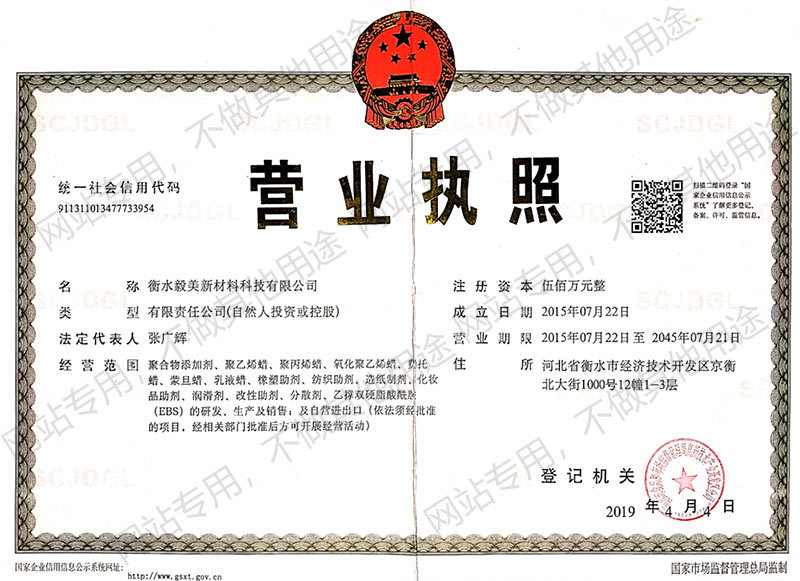
About UsHengshui yi mei new material technology co., ltd. was founded in 2015, is a collection of product development, production, sales and service as one of the high and new technology enterprises, yi mei company focused on deep processing of wax products, determined to become china's professional wax products supplier

-
ProductsThe company mainly produces and sells: polyethylene wax, oxidized polyethylene wax, synthetic Fischer-Tropsch wax, oxidized Fischer-Tropsch wax, maleic anhydride grafted wax, polypropylene wax, micro-powder wax, high-end composite wax and other eight series of dozens of models of high quality products.
-
NewsAt the beginning of its establishment, Yimei Company invested in the establishment of the "Polymer Additive R & D Center", insisting on scientific and technological innovation as the life force of enterprise development. Concentrate funds, technology, and talents in the company's scientific and technological innovation activities, focus on scientific research, public relations and technological breakthroughs of new products, new technologies, and new processes, and resolutely master core technologies.
-
SupportAt the beginning of its establishment, Yimei Company invested in the establishment of the "Polymer Additive R & D Center", insisting on scientific and technological innovation as the life force of enterprise development. Concentrate funds, technology, and talents in the company's scientific and technological innovation activities, focus on scientific research, public relations and technological breakthroughs of new products, new technologies, and new processes, and resolutely master core technologies.
-
RecruitmentOur company always adheres to the talent concept of "people-oriented", actively creates an atmosphere of respect, understanding, integrity and friendship, respects people's knowledge and talents, selects and develops mechanisms, and provides a growth platform for talents. make talents become a strong support for the sustainable development of enterprises, and realize the common growth and development of enterprises and talents.


Polypropylene Wax: A Key Ingredient for Achieving High-Quality Chemical Formulations
Release time:
2024-09-11
Polypropylene Wax: A Key Ingredient for Achieving High-Quality Chemical Formulations Table of Contents 1. Introduction to Polypropylene Wax 2. What is Polypropylene Wax? 3. Properties and Characteristics of Polypropylene Wax 4. Applications of Polypropylene Wax in Chemical Formulations 5. Benefits of Using Polypropylene Wax in Formulations 6. Polypropylene Wax vs Other Wax
Polypropylene Wax: A Key Ingredient for Achieving High-Quality Chemical Formulations
Table of Contents
- 1. Introduction to Polypropylene Wax
- 2. What is Polypropylene Wax?
- 3. Properties and Characteristics of Polypropylene Wax
- 4. Applications of Polypropylene Wax in Chemical Formulations
- 5. Benefits of Using Polypropylene Wax in Formulations
- 6. Polypropylene Wax vs Other Waxes
- 7. Sustainability and Environmental Impact of Polypropylene Wax
- 8. Frequently Asked Questions
- 9. Conclusion
1. Introduction to Polypropylene Wax
Polypropylene wax is garnering increasing attention in the chemical industry for its versatile applications and superior performance characteristics. As a synthetic wax derived from polypropylene, it serves as a crucial ingredient in a myriad of formulations, enhancing product quality and performance. This article explores the significance of polypropylene wax, shedding light on its properties, applications, and the myriad benefits it brings to chemical formulations.
2. What is Polypropylene Wax?
Polypropylene wax is a type of synthetic wax produced through the polymerization of propylene monomers. It is characterized by its low molecular weight, excellent thermal stability, and a unique structure that contributes to its waxy appearance. Typically, it is available in various forms, including powders and solid blocks, making it adaptable for different applications.
The processing of polypropylene wax involves controlled polymerization techniques, resulting in a product that boasts consistency and reliability. Its chemical structure allows for a high degree of compatibility with various materials, making it a favorite in the formulation of paints, coatings, adhesives, and plastics.
3. Properties and Characteristics of Polypropylene Wax
Polypropylene wax exhibits several key properties that make it a valuable ingredient in chemical formulations:
3.1 Physical Properties
- **Appearance**: Typically white or off-white solid.
- **Melting Point**: Ranges from 130°C to 170°C, depending on the specific formulation.
- **Viscosity**: Low viscosity when melted, allowing for easy incorporation into formulations.
3.2 Chemical Properties
- **Chemical Resistance**: Exhibits robust resistance to acids, bases, and solvents.
- **Thermal Stability**: Maintains stability across a broad temperature range, preventing degradation during processing.
- **Compatibility**: Highly compatible with various resins and polymers, enhancing the overall quality of the final product.
3.3 Performance Characteristics
- **Gloss Enhancement**: Improves the gloss and sheen of coatings and paints.
- **Anti-Skid Properties**: Provides texture and anti-skid qualities in various applications, including flooring and packaging.
4. Applications of Polypropylene Wax in Chemical Formulations
Polypropylene wax serves a multitude of applications across various industries. Here are some notable uses:
4.1 Coatings and Paints
In the coatings industry, polypropylene wax is utilized to enhance the gloss, durability, and scratch resistance of paints. It acts as a matting agent and provides a smooth finish, which is essential for both aesthetic and functional properties.
4.2 Adhesives and Sealants
The incorporation of polypropylene wax in adhesives improves their performance by enhancing adhesion, flexibility, and thermal stability. It is particularly effective in hot-melt adhesives, providing excellent bonding strength.
4.3 Plastics and Polymers
Polypropylene wax is used as a lubricant and processing aid in the manufacture of plastic products. It reduces friction during processing, enhancing efficiency and productivity.
4.4 Cosmetic and Personal Care Products
In the cosmetic industry, polypropylene wax is utilized for its emollient properties, providing a pleasant texture and enhancing the formulation's stability. It is also used in lipsticks and creams to improve application and longevity.
5. Benefits of Using Polypropylene Wax in Formulations
Utilizing polypropylene wax in chemical formulations offers numerous benefits that can significantly enhance product performance.
5.1 Improved Product Stability
Polypropylene wax contributes to the overall stability of formulations, ensuring that they maintain their desired properties over time. This is particularly crucial in industries where product shelf life is essential.
5.2 Enhanced Performance Characteristics
By incorporating polypropylene wax, manufacturers can achieve superior gloss, texture, and adhesion. This leads to higher quality end products, which can drive customer satisfaction and loyalty.
5.3 Cost-Effectiveness
The versatility of polypropylene wax allows for its use in various applications, reducing the need for multiple additives. This can lead to cost savings in formulation development and production.
5.4 Eco-Friendly Options
With increasing demand for sustainable products, polypropylene wax can be tailored to meet eco-friendly standards, appealing to environmentally conscious consumers.
6. Polypropylene Wax vs Other Waxes
When comparing polypropylene wax to other types of waxes, such as paraffin or microcrystalline wax, several differences emerge:
6.1 Performance
Polypropylene wax generally offers superior performance in terms of thermal stability and chemical resistance. It performs better in high-temperature applications, making it a preferred choice for many formulations.
6.2 Compatibility
The compatibility of polypropylene wax with various resins and polymers is typically higher than that of other waxes, allowing for more versatile applications.
6.3 Environmental Impact
Unlike some traditional waxes that may be derived from petroleum, polypropylene wax can be produced from renewable resources, making it a more sustainable option.
7. Sustainability and Environmental Impact of Polypropylene Wax
With growing awareness of environmental issues, the production and usage of polypropylene wax have garnered scrutiny. Fortunately, advancements in production techniques have led to more sustainable practices. Many manufacturers are now focusing on creating polypropylene wax from renewable resources, significantly reducing their carbon footprint.
Moreover, polypropylene wax is recyclable, minimizing its environmental impact when disposed of. By selecting eco-friendly formulations that incorporate polypropylene wax, industries can contribute to sustainability efforts while still achieving high-quality results.
8. Frequently Asked Questions
8.1 What industries use polypropylene wax?
Polypropylene wax is widely used in coatings, adhesives, plastics, cosmetics, and personal care products.
8.2 Is polypropylene wax safe for cosmetic use?
Yes, polypropylene wax is considered safe for cosmetic applications and is commonly used in various personal care products.
8.3 How does polypropylene wax improve adhesion in adhesives?
Polypropylene wax enhances the flexibility and bonding strength of adhesives, leading to superior performance in various applications.
8.4 Can polypropylene wax be used in food packaging?
Yes, certain grades of polypropylene wax are approved for use in food contact applications, ensuring safety and compliance.
8.5 What are the alternatives to polypropylene wax?
Alternatives include paraffin wax, microcrystalline wax, and natural waxes such as carnauba wax. However, each has its unique properties and applications.
9. Conclusion
Polypropylene wax is a versatile and essential ingredient in the production of high-quality chemical formulations. Its unique properties, coupled with a wide range of applications, make it an invaluable asset across various industries. By understanding its benefits and how it compares to other waxes, manufacturers can leverage polypropylene wax to enhance their products and meet consumer demands effectively. As sustainability continues to be a priority, incorporating eco-friendly polypropylene wax options will not only benefit product performance but also align with responsible manufacturing practices.
Key words:
Polypropylene wax
Previous article
recommend reading