Yimei New Material-Professional Wax Product Solution Supplier


-
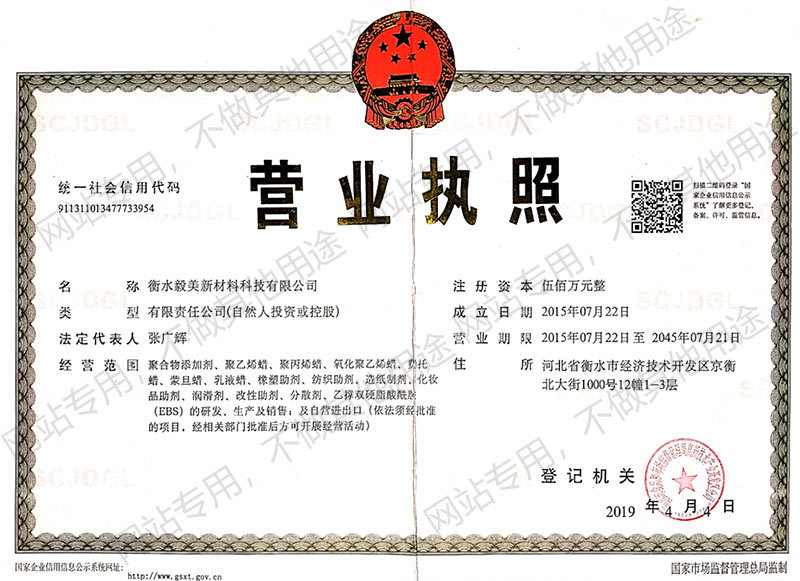
About UsHengshui yi mei new material technology co., ltd. was founded in 2015, is a collection of product development, production, sales and service as one of the high and new technology enterprises, yi mei company focused on deep processing of wax products, determined to become china's professional wax products supplier

-
ProductsThe company mainly produces and sells: polyethylene wax, oxidized polyethylene wax, synthetic Fischer-Tropsch wax, oxidized Fischer-Tropsch wax, maleic anhydride grafted wax, polypropylene wax, micro-powder wax, high-end composite wax and other eight series of dozens of models of high quality products.
-
NewsAt the beginning of its establishment, Yimei Company invested in the establishment of the "Polymer Additive R & D Center", insisting on scientific and technological innovation as the life force of enterprise development. Concentrate funds, technology, and talents in the company's scientific and technological innovation activities, focus on scientific research, public relations and technological breakthroughs of new products, new technologies, and new processes, and resolutely master core technologies.
-
SupportAt the beginning of its establishment, Yimei Company invested in the establishment of the "Polymer Additive R & D Center", insisting on scientific and technological innovation as the life force of enterprise development. Concentrate funds, technology, and talents in the company's scientific and technological innovation activities, focus on scientific research, public relations and technological breakthroughs of new products, new technologies, and new processes, and resolutely master core technologies.
-
RecruitmentOur company always adheres to the talent concept of "people-oriented", actively creates an atmosphere of respect, understanding, integrity and friendship, respects people's knowledge and talents, selects and develops mechanisms, and provides a growth platform for talents. make talents become a strong support for the sustainable development of enterprises, and realize the common growth and development of enterprises and talents.


Unlocking the Multifaceted Applications of Polypropylene Wax in Modern Chemical Industries
Release time:
2024-09-09
Exploring the Versatility of Polypropylene Wax in Various Chemical Applications Table of Contents Introduction to Polypropylene Wax Key Properties of Polypropylene Wax Diverse Applications in the Chemical Industry Coatings and Inks Plastics and Polymers Adhesives and Sealants Cosmetics and Personal Care Products Benefits of Using Polypropylene Wax Environmental Conside
Exploring the Versatility of Polypropylene Wax in Various Chemical Applications
Table of Contents
- Introduction to Polypropylene Wax
- Key Properties of Polypropylene Wax
- Diverse Applications in the Chemical Industry
- Benefits of Using Polypropylene Wax
- Environmental Considerations
- Future Trends in Polypropylene Wax Applications
- Frequently Asked Questions
- Conclusion
Introduction to Polypropylene Wax
Polypropylene wax is a synthetic wax derived from the polymerization of propylene monomers. This versatile wax is characterized by its low molecular weight, excellent thermal stability, and unique rheological properties. Over the years, it has gained prominence in various industrial applications, owing to its ability to improve the performance and quality of numerous products. Understanding the distinct characteristics and diverse applications of polypropylene wax is essential for manufacturers and formulators seeking innovative solutions in the chemical industry.
Key Properties of Polypropylene Wax
Polypropylene wax exhibits a range of properties that make it an ideal choice for various applications:
1. Excellent Thermal Stability
One of the standout features of polypropylene wax is its high thermal stability. This property allows it to maintain its integrity under high-temperature conditions, making it suitable for applications that require heat resistance.
2. Low Viscosity
With a low viscosity, polypropylene wax can easily blend with other materials, enhancing the overall consistency and performance of products. This characteristic is particularly beneficial in formulations for coatings and adhesives.
3. Good Compatibility
Polypropylene wax is compatible with a variety of resins, solvents, and additives. This compatibility allows it to be incorporated seamlessly into diverse formulations, improving efficiency and product quality.
4. Non-Toxic and Safe
As a non-toxic substance, polypropylene wax poses minimal health risks when used in various applications, particularly in cosmetics and personal care products where safety is paramount.
Diverse Applications in the Chemical Industry
The versatility of polypropylene wax lends itself to a multitude of applications across different sectors. Here, we will explore some of the most notable uses of this remarkable compound.
Coatings and Inks
Polypropylene wax is widely utilized in the coatings and inks industry due to its ability to enhance gloss and finish. It acts as a slip agent, improving the flow properties of coatings and providing a smooth surface finish. Additionally, it helps to improve the durability and scratch resistance of surface coatings, making it an essential ingredient in high-performance paints and varnishes.
Plastics and Polymers
In the plastics industry, polypropylene wax serves as a processing aid, improving the fluidity of polymer melts. It helps to reduce friction during processing, enhancing the overall efficiency of production. Furthermore, it is used as a lubricant in the extrusion and injection molding processes, providing superior surface quality to produced items.
Adhesives and Sealants
Polypropylene wax is often incorporated into adhesive formulations to enhance their performance. By improving adhesion properties and increasing flexibility, this wax ensures that adhesives bond more effectively across various substrates. Its low viscosity also aids in achieving a smooth application, making it a favored choice among formulators.
Cosmetics and Personal Care Products
In the cosmetics sector, polypropylene wax is valued for its emollient properties. It is commonly used in creams, lotions, and lip products, contributing to a pleasant texture and enhanced moisture retention. Its non-toxic nature makes it a safe option for consumers, reinforcing its popularity in personal care formulations.
Benefits of Using Polypropylene Wax
Incorporating polypropylene wax into various formulations offers numerous benefits, including:
1. Improved Product Performance
By enhancing properties such as adhesion, flow, and durability, polypropylene wax significantly boosts product performance across different applications.
2. Cost-Effectiveness
Due to its multifunctional capabilities, using polypropylene wax can lead to reduced formulation costs. It allows manufacturers to achieve desired product characteristics without the need for multiple additives.
3. Enhanced Aesthetic Appeal
In applications such as coatings and cosmetics, polypropylene wax contributes to a polished, professional finish that enhances the visual appeal of the final product.
Environmental Considerations
As industries move toward sustainability, the environmental impact of materials is under scrutiny. Polypropylene wax is considered a relatively environmentally friendly option, as it is derived from non-toxic materials and is often recyclable. However, ongoing research is essential to ensure that its production and application processes align with eco-friendly practices.
Future Trends in Polypropylene Wax Applications
The future of polypropylene wax in various chemical applications looks promising. As manufacturers continue to seek innovative solutions, we can anticipate the following trends:
1. Increased Demand in Green Chemistry
With a growing emphasis on sustainable and environmentally friendly products, the demand for polypropylene wax in green chemistry applications is likely to rise. Its compatibility with natural and bio-based materials positions it as a viable option for eco-conscious formulations.
2. Advancements in Technology
Ongoing advancements in polymerization technologies may lead to the development of new grades of polypropylene wax with tailored properties, enabling even broader applications across industries.
3. Greater Focus on Performance Enhancements
As industries evolve, there will be an increasing need for high-performance materials. Polypropylene wax's versatility positions it well to meet these demands, as formulators seek to optimize product performance in a competitive marketplace.
Frequently Asked Questions
1. What is polypropylene wax made from?
Polypropylene wax is derived from the polymerization of propylene monomers, resulting in a synthetic wax with unique properties suitable for various applications.
2. Is polypropylene wax safe for cosmetics?
Yes, polypropylene wax is classified as non-toxic and safe for use in cosmetics and personal care products, making it a popular choice among formulators.
3. How does polypropylene wax improve product performance?
It enhances properties such as adhesion, flow, and durability in formulations, significantly boosting overall product performance across different applications.
4. Can polypropylene wax be recycled?
Yes, polypropylene wax is often recyclable, which aligns with the growing emphasis on sustainability in product development.
5. What industries use polypropylene wax?
Polypropylene wax is utilized across various industries, including coatings and inks, plastics and polymers, adhesives and sealants, and cosmetics and personal care products.
Conclusion
Polypropylene wax stands out as a versatile and valuable compound within the chemical industry, offering a multitude of applications that enhance product performance. Its unique properties, along with its safety and environmental benefits, make it a preferred choice among manufacturers and formulators. As we continue to explore innovative applications and sustainable practices, polypropylene wax is poised to play a crucial role in shaping the future of diverse chemical processes. By understanding its multifaceted advantages, industry professionals can harness the full potential of polypropylene wax to meet the evolving demands of the market.
Key words:
Polypropylene wax
recommend reading