Yimei New Material-Professional Wax Product Solution Supplier


-
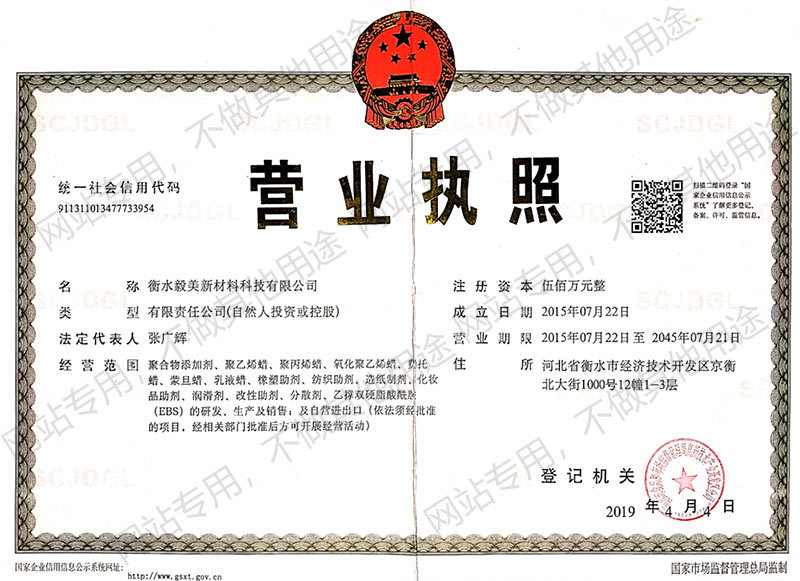
About UsHengshui yi mei new material technology co., ltd. was founded in 2015, is a collection of product development, production, sales and service as one of the high and new technology enterprises, yi mei company focused on deep processing of wax products, determined to become china's professional wax products supplier

-
ProductsThe company mainly produces and sells: polyethylene wax, oxidized polyethylene wax, synthetic Fischer-Tropsch wax, oxidized Fischer-Tropsch wax, maleic anhydride grafted wax, polypropylene wax, micro-powder wax, high-end composite wax and other eight series of dozens of models of high quality products.
-
NewsAt the beginning of its establishment, Yimei Company invested in the establishment of the "Polymer Additive R & D Center", insisting on scientific and technological innovation as the life force of enterprise development. Concentrate funds, technology, and talents in the company's scientific and technological innovation activities, focus on scientific research, public relations and technological breakthroughs of new products, new technologies, and new processes, and resolutely master core technologies.
-
SupportAt the beginning of its establishment, Yimei Company invested in the establishment of the "Polymer Additive R & D Center", insisting on scientific and technological innovation as the life force of enterprise development. Concentrate funds, technology, and talents in the company's scientific and technological innovation activities, focus on scientific research, public relations and technological breakthroughs of new products, new technologies, and new processes, and resolutely master core technologies.
-
RecruitmentOur company always adheres to the talent concept of "people-oriented", actively creates an atmosphere of respect, understanding, integrity and friendship, respects people's knowledge and talents, selects and develops mechanisms, and provides a growth platform for talents. make talents become a strong support for the sustainable development of enterprises, and realize the common growth and development of enterprises and talents.


The Benefits of High Density Polyethylene Wax in Industrial Applications
Release time:
2024-08-28
The Benefits of High Density Polyethylene Wax in Industrial Applications Introduction to High Density Polyethylene Wax High Density Polyethylene Wax (HDPE wax) has become an invaluable material in various industrial applications. This specialty wax is derived from the polymerization of ethylene, resulting in a versatile product that possesses a unique set of characteristics. Its waxy consistency
The Benefits of High Density Polyethylene Wax in Industrial Applications
Introduction to High Density Polyethylene Wax
High Density Polyethylene Wax (HDPE wax) has become an invaluable material in various industrial applications. This specialty wax is derived from the polymerization of ethylene, resulting in a versatile product that possesses a unique set of characteristics. Its waxy consistency, high melting point, and low viscosity make it ideal for an array of uses in industries ranging from cosmetics to coatings and adhesives.
Understanding the Properties of HDPE Wax
To appreciate the benefits of HDPE wax, it is essential to understand its properties.
Chemical Structure and Composition
HDPE wax consists of long-chain hydrocarbons, which contribute to its stability and resistance to chemical degradation. This structure allows HDPE wax to maintain its integrity under various conditions, making it a reliable choice for industrial applications.
Thermal and Mechanical Properties
With a melting point typically between 120°C to 130°C, HDPE wax exhibits excellent thermal stability. Its mechanical properties allow it to be molded and extruded easily, providing manufacturers with flexibility in application.
Industrial Applications of High Density Polyethylene Wax
HDPE wax is employed across numerous sectors due to its numerous benefits. Here are some of the most notable applications:
1. Coatings and Paints
In the coatings industry, HDPE wax is utilized to enhance the durability and appearance of paints and coatings. Its ability to improve scratch resistance, mar resistance, and gloss retention makes it a popular additive.
2. Adhesives and Sealants
HDPE wax is an essential component in many adhesives and sealants. It improves the bonding strength and flexibility of these products, making them more effective for a variety of applications, including construction and automotive industries.
3. Plastics and Polymers
In the production of plastic products, HDPE wax is added to improve processing characteristics, reduce friction, and enhance surface properties. This leads to better performance in end-use applications.
4. Cosmetics and Personal Care Products
The cosmetic industry benefits from HDPE wax due to its emollient properties. It acts as a thickener and stabilizer in creams, lotions, and lip balms, providing a smooth texture and enhancing the overall product quality.
5. Agriculture and Horticulture
In agricultural applications, HDPE wax is used as a coating for fertilizers and pesticides. This enhances the release rate of active ingredients, improving the efficacy of these products.
Advantages of High Density Polyethylene Wax
The unique properties of HDPE wax offer several advantages that make it a preferred choice in multiple industrial sectors.
Enhanced Durability
HDPE wax significantly increases the durability of products by providing a protective layer that resists environmental factors such as moisture and UV radiation.
Improved Texture and Aesthetics
In applications such as cosmetics, the inclusion of HDPE wax provides a luxurious feel and enhances the visual appeal of products, making them more attractive to consumers.
Cost-Effectiveness
Using HDPE wax can reduce production costs by enhancing processing efficiency and improving product quality, leading to greater customer satisfaction.
Environmental Benefits
HDPE wax is considered environmentally friendly as it is recyclable and has a lower carbon footprint compared to other waxes, making it an excellent choice for sustainable manufacturing practices.
How to Incorporate HDPE Wax in Industrial Processes
Integrating HDPE wax into your industrial processes requires an understanding of its characteristics and compatibility with other materials.
1. Determining the Right Grade
Different grades of HDPE wax are available based on specific applications. Identify the appropriate grade that meets your product requirements, considering factors such as melt flow index and viscosity.
2. Blending with Other Materials
HDPE wax can be blended with various resins, oils, and additives to enhance product performance. Careful formulation is necessary to achieve the desired properties.
3. Processing Techniques
Utilize appropriate processing techniques, such as extrusion or injection molding, to incorporate HDPE wax into your manufacturing process effectively. Monitor temperature and pressure to ensure quality.
Future Trends in the Use of HDPE Wax
As industries continue to evolve, the applications of HDPE wax are expected to grow. Emerging trends include:
1. Sustainable Manufacturing
With a growing focus on sustainability, the demand for eco-friendly materials like HDPE wax is expected to increase. Manufacturers are likely to explore ways to incorporate this wax into greener products and processes.
2. Innovations in Product Development
Research and development will drive innovations in HDPE wax formulations, leading to better performance and new applications across various sectors. This may include enhancing its compatibility with biodegradable materials.
FAQs on High Density Polyethylene Wax
1. What is HDPE wax made from?
HDPE wax is derived from the polymerization of ethylene, resulting in a long-chain hydrocarbon structure.
2. What are the main benefits of using HDPE wax in industrial applications?
Key benefits include enhanced durability, improved texture, cost-effectiveness, and environmental advantages.
3. Can HDPE wax be recycled?
Yes, HDPE wax is recyclable, making it a more sustainable choice compared to other waxes.
4. In which industries is HDPE wax commonly used?
HDPE wax is commonly used in coatings, adhesives, cosmetics, plastics, and agriculture.
5. How does HDPE wax improve the performance of paints and coatings?
HDPE wax enhances scratch resistance, mar resistance, and gloss retention in paints and coatings, leading to a more durable finish.
Conclusion
High Density Polyethylene Wax is a multifaceted material that offers significant benefits across various industrial applications. From enhancing product durability to improving texture and sustainability, HDPE wax has proven indispensable in today's competitive market. As industries continue to innovate, the role of HDPE wax is set to expand, paving the way for new possibilities and applications that can further enhance product performance. Embracing this versatile wax will undoubtedly position manufacturers to meet the demands of an evolving landscape while contributing to sustainable practices in production.
Key words:
high density polyethylene wax
recommend reading