Yimei New Material-Professional Wax Product Solution Supplier


-
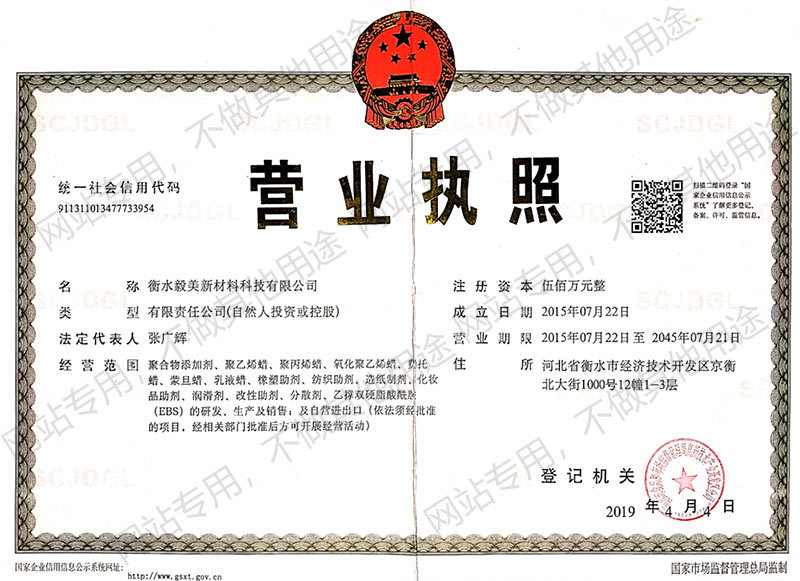
About UsHengshui yi mei new material technology co., ltd. was founded in 2015, is a collection of product development, production, sales and service as one of the high and new technology enterprises, yi mei company focused on deep processing of wax products, determined to become china's professional wax products supplier

-
ProductsThe company mainly produces and sells: polyethylene wax, oxidized polyethylene wax, synthetic Fischer-Tropsch wax, oxidized Fischer-Tropsch wax, maleic anhydride grafted wax, polypropylene wax, micro-powder wax, high-end composite wax and other eight series of dozens of models of high quality products.
-
NewsAt the beginning of its establishment, Yimei Company invested in the establishment of the "Polymer Additive R & D Center", insisting on scientific and technological innovation as the life force of enterprise development. Concentrate funds, technology, and talents in the company's scientific and technological innovation activities, focus on scientific research, public relations and technological breakthroughs of new products, new technologies, and new processes, and resolutely master core technologies.
-
SupportAt the beginning of its establishment, Yimei Company invested in the establishment of the "Polymer Additive R & D Center", insisting on scientific and technological innovation as the life force of enterprise development. Concentrate funds, technology, and talents in the company's scientific and technological innovation activities, focus on scientific research, public relations and technological breakthroughs of new products, new technologies, and new processes, and resolutely master core technologies.
-
RecruitmentOur company always adheres to the talent concept of "people-oriented", actively creates an atmosphere of respect, understanding, integrity and friendship, respects people's knowledge and talents, selects and develops mechanisms, and provides a growth platform for talents. make talents become a strong support for the sustainable development of enterprises, and realize the common growth and development of enterprises and talents.


The Versatility of Low Density Polyethylene Wax in Industrial Applications
Release time:
2024-08-22
The Versatility of Low Density Polyethylene Wax in Industrial Applications Introduction to Low Density Polyethylene Wax Low-density polyethylene wax (LDPE wax) is a versatile polymer that has become a staple in various industrial applications. Its unique properties, such as flexibility, chemical resistance, and low processing temperature, make it an ideal choice for numerous sectors. In this a
The Versatility of Low Density Polyethylene Wax in Industrial Applications
Introduction to Low Density Polyethylene Wax
Low-density polyethylene wax (LDPE wax) is a versatile polymer that has become a staple in various industrial applications. Its unique properties, such as flexibility, chemical resistance, and low processing temperature, make it an ideal choice for numerous sectors. In this article, we will explore the various applications of LDPE wax, the benefits it offers, and its significance in the modern industrial landscape.
Understanding Low Density Polyethylene Wax
What is Low Density Polyethylene Wax?
Low-density polyethylene wax is a type of synthetic wax derived from the polymerization of ethylene. It is characterized by its low molecular weight and high chemical resistance. This wax is typically produced through a process that involves the degradation of polyethylene, resulting in a waxy substance that is easily processed and formulated for a wide range of applications.
Properties of Low Density Polyethylene Wax
The properties of LDPE wax contribute significantly to its versatility in industrial applications. Key characteristics include:
- **Flexibility**: LDPE wax remains pliable even at lower temperatures, making it suitable for applications where flexibility is essential.
- **Chemical Resistance**: It exhibits excellent resistance to various chemicals, oils, and solvents, ensuring stability and longevity in various environments.
- **Low Melting Point**: With a melting point typically ranging between 90°C and 110°C, LDPE wax can be easily processed and blended with other materials.
- **Non-Toxicity**: It is generally considered safe for use in various applications, including those involving food contact, due to its low toxicity.
Industrial Applications of Low Density Polyethylene Wax
1. Coatings and Paints
LDPE wax plays a significant role in the formulation of coatings and paints. Its low viscosity and excellent wetting properties enhance the application process and improve the final product's performance. The use of LDPE wax in coatings helps achieve a smooth finish, increased durability, and enhanced resistance to abrasion and chemicals.
2. Plastics and Masterbatches
In the plastics industry, LDPE wax is often utilized as a lubricant and processing aid in the production of various plastic products. When incorporated into masterbatches, it improves the flow properties of polymers during processing, resulting in better quality and consistency in finished goods.
3. Adhesives and Sealants
The use of LDPE wax in adhesives and sealants enhances adhesion properties and improves flexibility. It serves as a key ingredient in hot-melt adhesives, where its low melting point allows for easy application and quick setting, making it ideal for various bonding applications.
4. Rubber and Elastomers
In the rubber industry, LDPE wax is used to enhance the processing of rubber compounds. It acts as a processing aid, reducing viscosity, and improving the dispersion of fillers. This results in improved mechanical properties and easier processing of rubber products.
5. Cosmetics and Personal Care Products
LDPE wax is also utilized in the cosmetics industry due to its emollient properties. It provides a smooth texture and enhances the stability of various formulations, making it a popular choice in lip balms, lotions, and creams.
6. Printing Inks
The addition of LDPE wax in printing inks improves the flow and leveling properties, resulting in a smoother application and better ink performance. It also enhances the durability and resistance of printed products, making it a valuable component in the printing industry.
7. Food Packaging
In food packaging, LDPE wax serves as a barrier to moisture and oxygen, helping to extend the shelf life of products. Its non-toxic nature makes it suitable for direct food contact applications, ensuring safety and compliance with regulations.
Benefits of Low Density Polyethylene Wax in Industrial Use
1. Cost-Effectiveness
One of the primary benefits of using LDPE wax is its cost-effectiveness. It is widely available and can be easily produced, making it an economical choice for manufacturers looking to optimize their production processes without sacrificing quality.
2. Enhanced Product Performance
The unique properties of LDPE wax, such as flexibility and chemical resistance, enhance the performance of various products. This leads to improved durability and functionality, making it a preferred choice across multiple industries.
3. Environmental Considerations
As industries move toward more sustainable practices, LDPE wax offers a viable option. Its low toxicity and recyclability make it an environmentally friendly choice compared to other synthetic waxes or coatings.
4. Versatility
The versatility of LDPE wax allows it to be used in various applications, from coatings to cosmetics. This broad range of uses makes it a valuable material for manufacturers looking for multipurpose solutions.
Future Trends in Low Density Polyethylene Wax Applications
1. Innovations in Formulations
As technology advances, we can expect to see innovations in the formulations of LDPE wax. Manufacturers are continuously experimenting with blends and additives to enhance its properties and expand its applications.
2. Sustainable Alternatives
With increasing environmental awareness, the demand for sustainable alternatives is on the rise. The development of bio-based LDPE wax could meet this demand, providing an eco-friendly option without compromising performance.
3. Growth in Emerging Markets
The global demand for LDPE wax is expected to grow, particularly in emerging markets. As industries expand and modernize, the need for high-quality materials like LDPE wax will continue to rise.
FAQs About Low Density Polyethylene Wax
1. What industries commonly use low-density polyethylene wax?
Low-density polyethylene wax is commonly used in industries such as coatings, plastics, adhesives, cosmetics, rubber, and food packaging.
2. Is low-density polyethylene wax safe for food contact?
Yes, LDPE wax is generally considered safe for direct food contact applications due to its low toxicity and compliance with safety regulations.
3. How does LDPE wax improve the performance of adhesives?
LDPE wax enhances the flexibility and adhesion properties of adhesives, allowing for better bonding and quicker setting times.
4. Can LDPE wax be recycled?
Yes, LDPE wax can be recycled, making it an environmentally friendly choice compared to other synthetic materials.
5. What are the main properties of low-density polyethylene wax?
The main properties of LDPE wax include flexibility, chemical resistance, low melting point, and non-toxicity.
Conclusion
The versatility of low-density polyethylene wax in industrial applications cannot be overstated. From coatings and plastics to cosmetics and food packaging, its unique properties make it an invaluable material across various sectors. As industries continue to evolve, LDPE wax will remain a preferred choice due to its cost-effectiveness, enhanced performance, and environmental benefits. Embracing LDPE wax not only optimizes manufacturing processes but also contributes to a more sustainable future.
Key words:
low density polyethylene wax
Previous article
recommend reading