Yimei New Material-Professional Wax Product Solution Supplier


-
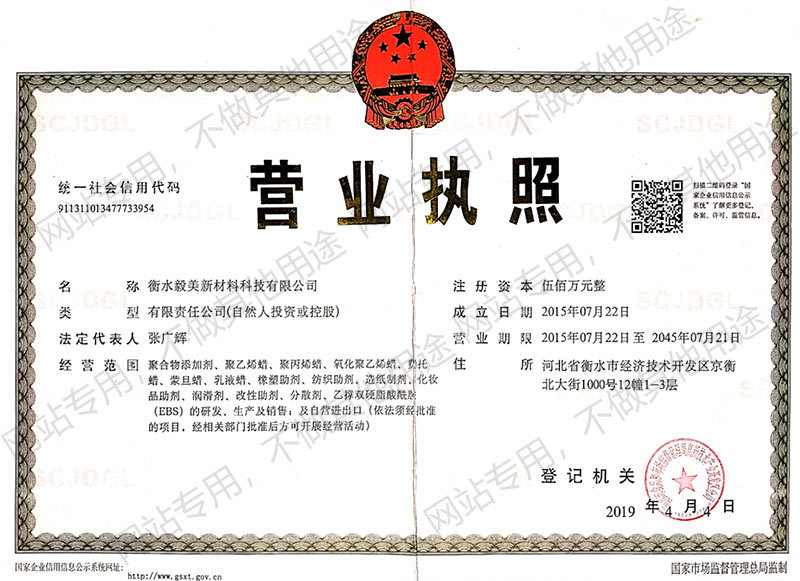
About UsHengshui yi mei new material technology co., ltd. was founded in 2015, is a collection of product development, production, sales and service as one of the high and new technology enterprises, yi mei company focused on deep processing of wax products, determined to become china's professional wax products supplier

-
ProductsThe company mainly produces and sells: polyethylene wax, oxidized polyethylene wax, synthetic Fischer-Tropsch wax, oxidized Fischer-Tropsch wax, maleic anhydride grafted wax, polypropylene wax, micro-powder wax, high-end composite wax and other eight series of dozens of models of high quality products.
-
NewsAt the beginning of its establishment, Yimei Company invested in the establishment of the "Polymer Additive R & D Center", insisting on scientific and technological innovation as the life force of enterprise development. Concentrate funds, technology, and talents in the company's scientific and technological innovation activities, focus on scientific research, public relations and technological breakthroughs of new products, new technologies, and new processes, and resolutely master core technologies.
-
SupportAt the beginning of its establishment, Yimei Company invested in the establishment of the "Polymer Additive R & D Center", insisting on scientific and technological innovation as the life force of enterprise development. Concentrate funds, technology, and talents in the company's scientific and technological innovation activities, focus on scientific research, public relations and technological breakthroughs of new products, new technologies, and new processes, and resolutely master core technologies.
-
RecruitmentOur company always adheres to the talent concept of "people-oriented", actively creates an atmosphere of respect, understanding, integrity and friendship, respects people's knowledge and talents, selects and develops mechanisms, and provides a growth platform for talents. make talents become a strong support for the sustainable development of enterprises, and realize the common growth and development of enterprises and talents.


Comparing Oxidised Wax with Traditional Wax Products
Release time:
2024-07-17
--- **Introduction to Oxidised Wax** Oxidised wax is a type of wax that has undergone a chemical process to increase its melting point and improve its properties for various industrial applications. This process involves exposing the wax to oxygen, which creates oxygenated functional groups on the wax molecules, resulting in enhanced performance characteristics. **Benefits of Oxidised Wax** 1. **I
---
**Introduction to Oxidised Wax**
Oxidised wax is a type of wax that has undergone a chemical process to increase its melting point and improve its properties for various industrial applications. This process involves exposing the wax to oxygen, which creates oxygenated functional groups on the wax molecules, resulting in enhanced performance characteristics.
**Benefits of Oxidised Wax**
1. **Improved Thermal Stability**: Oxidised wax has a higher melting point compared to traditional wax products, making it suitable for applications that require heat resistance.
2. **Enhanced Adhesion**: The oxygenated functional groups on oxidised wax molecules promote better adhesion to substrates, making it ideal for use in adhesive formulations.
3. **Increased Compatibility**: Oxidised wax is compatible with a wide range of polymers and additives, allowing for versatile formulations in various industries.
**Applications of Oxidised Wax**
1. **Coatings and Inks**: Oxidised wax is commonly used in coatings and inks to improve surface properties and enhance printability.
2. **Polishes and Sealants**: The adhesion and compatibility of oxidised wax make it a preferred choice for polishes and sealants in automotive and furniture industries.
3. **Adhesives and Sealants**: The enhanced adhesion properties of oxidised wax contribute to the performance of adhesives and sealants in construction and packaging materials.
**Introduction to Traditional Wax Products**
Traditional wax products, such as paraffin wax and microcrystalline wax, have been used for centuries in various industries for their lubricating, waterproofing, and protective properties.
**Benefits of Traditional Wax Products**
1. **Natural Origin**: Traditional wax products are derived from natural sources, such as petroleum or plants, making them environmentally friendly alternatives.
2. **Cost-Effective**: Traditional wax products are often more cost-effective compared to oxidised wax, making them a budget-friendly option for many applications.
3. **Versatile**: Traditional wax products have a wide range of applications, from candles and cosmetics to food packaging and pharmaceuticals.
**Applications of Traditional Wax Products**
1. **Candles**: Paraffin wax is commonly used in candle making due to its low cost and ease of use.
2. **Cosmetics**: Microcrystalline wax is a popular ingredient in cosmetics for its emollient and thickening properties.
3. **Food Packaging**: Beeswax and carnauba wax are used in food packaging to provide a protective coating and extend the shelf life of perishable goods.
**Comparing Oxidised Wax and Traditional Wax Products**
1. **Melting Point**: Oxidised wax has a higher melting point compared to traditional wax products, making it more suitable for high-temperature applications.
2. **Adhesion**: Oxidised wax exhibits better adhesion properties due to its oxygenated functional groups, while traditional wax products may require additional adhesion promoters.
3. **Compatibility**: While oxidised wax is compatible with a wide range of polymers, traditional wax products may have limited compatibility with certain materials.
4. **Cost**: Traditional wax products are generally more cost-effective than oxidised wax, making them a preferred choice for budget-conscious manufacturers.
5. **Environmental Impact**: Traditional wax products derived from natural sources may be more environmentally friendly than oxidised wax, which undergoes a chemical process.
---
**Frequently Asked Questions**
1. **Is oxidised wax biodegradable?**
- Oxidised wax may have varying degrees of biodegradability depending on the specific formulation and additives used.
2. **Can traditional wax products be used in high-temperature applications?**
- Some traditional wax products, such as microcrystalline wax, can withstand high temperatures, but oxidised wax is generally more heat-resistant.
3. **Are oxidised wax and traditional wax products suitable for food contact applications?**
- Both oxidised wax and traditional wax products can be used in food contact applications, but it is essential to ensure they meet regulatory requirements.
4. **Do oxidised wax and traditional wax products have odor or color differences?**
- Oxidised wax and traditional wax products may have distinct odors and colors based on their composition and processing methods.
5. **What are the storage requirements for oxidised wax and traditional wax products?**
- Both oxidised wax and traditional wax products should be stored in a cool, dry place away from direct sunlight to prevent degradation.
---
**Conclusion**
In conclusion, oxidised wax and traditional wax products offer unique benefits and applications in the chemical industry. While oxidised wax provides enhanced thermal stability and adhesion properties, traditional wax products are cost-effective and versatile options for various manufacturing processes. By understanding the key differences between these two types of wax, manufacturers can make informed decisions to optimize their formulations and achieve desired performance outcomes.
**Introduction to Oxidised Wax**
Oxidised wax is a type of wax that has undergone a chemical process to increase its melting point and improve its properties for various industrial applications. This process involves exposing the wax to oxygen, which creates oxygenated functional groups on the wax molecules, resulting in enhanced performance characteristics.
**Benefits of Oxidised Wax**
1. **Improved Thermal Stability**: Oxidised wax has a higher melting point compared to traditional wax products, making it suitable for applications that require heat resistance.
2. **Enhanced Adhesion**: The oxygenated functional groups on oxidised wax molecules promote better adhesion to substrates, making it ideal for use in adhesive formulations.
3. **Increased Compatibility**: Oxidised wax is compatible with a wide range of polymers and additives, allowing for versatile formulations in various industries.
**Applications of Oxidised Wax**
1. **Coatings and Inks**: Oxidised wax is commonly used in coatings and inks to improve surface properties and enhance printability.
2. **Polishes and Sealants**: The adhesion and compatibility of oxidised wax make it a preferred choice for polishes and sealants in automotive and furniture industries.
3. **Adhesives and Sealants**: The enhanced adhesion properties of oxidised wax contribute to the performance of adhesives and sealants in construction and packaging materials.
**Introduction to Traditional Wax Products**
Traditional wax products, such as paraffin wax and microcrystalline wax, have been used for centuries in various industries for their lubricating, waterproofing, and protective properties.
**Benefits of Traditional Wax Products**
1. **Natural Origin**: Traditional wax products are derived from natural sources, such as petroleum or plants, making them environmentally friendly alternatives.
2. **Cost-Effective**: Traditional wax products are often more cost-effective compared to oxidised wax, making them a budget-friendly option for many applications.
3. **Versatile**: Traditional wax products have a wide range of applications, from candles and cosmetics to food packaging and pharmaceuticals.
**Applications of Traditional Wax Products**
1. **Candles**: Paraffin wax is commonly used in candle making due to its low cost and ease of use.
2. **Cosmetics**: Microcrystalline wax is a popular ingredient in cosmetics for its emollient and thickening properties.
3. **Food Packaging**: Beeswax and carnauba wax are used in food packaging to provide a protective coating and extend the shelf life of perishable goods.
**Comparing Oxidised Wax and Traditional Wax Products**
1. **Melting Point**: Oxidised wax has a higher melting point compared to traditional wax products, making it more suitable for high-temperature applications.
2. **Adhesion**: Oxidised wax exhibits better adhesion properties due to its oxygenated functional groups, while traditional wax products may require additional adhesion promoters.
3. **Compatibility**: While oxidised wax is compatible with a wide range of polymers, traditional wax products may have limited compatibility with certain materials.
4. **Cost**: Traditional wax products are generally more cost-effective than oxidised wax, making them a preferred choice for budget-conscious manufacturers.
5. **Environmental Impact**: Traditional wax products derived from natural sources may be more environmentally friendly than oxidised wax, which undergoes a chemical process.
---
**Frequently Asked Questions**
1. **Is oxidised wax biodegradable?**
- Oxidised wax may have varying degrees of biodegradability depending on the specific formulation and additives used.
2. **Can traditional wax products be used in high-temperature applications?**
- Some traditional wax products, such as microcrystalline wax, can withstand high temperatures, but oxidised wax is generally more heat-resistant.
3. **Are oxidised wax and traditional wax products suitable for food contact applications?**
- Both oxidised wax and traditional wax products can be used in food contact applications, but it is essential to ensure they meet regulatory requirements.
4. **Do oxidised wax and traditional wax products have odor or color differences?**
- Oxidised wax and traditional wax products may have distinct odors and colors based on their composition and processing methods.
5. **What are the storage requirements for oxidised wax and traditional wax products?**
- Both oxidised wax and traditional wax products should be stored in a cool, dry place away from direct sunlight to prevent degradation.
---
**Conclusion**
In conclusion, oxidised wax and traditional wax products offer unique benefits and applications in the chemical industry. While oxidised wax provides enhanced thermal stability and adhesion properties, traditional wax products are cost-effective and versatile options for various manufacturing processes. By understanding the key differences between these two types of wax, manufacturers can make informed decisions to optimize their formulations and achieve desired performance outcomes.
Key words:
oxidised wax
Previous article
Next article
Previous article
Next article
recommend reading