Yimei New Material-Professional Wax Product Solution Supplier


-
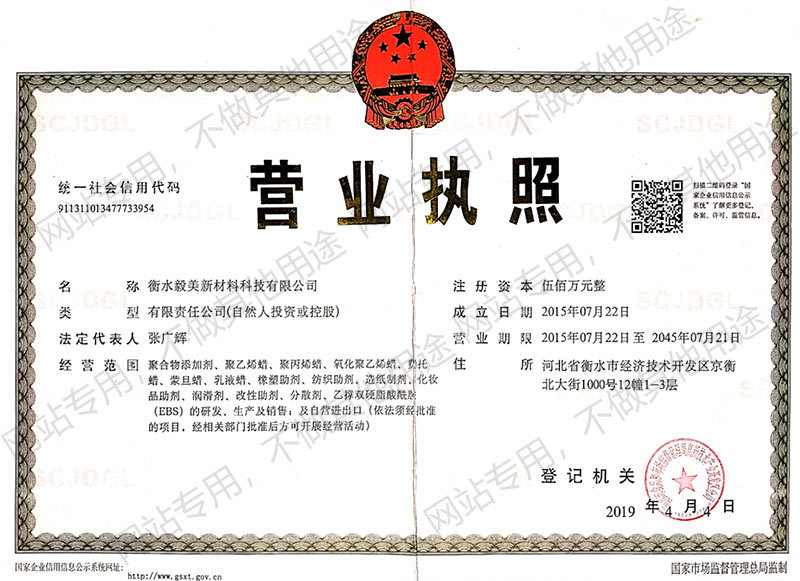
About UsHengshui yi mei new material technology co., ltd. was founded in 2015, is a collection of product development, production, sales and service as one of the high and new technology enterprises, yi mei company focused on deep processing of wax products, determined to become china's professional wax products supplier

-
ProductsThe company mainly produces and sells: polyethylene wax, oxidized polyethylene wax, synthetic Fischer-Tropsch wax, oxidized Fischer-Tropsch wax, maleic anhydride grafted wax, polypropylene wax, micro-powder wax, high-end composite wax and other eight series of dozens of models of high quality products.
-
NewsAt the beginning of its establishment, Yimei Company invested in the establishment of the "Polymer Additive R & D Center", insisting on scientific and technological innovation as the life force of enterprise development. Concentrate funds, technology, and talents in the company's scientific and technological innovation activities, focus on scientific research, public relations and technological breakthroughs of new products, new technologies, and new processes, and resolutely master core technologies.
-
SupportAt the beginning of its establishment, Yimei Company invested in the establishment of the "Polymer Additive R & D Center", insisting on scientific and technological innovation as the life force of enterprise development. Concentrate funds, technology, and talents in the company's scientific and technological innovation activities, focus on scientific research, public relations and technological breakthroughs of new products, new technologies, and new processes, and resolutely master core technologies.
-
RecruitmentOur company always adheres to the talent concept of "people-oriented", actively creates an atmosphere of respect, understanding, integrity and friendship, respects people's knowledge and talents, selects and develops mechanisms, and provides a growth platform for talents. make talents become a strong support for the sustainable development of enterprises, and realize the common growth and development of enterprises and talents.


Mastering the Art of Producing Top-Quality Oxidised Wax
Release time:
2024-07-15
**Introduction:** In the chemical industry, the production of oxidised wax presents unique challenges that require careful attention to detail and precision. Manufacturers must navigate a complex process to ensure the final product meets high standards of quality and consistency. In this article, we will explore the key challenges faced in the production of oxidised wax and provide valuable insigh
**Introduction:**
In the chemical industry, the production of oxidised wax presents unique challenges that require careful attention to detail and precision. Manufacturers must navigate a complex process to ensure the final product meets high standards of quality and consistency. In this article, we will explore the key challenges faced in the production of oxidised wax and provide valuable insights on how to overcome them effectively.
**Understanding Oxidised Wax:**
Oxidised wax is a versatile material used in various industries for its excellent properties, including water resistance, durability, and thermal stability. It is commonly used in coatings, polishes, and adhesives to provide protection and enhance the overall quality of the final product.
**Challenges in Production:**
Producing high-quality oxidised wax involves several intricate steps that can be prone to challenges. These challenges may include maintaining precise temperature control during the oxidation process, ensuring proper mixing of raw materials, and achieving the desired consistency and purity of the final product.
**Optimizing Production Processes:**
To overcome these challenges, manufacturers can implement several strategies to optimize their production processes. This may involve investing in advanced equipment for temperature control, conducting thorough quality control checks at each stage of production, and refining the formulation to achieve the desired properties in the final wax product.
**Quality Assurance Measures:**
Implementing robust quality assurance measures is essential to ensuring the consistency and quality of oxidised wax production. This may include conducting regular inspections, testing samples for purity and performance, and continuously improving processes based on feedback and data analysis.
**Enhancing Product Performance:**
By overcoming challenges in the production of oxidised wax, manufacturers can significantly enhance the performance and value of their final products. High-quality oxidised wax can provide superior protection, durability, and aesthetic appeal, making it a preferred choice for various applications in the chemical industry.
**FAQs:**
1. What are the key properties of oxidised wax?
2. How can temperature control impact the quality of oxidised wax?
3. What steps can manufacturers take to improve the consistency of oxidised wax production?
4. How important is quality assurance in the production of oxidised wax?
5. What are some common applications of oxidised wax in the chemical industry?
**Conclusion:**
In conclusion, mastering the art of producing top-quality oxidised wax requires a deep understanding of the unique challenges involved and a commitment to excellence in every step of the production process. By implementing proven strategies, investing in quality assurance measures, and continuously improving processes, manufacturers can overcome challenges and achieve exceptional results in producing high-quality oxidised wax. With dedication and attention to detail, manufacturers can elevate their production standards and set new benchmarks for excellence in the chemical industry.
In the chemical industry, the production of oxidised wax presents unique challenges that require careful attention to detail and precision. Manufacturers must navigate a complex process to ensure the final product meets high standards of quality and consistency. In this article, we will explore the key challenges faced in the production of oxidised wax and provide valuable insights on how to overcome them effectively.
**Understanding Oxidised Wax:**
Oxidised wax is a versatile material used in various industries for its excellent properties, including water resistance, durability, and thermal stability. It is commonly used in coatings, polishes, and adhesives to provide protection and enhance the overall quality of the final product.
**Challenges in Production:**
Producing high-quality oxidised wax involves several intricate steps that can be prone to challenges. These challenges may include maintaining precise temperature control during the oxidation process, ensuring proper mixing of raw materials, and achieving the desired consistency and purity of the final product.
**Optimizing Production Processes:**
To overcome these challenges, manufacturers can implement several strategies to optimize their production processes. This may involve investing in advanced equipment for temperature control, conducting thorough quality control checks at each stage of production, and refining the formulation to achieve the desired properties in the final wax product.
**Quality Assurance Measures:**
Implementing robust quality assurance measures is essential to ensuring the consistency and quality of oxidised wax production. This may include conducting regular inspections, testing samples for purity and performance, and continuously improving processes based on feedback and data analysis.
**Enhancing Product Performance:**
By overcoming challenges in the production of oxidised wax, manufacturers can significantly enhance the performance and value of their final products. High-quality oxidised wax can provide superior protection, durability, and aesthetic appeal, making it a preferred choice for various applications in the chemical industry.
**FAQs:**
1. What are the key properties of oxidised wax?
2. How can temperature control impact the quality of oxidised wax?
3. What steps can manufacturers take to improve the consistency of oxidised wax production?
4. How important is quality assurance in the production of oxidised wax?
5. What are some common applications of oxidised wax in the chemical industry?
**Conclusion:**
In conclusion, mastering the art of producing top-quality oxidised wax requires a deep understanding of the unique challenges involved and a commitment to excellence in every step of the production process. By implementing proven strategies, investing in quality assurance measures, and continuously improving processes, manufacturers can overcome challenges and achieve exceptional results in producing high-quality oxidised wax. With dedication and attention to detail, manufacturers can elevate their production standards and set new benchmarks for excellence in the chemical industry.
Key words:
oxidised wax
Previous article
recommend reading