Yimei New Material-Professional Wax Product Solution Supplier


-
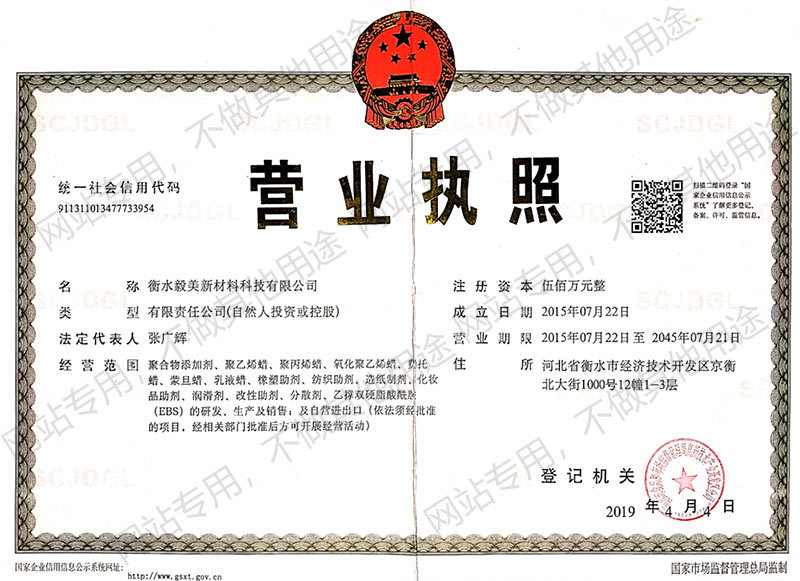
About UsHengshui yi mei new material technology co., ltd. was founded in 2015, is a collection of product development, production, sales and service as one of the high and new technology enterprises, yi mei company focused on deep processing of wax products, determined to become china's professional wax products supplier

-
ProductsThe company mainly produces and sells: polyethylene wax, oxidized polyethylene wax, synthetic Fischer-Tropsch wax, oxidized Fischer-Tropsch wax, maleic anhydride grafted wax, polypropylene wax, micro-powder wax, high-end composite wax and other eight series of dozens of models of high quality products.
-
NewsAt the beginning of its establishment, Yimei Company invested in the establishment of the "Polymer Additive R & D Center", insisting on scientific and technological innovation as the life force of enterprise development. Concentrate funds, technology, and talents in the company's scientific and technological innovation activities, focus on scientific research, public relations and technological breakthroughs of new products, new technologies, and new processes, and resolutely master core technologies.
-
SupportAt the beginning of its establishment, Yimei Company invested in the establishment of the "Polymer Additive R & D Center", insisting on scientific and technological innovation as the life force of enterprise development. Concentrate funds, technology, and talents in the company's scientific and technological innovation activities, focus on scientific research, public relations and technological breakthroughs of new products, new technologies, and new processes, and resolutely master core technologies.
-
RecruitmentOur company always adheres to the talent concept of "people-oriented", actively creates an atmosphere of respect, understanding, integrity and friendship, respects people's knowledge and talents, selects and develops mechanisms, and provides a growth platform for talents. make talents become a strong support for the sustainable development of enterprises, and realize the common growth and development of enterprises and talents.


The Role of Lead Based Compound Stabilizers in Chemical Manufacturing
Release time:
2023-12-18
Table of Contents: 1. Introduction 2. Understanding Stabilizers in Chemical Manufacturing 3. The Significance of Lead Based Compound Stabilizers 4. Types of Lead Based Compound Stabilizers 4.1 Inorganic Lead Stabilizers 4.2 Organic Lead Stabilizers 4.3 Mixed Metal Stabilizers 5. Applications of Lead Based Compound Stabilizers 5.1 PVC Stabilization 5.2 Rubber Stabilization 5.3 Pai
Table of Contents:
1. Introduction
2. Understanding Stabilizers in Chemical Manufacturing
3. The Significance of Lead Based Compound Stabilizers
4. Types of Lead Based Compound Stabilizers
4.1 Inorganic Lead Stabilizers
4.2 Organic Lead Stabilizers
4.3 Mixed Metal Stabilizers
5. Applications of Lead Based Compound Stabilizers
5.1 PVC Stabilization
5.2 Rubber Stabilization
5.3 Paints and Coatings
5.4 Other Chemical Manufacturing Applications
6. Advantages of Lead Based Compound Stabilizers
7. Environmental Considerations and Regulations
8. Manufacturing Process of Lead Based Compound Stabilizers
9. FAQs (Frequently Asked Questions)
9.1 What are lead based compound stabilizers?
9.2 Are lead based compound stabilizers safe to use?
9.3 How do lead based compound stabilizers enhance product stability?
9.4 Are there any alternative stabilizers to lead based compounds?
9.5 What are the environmental concerns associated with lead based compound stabilizers?
10. Conclusion
Introduction
In the chemical manufacturing industry, the quality and stability of products are of utmost importance. Lead based compound stabilizers have emerged as vital additives that contribute significantly to the overall performance and longevity of chemical products. This article aims to explore the role of lead based compound stabilizers in chemical manufacturing, including their types, applications, advantages, and the manufacturing process.
Understanding Stabilizers in Chemical Manufacturing
Stabilizers are additives used in chemical manufacturing to enhance the stability and durability of the final products. They play a crucial role in preventing degradation and maintaining the desired properties of chemicals during production, storage, and usage. Lead based compound stabilizers are particularly effective due to their unique characteristics and versatility.
The Significance of Lead Based Compound Stabilizers
Lead based compound stabilizers are widely recognized for their ability to improve heat stability, weathering resistance, and mechanical properties of chemical products. They act as catalysts in chemical reactions, preventing degradation and maintaining the desired properties of the end products. Their versatility allows them to be used in various applications across different industries.
Types of Lead Based Compound Stabilizers
There are three main types of lead based compound stabilizers: inorganic lead stabilizers, organic lead stabilizers, and mixed metal stabilizers. Each type has its specific functions and advantages, making them suitable for different applications.
Inorganic Lead Stabilizers
Inorganic lead stabilizers, such as lead sulfate and lead oxide, are widely used in the chemical manufacturing industry. They provide excellent heat stability and are particularly suitable for high-temperature processing applications. These stabilizers also offer good initial color and light stability.
Organic Lead Stabilizers
Organic lead stabilizers, including lead carboxylates and lead phosphites, are known for their excellent long-term stability and weatherability. They are commonly used in outdoor applications, such as PVC pipes, where exposure to harsh weather conditions is a concern. Organic lead stabilizers also offer good lubricity and processability.
Mixed Metal Stabilizers
Mixed metal stabilizers combine lead with other metals, such as calcium, zinc, or barium, to enhance specific properties. These stabilizers provide a balanced combination of excellent heat stability, weatherability, and mechanical strength. They are frequently used in applications that require a high level of performance and durability.
Applications of Lead Based Compound Stabilizers
Lead based compound stabilizers find applications in various industries, with PVC stabilization being one of the most prominent. They are used to enhance the heat stability, weather resistance, and mechanical properties of PVC products, including pipes, profiles, and cables. Lead based stabilizers are also essential in rubber manufacturing, where they improve the processability, aging resistance, and mechanical strength of rubber products.
In the paints and coatings industry, lead based stabilizers contribute to the durability, adhesion, and weather resistance of the finished products. Additionally, they find applications in other chemical manufacturing processes, such as plasticizers, adhesives, and sealants.
Advantages of Lead Based Compound Stabilizers
Lead based compound stabilizers offer numerous advantages that make them highly desirable in chemical manufacturing. Some of the key benefits include:
1. Improved heat stability: Lead based stabilizers prevent the degradation of chemical products under high temperatures, ensuring their long-term performance.
2. Enhanced weather resistance: These stabilizers protect products from the damaging effects of UV radiation, moisture, and extreme weather conditions, contributing to their durability.
3. Increased mechanical strength: Lead based compound stabilizers improve the mechanical properties of chemical products, making them more resistant to wear, impact, and deformation.
4. Versatility: The different types of lead based stabilizers allow manufacturers to choose the most suitable option for their specific application requirements.
Environmental Considerations and Regulations
While lead based compound stabilizers offer significant benefits in chemical manufacturing, it is essential to address the environmental concerns associated with their usage. Due to the potential health risks and environmental impact of lead, regulations and restrictions have been imposed to minimize their use and ensure proper waste management.
Manufacturing Process of Lead Based Compound Stabilizers
The manufacturing process of lead based compound stabilizers involves several stages, including raw material selection, synthesis, and quality control. The use of high-quality raw materials and modern production techniques is crucial to ensure the purity, stability, and consistency of the stabilizers. Environmental considerations are also taken into account, with manufacturers opting for greener processes and alternatives whenever possible.
FAQs
1. What are lead based compound stabilizers?
Lead based compound stabilizers are additives used in chemical manufacturing to enhance the stability and performance of products. They improve heat stability, weather resistance, and mechanical properties.
2. Are lead based compound stabilizers safe to use?
While lead based compound stabilizers offer significant benefits, precautions must be taken to minimize human exposure and manage waste properly. Compliance with regulations and guidelines is essential to ensure safe usage.
3. How do lead based compound stabilizers enhance product stability?
Lead based compound stabilizers act as catalysts, preventing degradation and maintaining the desired properties of chemical products. They improve heat stability, weather resistance, and mechanical strength.
4. Are there any alternative stabilizers to lead-based compounds?
Yes, there are alternative stabilizers available in the market, such as calcium-based stabilizers, zinc-based stabilizers, and organic-based stabilizers. Manufacturers can choose the most suitable option based on their specific requirements.
5. What are the environmental concerns associated with lead based compound stabilizers?
Lead is a toxic substance that can cause harm to human health and the environment. Strict regulations and guidelines are in place to minimize lead usage and ensure proper waste management.
Conclusion
Lead based compound stabilizers play a crucial role in the chemical manufacturing industry by enhancing the stability, durability, and performance of products. Their unique properties and versatility make them highly suitable for various applications across different industries. While the environmental concerns associated with lead have led to regulations and restrictions, manufacturers are continually striving to develop greener alternatives and ensure the safe use of lead based compound stabilizers. By understanding their benefits, applications, and manufacturing process, chemical manufacturers can make informed decisions to optimize their product stability and quality.
1. Introduction
2. Understanding Stabilizers in Chemical Manufacturing
3. The Significance of Lead Based Compound Stabilizers
4. Types of Lead Based Compound Stabilizers
4.1 Inorganic Lead Stabilizers
4.2 Organic Lead Stabilizers
4.3 Mixed Metal Stabilizers
5. Applications of Lead Based Compound Stabilizers
5.1 PVC Stabilization
5.2 Rubber Stabilization
5.3 Paints and Coatings
5.4 Other Chemical Manufacturing Applications
6. Advantages of Lead Based Compound Stabilizers
7. Environmental Considerations and Regulations
8. Manufacturing Process of Lead Based Compound Stabilizers
9. FAQs (Frequently Asked Questions)
9.1 What are lead based compound stabilizers?
9.2 Are lead based compound stabilizers safe to use?
9.3 How do lead based compound stabilizers enhance product stability?
9.4 Are there any alternative stabilizers to lead based compounds?
9.5 What are the environmental concerns associated with lead based compound stabilizers?
10. Conclusion
Introduction
In the chemical manufacturing industry, the quality and stability of products are of utmost importance. Lead based compound stabilizers have emerged as vital additives that contribute significantly to the overall performance and longevity of chemical products. This article aims to explore the role of lead based compound stabilizers in chemical manufacturing, including their types, applications, advantages, and the manufacturing process.
Understanding Stabilizers in Chemical Manufacturing
Stabilizers are additives used in chemical manufacturing to enhance the stability and durability of the final products. They play a crucial role in preventing degradation and maintaining the desired properties of chemicals during production, storage, and usage. Lead based compound stabilizers are particularly effective due to their unique characteristics and versatility.
The Significance of Lead Based Compound Stabilizers
Lead based compound stabilizers are widely recognized for their ability to improve heat stability, weathering resistance, and mechanical properties of chemical products. They act as catalysts in chemical reactions, preventing degradation and maintaining the desired properties of the end products. Their versatility allows them to be used in various applications across different industries.
Types of Lead Based Compound Stabilizers
There are three main types of lead based compound stabilizers: inorganic lead stabilizers, organic lead stabilizers, and mixed metal stabilizers. Each type has its specific functions and advantages, making them suitable for different applications.
Inorganic Lead Stabilizers
Inorganic lead stabilizers, such as lead sulfate and lead oxide, are widely used in the chemical manufacturing industry. They provide excellent heat stability and are particularly suitable for high-temperature processing applications. These stabilizers also offer good initial color and light stability.
Organic Lead Stabilizers
Organic lead stabilizers, including lead carboxylates and lead phosphites, are known for their excellent long-term stability and weatherability. They are commonly used in outdoor applications, such as PVC pipes, where exposure to harsh weather conditions is a concern. Organic lead stabilizers also offer good lubricity and processability.
Mixed Metal Stabilizers
Mixed metal stabilizers combine lead with other metals, such as calcium, zinc, or barium, to enhance specific properties. These stabilizers provide a balanced combination of excellent heat stability, weatherability, and mechanical strength. They are frequently used in applications that require a high level of performance and durability.
Applications of Lead Based Compound Stabilizers
Lead based compound stabilizers find applications in various industries, with PVC stabilization being one of the most prominent. They are used to enhance the heat stability, weather resistance, and mechanical properties of PVC products, including pipes, profiles, and cables. Lead based stabilizers are also essential in rubber manufacturing, where they improve the processability, aging resistance, and mechanical strength of rubber products.
In the paints and coatings industry, lead based stabilizers contribute to the durability, adhesion, and weather resistance of the finished products. Additionally, they find applications in other chemical manufacturing processes, such as plasticizers, adhesives, and sealants.
Advantages of Lead Based Compound Stabilizers
Lead based compound stabilizers offer numerous advantages that make them highly desirable in chemical manufacturing. Some of the key benefits include:
1. Improved heat stability: Lead based stabilizers prevent the degradation of chemical products under high temperatures, ensuring their long-term performance.
2. Enhanced weather resistance: These stabilizers protect products from the damaging effects of UV radiation, moisture, and extreme weather conditions, contributing to their durability.
3. Increased mechanical strength: Lead based compound stabilizers improve the mechanical properties of chemical products, making them more resistant to wear, impact, and deformation.
4. Versatility: The different types of lead based stabilizers allow manufacturers to choose the most suitable option for their specific application requirements.
Environmental Considerations and Regulations
While lead based compound stabilizers offer significant benefits in chemical manufacturing, it is essential to address the environmental concerns associated with their usage. Due to the potential health risks and environmental impact of lead, regulations and restrictions have been imposed to minimize their use and ensure proper waste management.
Manufacturing Process of Lead Based Compound Stabilizers
The manufacturing process of lead based compound stabilizers involves several stages, including raw material selection, synthesis, and quality control. The use of high-quality raw materials and modern production techniques is crucial to ensure the purity, stability, and consistency of the stabilizers. Environmental considerations are also taken into account, with manufacturers opting for greener processes and alternatives whenever possible.
FAQs
1. What are lead based compound stabilizers?
Lead based compound stabilizers are additives used in chemical manufacturing to enhance the stability and performance of products. They improve heat stability, weather resistance, and mechanical properties.
2. Are lead based compound stabilizers safe to use?
While lead based compound stabilizers offer significant benefits, precautions must be taken to minimize human exposure and manage waste properly. Compliance with regulations and guidelines is essential to ensure safe usage.
3. How do lead based compound stabilizers enhance product stability?
Lead based compound stabilizers act as catalysts, preventing degradation and maintaining the desired properties of chemical products. They improve heat stability, weather resistance, and mechanical strength.
4. Are there any alternative stabilizers to lead-based compounds?
Yes, there are alternative stabilizers available in the market, such as calcium-based stabilizers, zinc-based stabilizers, and organic-based stabilizers. Manufacturers can choose the most suitable option based on their specific requirements.
5. What are the environmental concerns associated with lead based compound stabilizers?
Lead is a toxic substance that can cause harm to human health and the environment. Strict regulations and guidelines are in place to minimize lead usage and ensure proper waste management.
Conclusion
Lead based compound stabilizers play a crucial role in the chemical manufacturing industry by enhancing the stability, durability, and performance of products. Their unique properties and versatility make them highly suitable for various applications across different industries. While the environmental concerns associated with lead have led to regulations and restrictions, manufacturers are continually striving to develop greener alternatives and ensure the safe use of lead based compound stabilizers. By understanding their benefits, applications, and manufacturing process, chemical manufacturers can make informed decisions to optimize their product stability and quality.
Key words:
Lead Based Compound Stabilizer
recommend reading