Yimei New Material-Professional Wax Product Solution Supplier


-
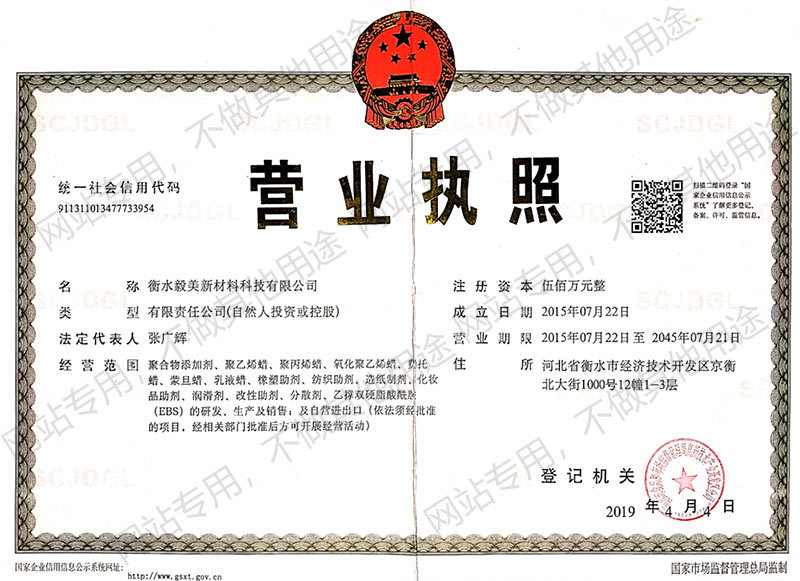
About UsHengshui yi mei new material technology co., ltd. was founded in 2015, is a collection of product development, production, sales and service as one of the high and new technology enterprises, yi mei company focused on deep processing of wax products, determined to become china's professional wax products supplier

-
ProductsThe company mainly produces and sells: polyethylene wax, oxidized polyethylene wax, synthetic Fischer-Tropsch wax, oxidized Fischer-Tropsch wax, maleic anhydride grafted wax, polypropylene wax, micro-powder wax, high-end composite wax and other eight series of dozens of models of high quality products.
-
NewsAt the beginning of its establishment, Yimei Company invested in the establishment of the "Polymer Additive R & D Center", insisting on scientific and technological innovation as the life force of enterprise development. Concentrate funds, technology, and talents in the company's scientific and technological innovation activities, focus on scientific research, public relations and technological breakthroughs of new products, new technologies, and new processes, and resolutely master core technologies.
-
SupportAt the beginning of its establishment, Yimei Company invested in the establishment of the "Polymer Additive R & D Center", insisting on scientific and technological innovation as the life force of enterprise development. Concentrate funds, technology, and talents in the company's scientific and technological innovation activities, focus on scientific research, public relations and technological breakthroughs of new products, new technologies, and new processes, and resolutely master core technologies.
-
RecruitmentOur company always adheres to the talent concept of "people-oriented", actively creates an atmosphere of respect, understanding, integrity and friendship, respects people's knowledge and talents, selects and develops mechanisms, and provides a growth platform for talents. make talents become a strong support for the sustainable development of enterprises, and realize the common growth and development of enterprises and talents.


Exploring the Various Grades of Micronized Polyolefin Waxes and Their Unique Properties
Release time:
2023-11-24
Introduction to Micronized Polyolefin Waxes Understanding Micronized Polyolefin Waxes The Importance of Grades in Micronized Polyolefin Waxes Grade A: High Melting Point Waxes Grade B: Low Melting Point Waxes Grade C: Medium Melting Point Waxes Unique Properties of Micronized Polyolefin Waxes Enhanced Surface Characteristics Improved Lubricity and Slip Resistance Heat Stability and Thermal Resista
Introduction to Micronized Polyolefin Waxes
Understanding Micronized Polyolefin Waxes
The Importance of Grades in Micronized Polyolefin Waxes
Grade A: High Melting Point Waxes
Grade B: Low Melting Point Waxes
Grade C: Medium Melting Point Waxes
Unique Properties of Micronized Polyolefin Waxes
Enhanced Surface Characteristics
Improved Lubricity and Slip Resistance
Heat Stability and Thermal Resistance
Excellent Moisture Resistance
Applications of Micronized Polyolefin Waxes
Coatings and Paints Industry
Plastics and Rubber Industry
Printing Inks and Toner Industry
Frequently Asked Questions (FAQs)
Q1: What are the key differences between high and low melting point grades of micronized polyolefin waxes?
Q2: Can micronized polyolefin waxes be used for food packaging applications?
Q3: Are these waxes environmentally friendly?
Q4: How do micronized polyolefin waxes enhance the properties of coatings?
Q5: Can these waxes be used in 3D printing?
Conclusion
Introduction to Micronized Polyolefin Waxes
Micronized polyolefin waxes, widely used in various industries, have gained significant attention due to their unique properties and diverse applications. In this article, we will explore the different grades of micronized polyolefin waxes and the exceptional characteristics that make them stand out.
Understanding Micronized Polyolefin Waxes
Micronized polyolefin waxes are fine powders obtained by reducing the size of conventional polyolefin waxes through a specialized micronization process. These waxes are derived from polyethylene, polypropylene, or their copolymers, offering distinct advantages in terms of performance, versatility, and compatibility.
The Importance of Grades in Micronized Polyolefin Waxes
Grades play a pivotal role in determining the properties and applications of micronized polyolefin waxes. Let's explore the three major grades:
Grade A: High Melting Point Waxes
Grade A micronized polyolefin waxes have a high melting point, making them suitable for applications requiring heat resistance. These waxes provide excellent surface protection, improve scratch resistance, and enhance the durability of coatings. They are widely used in automotive coatings, industrial coatings, and high-temperature applications.
Grade B: Low Melting Point Waxes
Grade B micronized polyolefin waxes have a low melting point, which makes them suitable for applications requiring low-temperature processing. These waxes offer exceptional release properties, anti-blocking characteristics, and improved surface finish. They find extensive use in the plastics, rubber, and packaging industries.
Grade C: Medium Melting Point Waxes
Grade C micronized polyolefin waxes possess a medium melting point, offering a balance between high and low melting point grades. These waxes provide excellent dispersion and improved flow properties. They are commonly used in printing inks, toners, and various hot-melt adhesive applications.
Unique Properties of Micronized Polyolefin Waxes
Micronized polyolefin waxes exhibit several exceptional properties that make them indispensable in diverse industries. Let's explore some of these remarkable characteristics:
Enhanced Surface Characteristics
Micronized polyolefin waxes improve the surface characteristics of coatings, paints, and other formulated products by enhancing gloss, leveling, and scratch resistance. These waxes create a protective layer, ensuring long-lasting performance and a visually appealing finish.
Improved Lubricity and Slip Resistance
The addition of micronized polyolefin waxes to various materials significantly improves lubricity, reducing friction and enhancing wear resistance. These waxes also contribute to slip resistance, making them ideal for applications such as packaging films, flooring, and anti-blocking coatings.
Heat Stability and Thermal Resistance
Micronized polyolefin waxes offer excellent heat stability and thermal resistance, making them suitable for applications exposed to high temperatures. These waxes retain their properties even in demanding conditions, ensuring long-term performance and stability.
Excellent Moisture Resistance
These waxes exhibit outstanding moisture resistance, preventing moisture absorption and protecting materials from degradation, warping, or dimensional changes. Their hydrophobic nature makes them highly advantageous in various industries, including adhesives, construction, and electrical insulation.
Applications of Micronized Polyolefin Waxes
Micronized polyolefin waxes find extensive applications across diverse industries due to their exceptional properties. Some notable applications include:
Coatings and Paints Industry
Micronized polyolefin waxes are widely used in the coatings and paints industry to enhance scratch resistance, gloss, and leveling properties. These waxes also improve the durability and weatherability of coatings, ensuring long-lasting protection.
Plastics and Rubber Industry
In the plastics and rubber industry, micronized polyolefin waxes are employed as additives to improve processing, release properties, and surface finish. These waxes facilitate easy demolding, reduce friction, and enhance the overall performance of plastic and rubber products.
Printing Inks and Toner Industry
Micronized polyolefin waxes are extensively used in printing inks and toners to enhance print quality, dispersibility, and scratch resistance. These waxes improve the flow characteristics of inks and toners, ensuring precise and consistent print results.
Frequently Asked Questions (FAQs)
Q1: What are the key differences between high and low melting point grades of micronized polyolefin waxes?
A: The key difference lies in their melting points. High melting point grades offer excellent heat resistance, while low melting point grades are suitable for low-temperature processing. The choice depends on the specific application requirements.
Q2: Can micronized polyolefin waxes be used for food packaging applications?
A: Yes, micronized polyolefin waxes are deemed safe for food packaging applications. They comply with regulatory standards and provide excellent moisture resistance and release properties.
Q3: Are these waxes environmentally friendly?
A: Micronized polyolefin waxes are considered environmentally friendly as they are non-toxic, non-hazardous, and non-reactive. They do not release harmful substances during usage or disposal.
Q4: How do micronized polyolefin waxes enhance the properties of coatings?
A: These waxes improve the scratch resistance, gloss, leveling, and durability of coatings by creating a protective layer on the surface. They also contribute to anti-blocking properties and enhance weatherability.
Q5: Can these waxes be used in 3D printing?
A: Yes, micronized polyolefin waxes can be utilized in 3D printing as additives to enhance print quality, surface finish, and dimensional stability. They improve the flow characteristics of the printing material, ensuring precise and intricate prints.
Conclusion
In conclusion, exploring the various grades of micronized polyolefin waxes reveals their unique properties and extensive applications. These waxes offer exceptional benefits such as enhanced surface characteristics, improved lubricity, heat stability, and moisture resistance. By understanding the grades and properties, industries can leverage the advantages of these waxes for diverse applications ranging from coatings and plastics to printing inks and toners. Embracing the potential of micronized polyolefin waxes opens doors to innovation, durability, and performance in various industries.
The Importance of Grades in Micronized Polyolefin Waxes
Grade A: High Melting Point Waxes
Grade B: Low Melting Point Waxes
Grade C: Medium Melting Point Waxes
Unique Properties of Micronized Polyolefin Waxes
Enhanced Surface Characteristics
Improved Lubricity and Slip Resistance
Heat Stability and Thermal Resistance
Excellent Moisture Resistance
Applications of Micronized Polyolefin Waxes
Coatings and Paints Industry
Plastics and Rubber Industry
Printing Inks and Toner Industry
Frequently Asked Questions (FAQs)
Q1: What are the key differences between high and low melting point grades of micronized polyolefin waxes?
Q2: Can micronized polyolefin waxes be used for food packaging applications?
Q3: Are these waxes environmentally friendly?
Q4: How do micronized polyolefin waxes enhance the properties of coatings?
Q5: Can these waxes be used in 3D printing?
Conclusion
Introduction to Micronized Polyolefin Waxes
Micronized polyolefin waxes, widely used in various industries, have gained significant attention due to their unique properties and diverse applications. In this article, we will explore the different grades of micronized polyolefin waxes and the exceptional characteristics that make them stand out.
Understanding Micronized Polyolefin Waxes
Micronized polyolefin waxes are fine powders obtained by reducing the size of conventional polyolefin waxes through a specialized micronization process. These waxes are derived from polyethylene, polypropylene, or their copolymers, offering distinct advantages in terms of performance, versatility, and compatibility.
The Importance of Grades in Micronized Polyolefin Waxes
Grades play a pivotal role in determining the properties and applications of micronized polyolefin waxes. Let's explore the three major grades:
Grade A: High Melting Point Waxes
Grade A micronized polyolefin waxes have a high melting point, making them suitable for applications requiring heat resistance. These waxes provide excellent surface protection, improve scratch resistance, and enhance the durability of coatings. They are widely used in automotive coatings, industrial coatings, and high-temperature applications.
Grade B: Low Melting Point Waxes
Grade B micronized polyolefin waxes have a low melting point, which makes them suitable for applications requiring low-temperature processing. These waxes offer exceptional release properties, anti-blocking characteristics, and improved surface finish. They find extensive use in the plastics, rubber, and packaging industries.
Grade C: Medium Melting Point Waxes
Grade C micronized polyolefin waxes possess a medium melting point, offering a balance between high and low melting point grades. These waxes provide excellent dispersion and improved flow properties. They are commonly used in printing inks, toners, and various hot-melt adhesive applications.
Unique Properties of Micronized Polyolefin Waxes
Micronized polyolefin waxes exhibit several exceptional properties that make them indispensable in diverse industries. Let's explore some of these remarkable characteristics:
Enhanced Surface Characteristics
Micronized polyolefin waxes improve the surface characteristics of coatings, paints, and other formulated products by enhancing gloss, leveling, and scratch resistance. These waxes create a protective layer, ensuring long-lasting performance and a visually appealing finish.
Improved Lubricity and Slip Resistance
The addition of micronized polyolefin waxes to various materials significantly improves lubricity, reducing friction and enhancing wear resistance. These waxes also contribute to slip resistance, making them ideal for applications such as packaging films, flooring, and anti-blocking coatings.
Heat Stability and Thermal Resistance
Micronized polyolefin waxes offer excellent heat stability and thermal resistance, making them suitable for applications exposed to high temperatures. These waxes retain their properties even in demanding conditions, ensuring long-term performance and stability.
Excellent Moisture Resistance
These waxes exhibit outstanding moisture resistance, preventing moisture absorption and protecting materials from degradation, warping, or dimensional changes. Their hydrophobic nature makes them highly advantageous in various industries, including adhesives, construction, and electrical insulation.
Applications of Micronized Polyolefin Waxes
Micronized polyolefin waxes find extensive applications across diverse industries due to their exceptional properties. Some notable applications include:
Coatings and Paints Industry
Micronized polyolefin waxes are widely used in the coatings and paints industry to enhance scratch resistance, gloss, and leveling properties. These waxes also improve the durability and weatherability of coatings, ensuring long-lasting protection.
Plastics and Rubber Industry
In the plastics and rubber industry, micronized polyolefin waxes are employed as additives to improve processing, release properties, and surface finish. These waxes facilitate easy demolding, reduce friction, and enhance the overall performance of plastic and rubber products.
Printing Inks and Toner Industry
Micronized polyolefin waxes are extensively used in printing inks and toners to enhance print quality, dispersibility, and scratch resistance. These waxes improve the flow characteristics of inks and toners, ensuring precise and consistent print results.
Frequently Asked Questions (FAQs)
Q1: What are the key differences between high and low melting point grades of micronized polyolefin waxes?
A: The key difference lies in their melting points. High melting point grades offer excellent heat resistance, while low melting point grades are suitable for low-temperature processing. The choice depends on the specific application requirements.
Q2: Can micronized polyolefin waxes be used for food packaging applications?
A: Yes, micronized polyolefin waxes are deemed safe for food packaging applications. They comply with regulatory standards and provide excellent moisture resistance and release properties.
Q3: Are these waxes environmentally friendly?
A: Micronized polyolefin waxes are considered environmentally friendly as they are non-toxic, non-hazardous, and non-reactive. They do not release harmful substances during usage or disposal.
Q4: How do micronized polyolefin waxes enhance the properties of coatings?
A: These waxes improve the scratch resistance, gloss, leveling, and durability of coatings by creating a protective layer on the surface. They also contribute to anti-blocking properties and enhance weatherability.
Q5: Can these waxes be used in 3D printing?
A: Yes, micronized polyolefin waxes can be utilized in 3D printing as additives to enhance print quality, surface finish, and dimensional stability. They improve the flow characteristics of the printing material, ensuring precise and intricate prints.
Conclusion
In conclusion, exploring the various grades of micronized polyolefin waxes reveals their unique properties and extensive applications. These waxes offer exceptional benefits such as enhanced surface characteristics, improved lubricity, heat stability, and moisture resistance. By understanding the grades and properties, industries can leverage the advantages of these waxes for diverse applications ranging from coatings and plastics to printing inks and toners. Embracing the potential of micronized polyolefin waxes opens doors to innovation, durability, and performance in various industries.
Grade B: Low Melting Point Waxes
Grade C: Medium Melting Point Waxes
Unique Properties of Micronized Polyolefin Waxes
Enhanced Surface Characteristics
Improved Lubricity and Slip Resistance
Heat Stability and Thermal Resistance
Excellent Moisture Resistance
Applications of Micronized Polyolefin Waxes
Coatings and Paints Industry
Plastics and Rubber Industry
Printing Inks and Toner Industry
Frequently Asked Questions (FAQs)
Q1: What are the key differences between high and low melting point grades of micronized polyolefin waxes?
Q2: Can micronized polyolefin waxes be used for food packaging applications?
Q3: Are these waxes environmentally friendly?
Q4: How do micronized polyolefin waxes enhance the properties of coatings?
Q5: Can these waxes be used in 3D printing?
Conclusion
Introduction to Micronized Polyolefin Waxes
Micronized polyolefin waxes, widely used in various industries, have gained significant attention due to their unique properties and diverse applications. In this article, we will explore the different grades of micronized polyolefin waxes and the exceptional characteristics that make them stand out.
Understanding Micronized Polyolefin Waxes
Micronized polyolefin waxes are fine powders obtained by reducing the size of conventional polyolefin waxes through a specialized micronization process. These waxes are derived from polyethylene, polypropylene, or their copolymers, offering distinct advantages in terms of performance, versatility, and compatibility.
The Importance of Grades in Micronized Polyolefin Waxes
Grades play a pivotal role in determining the properties and applications of micronized polyolefin waxes. Let's explore the three major grades:
Grade A: High Melting Point Waxes
Grade A micronized polyolefin waxes have a high melting point, making them suitable for applications requiring heat resistance. These waxes provide excellent surface protection, improve scratch resistance, and enhance the durability of coatings. They are widely used in automotive coatings, industrial coatings, and high-temperature applications.
Grade B: Low Melting Point Waxes
Grade B micronized polyolefin waxes have a low melting point, which makes them suitable for applications requiring low-temperature processing. These waxes offer exceptional release properties, anti-blocking characteristics, and improved surface finish. They find extensive use in the plastics, rubber, and packaging industries.
Grade C: Medium Melting Point Waxes
Grade C micronized polyolefin waxes possess a medium melting point, offering a balance between high and low melting point grades. These waxes provide excellent dispersion and improved flow properties. They are commonly used in printing inks, toners, and various hot-melt adhesive applications.
Unique Properties of Micronized Polyolefin Waxes
Micronized polyolefin waxes exhibit several exceptional properties that make them indispensable in diverse industries. Let's explore some of these remarkable characteristics:
Enhanced Surface Characteristics
Micronized polyolefin waxes improve the surface characteristics of coatings, paints, and other formulated products by enhancing gloss, leveling, and scratch resistance. These waxes create a protective layer, ensuring long-lasting performance and a visually appealing finish.
Improved Lubricity and Slip Resistance
The addition of micronized polyolefin waxes to various materials significantly improves lubricity, reducing friction and enhancing wear resistance. These waxes also contribute to slip resistance, making them ideal for applications such as packaging films, flooring, and anti-blocking coatings.
Heat Stability and Thermal Resistance
Micronized polyolefin waxes offer excellent heat stability and thermal resistance, making them suitable for applications exposed to high temperatures. These waxes retain their properties even in demanding conditions, ensuring long-term performance and stability.
Excellent Moisture Resistance
These waxes exhibit outstanding moisture resistance, preventing moisture absorption and protecting materials from degradation, warping, or dimensional changes. Their hydrophobic nature makes them highly advantageous in various industries, including adhesives, construction, and electrical insulation.
Applications of Micronized Polyolefin Waxes
Micronized polyolefin waxes find extensive applications across diverse industries due to their exceptional properties. Some notable applications include:
Coatings and Paints Industry
Micronized polyolefin waxes are widely used in the coatings and paints industry to enhance scratch resistance, gloss, and leveling properties. These waxes also improve the durability and weatherability of coatings, ensuring long-lasting protection.
Plastics and Rubber Industry
In the plastics and rubber industry, micronized polyolefin waxes are employed as additives to improve processing, release properties, and surface finish. These waxes facilitate easy demolding, reduce friction, and enhance the overall performance of plastic and rubber products.
Printing Inks and Toner Industry
Micronized polyolefin waxes are extensively used in printing inks and toners to enhance print quality, dispersibility, and scratch resistance. These waxes improve the flow characteristics of inks and toners, ensuring precise and consistent print results.
Frequently Asked Questions (FAQs)
Q1: What are the key differences between high and low melting point grades of micronized polyolefin waxes?
A: The key difference lies in their melting points. High melting point grades offer excellent heat resistance, while low melting point grades are suitable for low-temperature processing. The choice depends on the specific application requirements.
Q2: Can micronized polyolefin waxes be used for food packaging applications?
A: Yes, micronized polyolefin waxes are deemed safe for food packaging applications. They comply with regulatory standards and provide excellent moisture resistance and release properties.
Q3: Are these waxes environmentally friendly?
A: Micronized polyolefin waxes are considered environmentally friendly as they are non-toxic, non-hazardous, and non-reactive. They do not release harmful substances during usage or disposal.
Q4: How do micronized polyolefin waxes enhance the properties of coatings?
A: These waxes improve the scratch resistance, gloss, leveling, and durability of coatings by creating a protective layer on the surface. They also contribute to anti-blocking properties and enhance weatherability.
Q5: Can these waxes be used in 3D printing?
A: Yes, micronized polyolefin waxes can be utilized in 3D printing as additives to enhance print quality, surface finish, and dimensional stability. They improve the flow characteristics of the printing material, ensuring precise and intricate prints.
Conclusion
In conclusion, exploring the various grades of micronized polyolefin waxes reveals their unique properties and extensive applications. These waxes offer exceptional benefits such as enhanced surface characteristics, improved lubricity, heat stability, and moisture resistance. By understanding the grades and properties, industries can leverage the advantages of these waxes for diverse applications ranging from coatings and plastics to printing inks and toners. Embracing the potential of micronized polyolefin waxes opens doors to innovation, durability, and performance in various industries.
Unique Properties of Micronized Polyolefin Waxes
Enhanced Surface Characteristics
Improved Lubricity and Slip Resistance
Heat Stability and Thermal Resistance
Excellent Moisture Resistance
Applications of Micronized Polyolefin Waxes
Coatings and Paints Industry
Plastics and Rubber Industry
Printing Inks and Toner Industry
Frequently Asked Questions (FAQs)
Q1: What are the key differences between high and low melting point grades of micronized polyolefin waxes?
Q2: Can micronized polyolefin waxes be used for food packaging applications?
Q3: Are these waxes environmentally friendly?
Q4: How do micronized polyolefin waxes enhance the properties of coatings?
Q5: Can these waxes be used in 3D printing?
Conclusion
Introduction to Micronized Polyolefin Waxes
Micronized polyolefin waxes, widely used in various industries, have gained significant attention due to their unique properties and diverse applications. In this article, we will explore the different grades of micronized polyolefin waxes and the exceptional characteristics that make them stand out.
Understanding Micronized Polyolefin Waxes
Micronized polyolefin waxes are fine powders obtained by reducing the size of conventional polyolefin waxes through a specialized micronization process. These waxes are derived from polyethylene, polypropylene, or their copolymers, offering distinct advantages in terms of performance, versatility, and compatibility.
The Importance of Grades in Micronized Polyolefin Waxes
Grades play a pivotal role in determining the properties and applications of micronized polyolefin waxes. Let's explore the three major grades:
Grade A: High Melting Point Waxes
Grade A micronized polyolefin waxes have a high melting point, making them suitable for applications requiring heat resistance. These waxes provide excellent surface protection, improve scratch resistance, and enhance the durability of coatings. They are widely used in automotive coatings, industrial coatings, and high-temperature applications.
Grade B: Low Melting Point Waxes
Grade B micronized polyolefin waxes have a low melting point, which makes them suitable for applications requiring low-temperature processing. These waxes offer exceptional release properties, anti-blocking characteristics, and improved surface finish. They find extensive use in the plastics, rubber, and packaging industries.
Grade C: Medium Melting Point Waxes
Grade C micronized polyolefin waxes possess a medium melting point, offering a balance between high and low melting point grades. These waxes provide excellent dispersion and improved flow properties. They are commonly used in printing inks, toners, and various hot-melt adhesive applications.
Unique Properties of Micronized Polyolefin Waxes
Micronized polyolefin waxes exhibit several exceptional properties that make them indispensable in diverse industries. Let's explore some of these remarkable characteristics:
Enhanced Surface Characteristics
Micronized polyolefin waxes improve the surface characteristics of coatings, paints, and other formulated products by enhancing gloss, leveling, and scratch resistance. These waxes create a protective layer, ensuring long-lasting performance and a visually appealing finish.
Improved Lubricity and Slip Resistance
The addition of micronized polyolefin waxes to various materials significantly improves lubricity, reducing friction and enhancing wear resistance. These waxes also contribute to slip resistance, making them ideal for applications such as packaging films, flooring, and anti-blocking coatings.
Heat Stability and Thermal Resistance
Micronized polyolefin waxes offer excellent heat stability and thermal resistance, making them suitable for applications exposed to high temperatures. These waxes retain their properties even in demanding conditions, ensuring long-term performance and stability.
Excellent Moisture Resistance
These waxes exhibit outstanding moisture resistance, preventing moisture absorption and protecting materials from degradation, warping, or dimensional changes. Their hydrophobic nature makes them highly advantageous in various industries, including adhesives, construction, and electrical insulation.
Applications of Micronized Polyolefin Waxes
Micronized polyolefin waxes find extensive applications across diverse industries due to their exceptional properties. Some notable applications include:
Coatings and Paints Industry
Micronized polyolefin waxes are widely used in the coatings and paints industry to enhance scratch resistance, gloss, and leveling properties. These waxes also improve the durability and weatherability of coatings, ensuring long-lasting protection.
Plastics and Rubber Industry
In the plastics and rubber industry, micronized polyolefin waxes are employed as additives to improve processing, release properties, and surface finish. These waxes facilitate easy demolding, reduce friction, and enhance the overall performance of plastic and rubber products.
Printing Inks and Toner Industry
Micronized polyolefin waxes are extensively used in printing inks and toners to enhance print quality, dispersibility, and scratch resistance. These waxes improve the flow characteristics of inks and toners, ensuring precise and consistent print results.
Frequently Asked Questions (FAQs)
Q1: What are the key differences between high and low melting point grades of micronized polyolefin waxes?
A: The key difference lies in their melting points. High melting point grades offer excellent heat resistance, while low melting point grades are suitable for low-temperature processing. The choice depends on the specific application requirements.
Q2: Can micronized polyolefin waxes be used for food packaging applications?
A: Yes, micronized polyolefin waxes are deemed safe for food packaging applications. They comply with regulatory standards and provide excellent moisture resistance and release properties.
Q3: Are these waxes environmentally friendly?
A: Micronized polyolefin waxes are considered environmentally friendly as they are non-toxic, non-hazardous, and non-reactive. They do not release harmful substances during usage or disposal.
Q4: How do micronized polyolefin waxes enhance the properties of coatings?
A: These waxes improve the scratch resistance, gloss, leveling, and durability of coatings by creating a protective layer on the surface. They also contribute to anti-blocking properties and enhance weatherability.
Q5: Can these waxes be used in 3D printing?
A: Yes, micronized polyolefin waxes can be utilized in 3D printing as additives to enhance print quality, surface finish, and dimensional stability. They improve the flow characteristics of the printing material, ensuring precise and intricate prints.
Conclusion
In conclusion, exploring the various grades of micronized polyolefin waxes reveals their unique properties and extensive applications. These waxes offer exceptional benefits such as enhanced surface characteristics, improved lubricity, heat stability, and moisture resistance. By understanding the grades and properties, industries can leverage the advantages of these waxes for diverse applications ranging from coatings and plastics to printing inks and toners. Embracing the potential of micronized polyolefin waxes opens doors to innovation, durability, and performance in various industries.
Improved Lubricity and Slip Resistance
Heat Stability and Thermal Resistance
Excellent Moisture Resistance
Applications of Micronized Polyolefin Waxes
Coatings and Paints Industry
Plastics and Rubber Industry
Printing Inks and Toner Industry
Frequently Asked Questions (FAQs)
Q1: What are the key differences between high and low melting point grades of micronized polyolefin waxes?
Q2: Can micronized polyolefin waxes be used for food packaging applications?
Q3: Are these waxes environmentally friendly?
Q4: How do micronized polyolefin waxes enhance the properties of coatings?
Q5: Can these waxes be used in 3D printing?
Conclusion
Introduction to Micronized Polyolefin Waxes
Micronized polyolefin waxes, widely used in various industries, have gained significant attention due to their unique properties and diverse applications. In this article, we will explore the different grades of micronized polyolefin waxes and the exceptional characteristics that make them stand out.
Understanding Micronized Polyolefin Waxes
Micronized polyolefin waxes are fine powders obtained by reducing the size of conventional polyolefin waxes through a specialized micronization process. These waxes are derived from polyethylene, polypropylene, or their copolymers, offering distinct advantages in terms of performance, versatility, and compatibility.
The Importance of Grades in Micronized Polyolefin Waxes
Grades play a pivotal role in determining the properties and applications of micronized polyolefin waxes. Let's explore the three major grades:
Grade A: High Melting Point Waxes
Grade A micronized polyolefin waxes have a high melting point, making them suitable for applications requiring heat resistance. These waxes provide excellent surface protection, improve scratch resistance, and enhance the durability of coatings. They are widely used in automotive coatings, industrial coatings, and high-temperature applications.
Grade B: Low Melting Point Waxes
Grade B micronized polyolefin waxes have a low melting point, which makes them suitable for applications requiring low-temperature processing. These waxes offer exceptional release properties, anti-blocking characteristics, and improved surface finish. They find extensive use in the plastics, rubber, and packaging industries.
Grade C: Medium Melting Point Waxes
Grade C micronized polyolefin waxes possess a medium melting point, offering a balance between high and low melting point grades. These waxes provide excellent dispersion and improved flow properties. They are commonly used in printing inks, toners, and various hot-melt adhesive applications.
Unique Properties of Micronized Polyolefin Waxes
Micronized polyolefin waxes exhibit several exceptional properties that make them indispensable in diverse industries. Let's explore some of these remarkable characteristics:
Enhanced Surface Characteristics
Micronized polyolefin waxes improve the surface characteristics of coatings, paints, and other formulated products by enhancing gloss, leveling, and scratch resistance. These waxes create a protective layer, ensuring long-lasting performance and a visually appealing finish.
Improved Lubricity and Slip Resistance
The addition of micronized polyolefin waxes to various materials significantly improves lubricity, reducing friction and enhancing wear resistance. These waxes also contribute to slip resistance, making them ideal for applications such as packaging films, flooring, and anti-blocking coatings.
Heat Stability and Thermal Resistance
Micronized polyolefin waxes offer excellent heat stability and thermal resistance, making them suitable for applications exposed to high temperatures. These waxes retain their properties even in demanding conditions, ensuring long-term performance and stability.
Excellent Moisture Resistance
These waxes exhibit outstanding moisture resistance, preventing moisture absorption and protecting materials from degradation, warping, or dimensional changes. Their hydrophobic nature makes them highly advantageous in various industries, including adhesives, construction, and electrical insulation.
Applications of Micronized Polyolefin Waxes
Micronized polyolefin waxes find extensive applications across diverse industries due to their exceptional properties. Some notable applications include:
Coatings and Paints Industry
Micronized polyolefin waxes are widely used in the coatings and paints industry to enhance scratch resistance, gloss, and leveling properties. These waxes also improve the durability and weatherability of coatings, ensuring long-lasting protection.
Plastics and Rubber Industry
In the plastics and rubber industry, micronized polyolefin waxes are employed as additives to improve processing, release properties, and surface finish. These waxes facilitate easy demolding, reduce friction, and enhance the overall performance of plastic and rubber products.
Printing Inks and Toner Industry
Micronized polyolefin waxes are extensively used in printing inks and toners to enhance print quality, dispersibility, and scratch resistance. These waxes improve the flow characteristics of inks and toners, ensuring precise and consistent print results.
Frequently Asked Questions (FAQs)
Q1: What are the key differences between high and low melting point grades of micronized polyolefin waxes?
A: The key difference lies in their melting points. High melting point grades offer excellent heat resistance, while low melting point grades are suitable for low-temperature processing. The choice depends on the specific application requirements.
Q2: Can micronized polyolefin waxes be used for food packaging applications?
A: Yes, micronized polyolefin waxes are deemed safe for food packaging applications. They comply with regulatory standards and provide excellent moisture resistance and release properties.
Q3: Are these waxes environmentally friendly?
A: Micronized polyolefin waxes are considered environmentally friendly as they are non-toxic, non-hazardous, and non-reactive. They do not release harmful substances during usage or disposal.
Q4: How do micronized polyolefin waxes enhance the properties of coatings?
A: These waxes improve the scratch resistance, gloss, leveling, and durability of coatings by creating a protective layer on the surface. They also contribute to anti-blocking properties and enhance weatherability.
Q5: Can these waxes be used in 3D printing?
A: Yes, micronized polyolefin waxes can be utilized in 3D printing as additives to enhance print quality, surface finish, and dimensional stability. They improve the flow characteristics of the printing material, ensuring precise and intricate prints.
Conclusion
In conclusion, exploring the various grades of micronized polyolefin waxes reveals their unique properties and extensive applications. These waxes offer exceptional benefits such as enhanced surface characteristics, improved lubricity, heat stability, and moisture resistance. By understanding the grades and properties, industries can leverage the advantages of these waxes for diverse applications ranging from coatings and plastics to printing inks and toners. Embracing the potential of micronized polyolefin waxes opens doors to innovation, durability, and performance in various industries.
Excellent Moisture Resistance
Applications of Micronized Polyolefin Waxes
Coatings and Paints Industry
Plastics and Rubber Industry
Printing Inks and Toner Industry
Frequently Asked Questions (FAQs)
Q1: What are the key differences between high and low melting point grades of micronized polyolefin waxes?
Q2: Can micronized polyolefin waxes be used for food packaging applications?
Q3: Are these waxes environmentally friendly?
Q4: How do micronized polyolefin waxes enhance the properties of coatings?
Q5: Can these waxes be used in 3D printing?
Conclusion
Introduction to Micronized Polyolefin Waxes
Micronized polyolefin waxes, widely used in various industries, have gained significant attention due to their unique properties and diverse applications. In this article, we will explore the different grades of micronized polyolefin waxes and the exceptional characteristics that make them stand out.
Understanding Micronized Polyolefin Waxes
Micronized polyolefin waxes are fine powders obtained by reducing the size of conventional polyolefin waxes through a specialized micronization process. These waxes are derived from polyethylene, polypropylene, or their copolymers, offering distinct advantages in terms of performance, versatility, and compatibility.
The Importance of Grades in Micronized Polyolefin Waxes
Grades play a pivotal role in determining the properties and applications of micronized polyolefin waxes. Let's explore the three major grades:
Grade A: High Melting Point Waxes
Grade A micronized polyolefin waxes have a high melting point, making them suitable for applications requiring heat resistance. These waxes provide excellent surface protection, improve scratch resistance, and enhance the durability of coatings. They are widely used in automotive coatings, industrial coatings, and high-temperature applications.
Grade B: Low Melting Point Waxes
Grade B micronized polyolefin waxes have a low melting point, which makes them suitable for applications requiring low-temperature processing. These waxes offer exceptional release properties, anti-blocking characteristics, and improved surface finish. They find extensive use in the plastics, rubber, and packaging industries.
Grade C: Medium Melting Point Waxes
Grade C micronized polyolefin waxes possess a medium melting point, offering a balance between high and low melting point grades. These waxes provide excellent dispersion and improved flow properties. They are commonly used in printing inks, toners, and various hot-melt adhesive applications.
Unique Properties of Micronized Polyolefin Waxes
Micronized polyolefin waxes exhibit several exceptional properties that make them indispensable in diverse industries. Let's explore some of these remarkable characteristics:
Enhanced Surface Characteristics
Micronized polyolefin waxes improve the surface characteristics of coatings, paints, and other formulated products by enhancing gloss, leveling, and scratch resistance. These waxes create a protective layer, ensuring long-lasting performance and a visually appealing finish.
Improved Lubricity and Slip Resistance
The addition of micronized polyolefin waxes to various materials significantly improves lubricity, reducing friction and enhancing wear resistance. These waxes also contribute to slip resistance, making them ideal for applications such as packaging films, flooring, and anti-blocking coatings.
Heat Stability and Thermal Resistance
Micronized polyolefin waxes offer excellent heat stability and thermal resistance, making them suitable for applications exposed to high temperatures. These waxes retain their properties even in demanding conditions, ensuring long-term performance and stability.
Excellent Moisture Resistance
These waxes exhibit outstanding moisture resistance, preventing moisture absorption and protecting materials from degradation, warping, or dimensional changes. Their hydrophobic nature makes them highly advantageous in various industries, including adhesives, construction, and electrical insulation.
Applications of Micronized Polyolefin Waxes
Micronized polyolefin waxes find extensive applications across diverse industries due to their exceptional properties. Some notable applications include:
Coatings and Paints Industry
Micronized polyolefin waxes are widely used in the coatings and paints industry to enhance scratch resistance, gloss, and leveling properties. These waxes also improve the durability and weatherability of coatings, ensuring long-lasting protection.
Plastics and Rubber Industry
In the plastics and rubber industry, micronized polyolefin waxes are employed as additives to improve processing, release properties, and surface finish. These waxes facilitate easy demolding, reduce friction, and enhance the overall performance of plastic and rubber products.
Printing Inks and Toner Industry
Micronized polyolefin waxes are extensively used in printing inks and toners to enhance print quality, dispersibility, and scratch resistance. These waxes improve the flow characteristics of inks and toners, ensuring precise and consistent print results.
Frequently Asked Questions (FAQs)
Q1: What are the key differences between high and low melting point grades of micronized polyolefin waxes?
A: The key difference lies in their melting points. High melting point grades offer excellent heat resistance, while low melting point grades are suitable for low-temperature processing. The choice depends on the specific application requirements.
Q2: Can micronized polyolefin waxes be used for food packaging applications?
A: Yes, micronized polyolefin waxes are deemed safe for food packaging applications. They comply with regulatory standards and provide excellent moisture resistance and release properties.
Q3: Are these waxes environmentally friendly?
A: Micronized polyolefin waxes are considered environmentally friendly as they are non-toxic, non-hazardous, and non-reactive. They do not release harmful substances during usage or disposal.
Q4: How do micronized polyolefin waxes enhance the properties of coatings?
A: These waxes improve the scratch resistance, gloss, leveling, and durability of coatings by creating a protective layer on the surface. They also contribute to anti-blocking properties and enhance weatherability.
Q5: Can these waxes be used in 3D printing?
A: Yes, micronized polyolefin waxes can be utilized in 3D printing as additives to enhance print quality, surface finish, and dimensional stability. They improve the flow characteristics of the printing material, ensuring precise and intricate prints.
Conclusion
In conclusion, exploring the various grades of micronized polyolefin waxes reveals their unique properties and extensive applications. These waxes offer exceptional benefits such as enhanced surface characteristics, improved lubricity, heat stability, and moisture resistance. By understanding the grades and properties, industries can leverage the advantages of these waxes for diverse applications ranging from coatings and plastics to printing inks and toners. Embracing the potential of micronized polyolefin waxes opens doors to innovation, durability, and performance in various industries.
Coatings and Paints Industry
Plastics and Rubber Industry
Printing Inks and Toner Industry
Frequently Asked Questions (FAQs)
Q1: What are the key differences between high and low melting point grades of micronized polyolefin waxes?
Q2: Can micronized polyolefin waxes be used for food packaging applications?
Q3: Are these waxes environmentally friendly?
Q4: How do micronized polyolefin waxes enhance the properties of coatings?
Q5: Can these waxes be used in 3D printing?
Conclusion
Introduction to Micronized Polyolefin Waxes
Micronized polyolefin waxes, widely used in various industries, have gained significant attention due to their unique properties and diverse applications. In this article, we will explore the different grades of micronized polyolefin waxes and the exceptional characteristics that make them stand out.
Understanding Micronized Polyolefin Waxes
Micronized polyolefin waxes are fine powders obtained by reducing the size of conventional polyolefin waxes through a specialized micronization process. These waxes are derived from polyethylene, polypropylene, or their copolymers, offering distinct advantages in terms of performance, versatility, and compatibility.
The Importance of Grades in Micronized Polyolefin Waxes
Grades play a pivotal role in determining the properties and applications of micronized polyolefin waxes. Let's explore the three major grades:
Grade A: High Melting Point Waxes
Grade A micronized polyolefin waxes have a high melting point, making them suitable for applications requiring heat resistance. These waxes provide excellent surface protection, improve scratch resistance, and enhance the durability of coatings. They are widely used in automotive coatings, industrial coatings, and high-temperature applications.
Grade B: Low Melting Point Waxes
Grade B micronized polyolefin waxes have a low melting point, which makes them suitable for applications requiring low-temperature processing. These waxes offer exceptional release properties, anti-blocking characteristics, and improved surface finish. They find extensive use in the plastics, rubber, and packaging industries.
Grade C: Medium Melting Point Waxes
Grade C micronized polyolefin waxes possess a medium melting point, offering a balance between high and low melting point grades. These waxes provide excellent dispersion and improved flow properties. They are commonly used in printing inks, toners, and various hot-melt adhesive applications.
Unique Properties of Micronized Polyolefin Waxes
Micronized polyolefin waxes exhibit several exceptional properties that make them indispensable in diverse industries. Let's explore some of these remarkable characteristics:
Enhanced Surface Characteristics
Micronized polyolefin waxes improve the surface characteristics of coatings, paints, and other formulated products by enhancing gloss, leveling, and scratch resistance. These waxes create a protective layer, ensuring long-lasting performance and a visually appealing finish.
Improved Lubricity and Slip Resistance
The addition of micronized polyolefin waxes to various materials significantly improves lubricity, reducing friction and enhancing wear resistance. These waxes also contribute to slip resistance, making them ideal for applications such as packaging films, flooring, and anti-blocking coatings.
Heat Stability and Thermal Resistance
Micronized polyolefin waxes offer excellent heat stability and thermal resistance, making them suitable for applications exposed to high temperatures. These waxes retain their properties even in demanding conditions, ensuring long-term performance and stability.
Excellent Moisture Resistance
These waxes exhibit outstanding moisture resistance, preventing moisture absorption and protecting materials from degradation, warping, or dimensional changes. Their hydrophobic nature makes them highly advantageous in various industries, including adhesives, construction, and electrical insulation.
Applications of Micronized Polyolefin Waxes
Micronized polyolefin waxes find extensive applications across diverse industries due to their exceptional properties. Some notable applications include:
Coatings and Paints Industry
Micronized polyolefin waxes are widely used in the coatings and paints industry to enhance scratch resistance, gloss, and leveling properties. These waxes also improve the durability and weatherability of coatings, ensuring long-lasting protection.
Plastics and Rubber Industry
In the plastics and rubber industry, micronized polyolefin waxes are employed as additives to improve processing, release properties, and surface finish. These waxes facilitate easy demolding, reduce friction, and enhance the overall performance of plastic and rubber products.
Printing Inks and Toner Industry
Micronized polyolefin waxes are extensively used in printing inks and toners to enhance print quality, dispersibility, and scratch resistance. These waxes improve the flow characteristics of inks and toners, ensuring precise and consistent print results.
Frequently Asked Questions (FAQs)
Q1: What are the key differences between high and low melting point grades of micronized polyolefin waxes?
A: The key difference lies in their melting points. High melting point grades offer excellent heat resistance, while low melting point grades are suitable for low-temperature processing. The choice depends on the specific application requirements.
Q2: Can micronized polyolefin waxes be used for food packaging applications?
A: Yes, micronized polyolefin waxes are deemed safe for food packaging applications. They comply with regulatory standards and provide excellent moisture resistance and release properties.
Q3: Are these waxes environmentally friendly?
A: Micronized polyolefin waxes are considered environmentally friendly as they are non-toxic, non-hazardous, and non-reactive. They do not release harmful substances during usage or disposal.
Q4: How do micronized polyolefin waxes enhance the properties of coatings?
A: These waxes improve the scratch resistance, gloss, leveling, and durability of coatings by creating a protective layer on the surface. They also contribute to anti-blocking properties and enhance weatherability.
Q5: Can these waxes be used in 3D printing?
A: Yes, micronized polyolefin waxes can be utilized in 3D printing as additives to enhance print quality, surface finish, and dimensional stability. They improve the flow characteristics of the printing material, ensuring precise and intricate prints.
Conclusion
In conclusion, exploring the various grades of micronized polyolefin waxes reveals their unique properties and extensive applications. These waxes offer exceptional benefits such as enhanced surface characteristics, improved lubricity, heat stability, and moisture resistance. By understanding the grades and properties, industries can leverage the advantages of these waxes for diverse applications ranging from coatings and plastics to printing inks and toners. Embracing the potential of micronized polyolefin waxes opens doors to innovation, durability, and performance in various industries.
Printing Inks and Toner Industry
Frequently Asked Questions (FAQs)
Q1: What are the key differences between high and low melting point grades of micronized polyolefin waxes?
Q2: Can micronized polyolefin waxes be used for food packaging applications?
Q3: Are these waxes environmentally friendly?
Q4: How do micronized polyolefin waxes enhance the properties of coatings?
Q5: Can these waxes be used in 3D printing?
Conclusion
Introduction to Micronized Polyolefin Waxes
Micronized polyolefin waxes, widely used in various industries, have gained significant attention due to their unique properties and diverse applications. In this article, we will explore the different grades of micronized polyolefin waxes and the exceptional characteristics that make them stand out.
Understanding Micronized Polyolefin Waxes
Micronized polyolefin waxes are fine powders obtained by reducing the size of conventional polyolefin waxes through a specialized micronization process. These waxes are derived from polyethylene, polypropylene, or their copolymers, offering distinct advantages in terms of performance, versatility, and compatibility.
The Importance of Grades in Micronized Polyolefin Waxes
Grades play a pivotal role in determining the properties and applications of micronized polyolefin waxes. Let's explore the three major grades:
Grade A: High Melting Point Waxes
Grade A micronized polyolefin waxes have a high melting point, making them suitable for applications requiring heat resistance. These waxes provide excellent surface protection, improve scratch resistance, and enhance the durability of coatings. They are widely used in automotive coatings, industrial coatings, and high-temperature applications.
Grade B: Low Melting Point Waxes
Grade B micronized polyolefin waxes have a low melting point, which makes them suitable for applications requiring low-temperature processing. These waxes offer exceptional release properties, anti-blocking characteristics, and improved surface finish. They find extensive use in the plastics, rubber, and packaging industries.
Grade C: Medium Melting Point Waxes
Grade C micronized polyolefin waxes possess a medium melting point, offering a balance between high and low melting point grades. These waxes provide excellent dispersion and improved flow properties. They are commonly used in printing inks, toners, and various hot-melt adhesive applications.
Unique Properties of Micronized Polyolefin Waxes
Micronized polyolefin waxes exhibit several exceptional properties that make them indispensable in diverse industries. Let's explore some of these remarkable characteristics:
Enhanced Surface Characteristics
Micronized polyolefin waxes improve the surface characteristics of coatings, paints, and other formulated products by enhancing gloss, leveling, and scratch resistance. These waxes create a protective layer, ensuring long-lasting performance and a visually appealing finish.
Improved Lubricity and Slip Resistance
The addition of micronized polyolefin waxes to various materials significantly improves lubricity, reducing friction and enhancing wear resistance. These waxes also contribute to slip resistance, making them ideal for applications such as packaging films, flooring, and anti-blocking coatings.
Heat Stability and Thermal Resistance
Micronized polyolefin waxes offer excellent heat stability and thermal resistance, making them suitable for applications exposed to high temperatures. These waxes retain their properties even in demanding conditions, ensuring long-term performance and stability.
Excellent Moisture Resistance
These waxes exhibit outstanding moisture resistance, preventing moisture absorption and protecting materials from degradation, warping, or dimensional changes. Their hydrophobic nature makes them highly advantageous in various industries, including adhesives, construction, and electrical insulation.
Applications of Micronized Polyolefin Waxes
Micronized polyolefin waxes find extensive applications across diverse industries due to their exceptional properties. Some notable applications include:
Coatings and Paints Industry
Micronized polyolefin waxes are widely used in the coatings and paints industry to enhance scratch resistance, gloss, and leveling properties. These waxes also improve the durability and weatherability of coatings, ensuring long-lasting protection.
Plastics and Rubber Industry
In the plastics and rubber industry, micronized polyolefin waxes are employed as additives to improve processing, release properties, and surface finish. These waxes facilitate easy demolding, reduce friction, and enhance the overall performance of plastic and rubber products.
Printing Inks and Toner Industry
Micronized polyolefin waxes are extensively used in printing inks and toners to enhance print quality, dispersibility, and scratch resistance. These waxes improve the flow characteristics of inks and toners, ensuring precise and consistent print results.
Frequently Asked Questions (FAQs)
Q1: What are the key differences between high and low melting point grades of micronized polyolefin waxes?
A: The key difference lies in their melting points. High melting point grades offer excellent heat resistance, while low melting point grades are suitable for low-temperature processing. The choice depends on the specific application requirements.
Q2: Can micronized polyolefin waxes be used for food packaging applications?
A: Yes, micronized polyolefin waxes are deemed safe for food packaging applications. They comply with regulatory standards and provide excellent moisture resistance and release properties.
Q3: Are these waxes environmentally friendly?
A: Micronized polyolefin waxes are considered environmentally friendly as they are non-toxic, non-hazardous, and non-reactive. They do not release harmful substances during usage or disposal.
Q4: How do micronized polyolefin waxes enhance the properties of coatings?
A: These waxes improve the scratch resistance, gloss, leveling, and durability of coatings by creating a protective layer on the surface. They also contribute to anti-blocking properties and enhance weatherability.
Q5: Can these waxes be used in 3D printing?
A: Yes, micronized polyolefin waxes can be utilized in 3D printing as additives to enhance print quality, surface finish, and dimensional stability. They improve the flow characteristics of the printing material, ensuring precise and intricate prints.
Conclusion
In conclusion, exploring the various grades of micronized polyolefin waxes reveals their unique properties and extensive applications. These waxes offer exceptional benefits such as enhanced surface characteristics, improved lubricity, heat stability, and moisture resistance. By understanding the grades and properties, industries can leverage the advantages of these waxes for diverse applications ranging from coatings and plastics to printing inks and toners. Embracing the potential of micronized polyolefin waxes opens doors to innovation, durability, and performance in various industries.
Q1: What are the key differences between high and low melting point grades of micronized polyolefin waxes?
Q2: Can micronized polyolefin waxes be used for food packaging applications?
Q3: Are these waxes environmentally friendly?
Q4: How do micronized polyolefin waxes enhance the properties of coatings?
Q5: Can these waxes be used in 3D printing?
Conclusion
Introduction to Micronized Polyolefin Waxes
Micronized polyolefin waxes, widely used in various industries, have gained significant attention due to their unique properties and diverse applications. In this article, we will explore the different grades of micronized polyolefin waxes and the exceptional characteristics that make them stand out.
Understanding Micronized Polyolefin Waxes
Micronized polyolefin waxes are fine powders obtained by reducing the size of conventional polyolefin waxes through a specialized micronization process. These waxes are derived from polyethylene, polypropylene, or their copolymers, offering distinct advantages in terms of performance, versatility, and compatibility.
The Importance of Grades in Micronized Polyolefin Waxes
Grades play a pivotal role in determining the properties and applications of micronized polyolefin waxes. Let's explore the three major grades:
Grade A: High Melting Point Waxes
Grade A micronized polyolefin waxes have a high melting point, making them suitable for applications requiring heat resistance. These waxes provide excellent surface protection, improve scratch resistance, and enhance the durability of coatings. They are widely used in automotive coatings, industrial coatings, and high-temperature applications.
Grade B: Low Melting Point Waxes
Grade B micronized polyolefin waxes have a low melting point, which makes them suitable for applications requiring low-temperature processing. These waxes offer exceptional release properties, anti-blocking characteristics, and improved surface finish. They find extensive use in the plastics, rubber, and packaging industries.
Grade C: Medium Melting Point Waxes
Grade C micronized polyolefin waxes possess a medium melting point, offering a balance between high and low melting point grades. These waxes provide excellent dispersion and improved flow properties. They are commonly used in printing inks, toners, and various hot-melt adhesive applications.
Unique Properties of Micronized Polyolefin Waxes
Micronized polyolefin waxes exhibit several exceptional properties that make them indispensable in diverse industries. Let's explore some of these remarkable characteristics:
Enhanced Surface Characteristics
Micronized polyolefin waxes improve the surface characteristics of coatings, paints, and other formulated products by enhancing gloss, leveling, and scratch resistance. These waxes create a protective layer, ensuring long-lasting performance and a visually appealing finish.
Improved Lubricity and Slip Resistance
The addition of micronized polyolefin waxes to various materials significantly improves lubricity, reducing friction and enhancing wear resistance. These waxes also contribute to slip resistance, making them ideal for applications such as packaging films, flooring, and anti-blocking coatings.
Heat Stability and Thermal Resistance
Micronized polyolefin waxes offer excellent heat stability and thermal resistance, making them suitable for applications exposed to high temperatures. These waxes retain their properties even in demanding conditions, ensuring long-term performance and stability.
Excellent Moisture Resistance
These waxes exhibit outstanding moisture resistance, preventing moisture absorption and protecting materials from degradation, warping, or dimensional changes. Their hydrophobic nature makes them highly advantageous in various industries, including adhesives, construction, and electrical insulation.
Applications of Micronized Polyolefin Waxes
Micronized polyolefin waxes find extensive applications across diverse industries due to their exceptional properties. Some notable applications include:
Coatings and Paints Industry
Micronized polyolefin waxes are widely used in the coatings and paints industry to enhance scratch resistance, gloss, and leveling properties. These waxes also improve the durability and weatherability of coatings, ensuring long-lasting protection.
Plastics and Rubber Industry
In the plastics and rubber industry, micronized polyolefin waxes are employed as additives to improve processing, release properties, and surface finish. These waxes facilitate easy demolding, reduce friction, and enhance the overall performance of plastic and rubber products.
Printing Inks and Toner Industry
Micronized polyolefin waxes are extensively used in printing inks and toners to enhance print quality, dispersibility, and scratch resistance. These waxes improve the flow characteristics of inks and toners, ensuring precise and consistent print results.
Frequently Asked Questions (FAQs)
Q1: What are the key differences between high and low melting point grades of micronized polyolefin waxes?
A: The key difference lies in their melting points. High melting point grades offer excellent heat resistance, while low melting point grades are suitable for low-temperature processing. The choice depends on the specific application requirements.
Q2: Can micronized polyolefin waxes be used for food packaging applications?
A: Yes, micronized polyolefin waxes are deemed safe for food packaging applications. They comply with regulatory standards and provide excellent moisture resistance and release properties.
Q3: Are these waxes environmentally friendly?
A: Micronized polyolefin waxes are considered environmentally friendly as they are non-toxic, non-hazardous, and non-reactive. They do not release harmful substances during usage or disposal.
Q4: How do micronized polyolefin waxes enhance the properties of coatings?
A: These waxes improve the scratch resistance, gloss, leveling, and durability of coatings by creating a protective layer on the surface. They also contribute to anti-blocking properties and enhance weatherability.
Q5: Can these waxes be used in 3D printing?
A: Yes, micronized polyolefin waxes can be utilized in 3D printing as additives to enhance print quality, surface finish, and dimensional stability. They improve the flow characteristics of the printing material, ensuring precise and intricate prints.
Conclusion
In conclusion, exploring the various grades of micronized polyolefin waxes reveals their unique properties and extensive applications. These waxes offer exceptional benefits such as enhanced surface characteristics, improved lubricity, heat stability, and moisture resistance. By understanding the grades and properties, industries can leverage the advantages of these waxes for diverse applications ranging from coatings and plastics to printing inks and toners. Embracing the potential of micronized polyolefin waxes opens doors to innovation, durability, and performance in various industries.
Q3: Are these waxes environmentally friendly?
Q4: How do micronized polyolefin waxes enhance the properties of coatings?
Q5: Can these waxes be used in 3D printing?
Conclusion
Introduction to Micronized Polyolefin Waxes
Micronized polyolefin waxes, widely used in various industries, have gained significant attention due to their unique properties and diverse applications. In this article, we will explore the different grades of micronized polyolefin waxes and the exceptional characteristics that make them stand out.
Understanding Micronized Polyolefin Waxes
Micronized polyolefin waxes are fine powders obtained by reducing the size of conventional polyolefin waxes through a specialized micronization process. These waxes are derived from polyethylene, polypropylene, or their copolymers, offering distinct advantages in terms of performance, versatility, and compatibility.
The Importance of Grades in Micronized Polyolefin Waxes
Grades play a pivotal role in determining the properties and applications of micronized polyolefin waxes. Let's explore the three major grades:
Grade A: High Melting Point Waxes
Grade A micronized polyolefin waxes have a high melting point, making them suitable for applications requiring heat resistance. These waxes provide excellent surface protection, improve scratch resistance, and enhance the durability of coatings. They are widely used in automotive coatings, industrial coatings, and high-temperature applications.
Grade B: Low Melting Point Waxes
Grade B micronized polyolefin waxes have a low melting point, which makes them suitable for applications requiring low-temperature processing. These waxes offer exceptional release properties, anti-blocking characteristics, and improved surface finish. They find extensive use in the plastics, rubber, and packaging industries.
Grade C: Medium Melting Point Waxes
Grade C micronized polyolefin waxes possess a medium melting point, offering a balance between high and low melting point grades. These waxes provide excellent dispersion and improved flow properties. They are commonly used in printing inks, toners, and various hot-melt adhesive applications.
Unique Properties of Micronized Polyolefin Waxes
Micronized polyolefin waxes exhibit several exceptional properties that make them indispensable in diverse industries. Let's explore some of these remarkable characteristics:
Enhanced Surface Characteristics
Micronized polyolefin waxes improve the surface characteristics of coatings, paints, and other formulated products by enhancing gloss, leveling, and scratch resistance. These waxes create a protective layer, ensuring long-lasting performance and a visually appealing finish.
Improved Lubricity and Slip Resistance
The addition of micronized polyolefin waxes to various materials significantly improves lubricity, reducing friction and enhancing wear resistance. These waxes also contribute to slip resistance, making them ideal for applications such as packaging films, flooring, and anti-blocking coatings.
Heat Stability and Thermal Resistance
Micronized polyolefin waxes offer excellent heat stability and thermal resistance, making them suitable for applications exposed to high temperatures. These waxes retain their properties even in demanding conditions, ensuring long-term performance and stability.
Excellent Moisture Resistance
These waxes exhibit outstanding moisture resistance, preventing moisture absorption and protecting materials from degradation, warping, or dimensional changes. Their hydrophobic nature makes them highly advantageous in various industries, including adhesives, construction, and electrical insulation.
Applications of Micronized Polyolefin Waxes
Micronized polyolefin waxes find extensive applications across diverse industries due to their exceptional properties. Some notable applications include:
Coatings and Paints Industry
Micronized polyolefin waxes are widely used in the coatings and paints industry to enhance scratch resistance, gloss, and leveling properties. These waxes also improve the durability and weatherability of coatings, ensuring long-lasting protection.
Plastics and Rubber Industry
In the plastics and rubber industry, micronized polyolefin waxes are employed as additives to improve processing, release properties, and surface finish. These waxes facilitate easy demolding, reduce friction, and enhance the overall performance of plastic and rubber products.
Printing Inks and Toner Industry
Micronized polyolefin waxes are extensively used in printing inks and toners to enhance print quality, dispersibility, and scratch resistance. These waxes improve the flow characteristics of inks and toners, ensuring precise and consistent print results.
Frequently Asked Questions (FAQs)
Q1: What are the key differences between high and low melting point grades of micronized polyolefin waxes?
A: The key difference lies in their melting points. High melting point grades offer excellent heat resistance, while low melting point grades are suitable for low-temperature processing. The choice depends on the specific application requirements.
Q2: Can micronized polyolefin waxes be used for food packaging applications?
A: Yes, micronized polyolefin waxes are deemed safe for food packaging applications. They comply with regulatory standards and provide excellent moisture resistance and release properties.
Q3: Are these waxes environmentally friendly?
A: Micronized polyolefin waxes are considered environmentally friendly as they are non-toxic, non-hazardous, and non-reactive. They do not release harmful substances during usage or disposal.
Q4: How do micronized polyolefin waxes enhance the properties of coatings?
A: These waxes improve the scratch resistance, gloss, leveling, and durability of coatings by creating a protective layer on the surface. They also contribute to anti-blocking properties and enhance weatherability.
Q5: Can these waxes be used in 3D printing?
A: Yes, micronized polyolefin waxes can be utilized in 3D printing as additives to enhance print quality, surface finish, and dimensional stability. They improve the flow characteristics of the printing material, ensuring precise and intricate prints.
Conclusion
In conclusion, exploring the various grades of micronized polyolefin waxes reveals their unique properties and extensive applications. These waxes offer exceptional benefits such as enhanced surface characteristics, improved lubricity, heat stability, and moisture resistance. By understanding the grades and properties, industries can leverage the advantages of these waxes for diverse applications ranging from coatings and plastics to printing inks and toners. Embracing the potential of micronized polyolefin waxes opens doors to innovation, durability, and performance in various industries.
Q5: Can these waxes be used in 3D printing?
Conclusion
Introduction to Micronized Polyolefin Waxes
Micronized polyolefin waxes, widely used in various industries, have gained significant attention due to their unique properties and diverse applications. In this article, we will explore the different grades of micronized polyolefin waxes and the exceptional characteristics that make them stand out.
Understanding Micronized Polyolefin Waxes
Micronized polyolefin waxes are fine powders obtained by reducing the size of conventional polyolefin waxes through a specialized micronization process. These waxes are derived from polyethylene, polypropylene, or their copolymers, offering distinct advantages in terms of performance, versatility, and compatibility.
The Importance of Grades in Micronized Polyolefin Waxes
Grades play a pivotal role in determining the properties and applications of micronized polyolefin waxes. Let's explore the three major grades:
Grade A: High Melting Point Waxes
Grade A micronized polyolefin waxes have a high melting point, making them suitable for applications requiring heat resistance. These waxes provide excellent surface protection, improve scratch resistance, and enhance the durability of coatings. They are widely used in automotive coatings, industrial coatings, and high-temperature applications.
Grade B: Low Melting Point Waxes
Grade B micronized polyolefin waxes have a low melting point, which makes them suitable for applications requiring low-temperature processing. These waxes offer exceptional release properties, anti-blocking characteristics, and improved surface finish. They find extensive use in the plastics, rubber, and packaging industries.
Grade C: Medium Melting Point Waxes
Grade C micronized polyolefin waxes possess a medium melting point, offering a balance between high and low melting point grades. These waxes provide excellent dispersion and improved flow properties. They are commonly used in printing inks, toners, and various hot-melt adhesive applications.
Unique Properties of Micronized Polyolefin Waxes
Micronized polyolefin waxes exhibit several exceptional properties that make them indispensable in diverse industries. Let's explore some of these remarkable characteristics:
Enhanced Surface Characteristics
Micronized polyolefin waxes improve the surface characteristics of coatings, paints, and other formulated products by enhancing gloss, leveling, and scratch resistance. These waxes create a protective layer, ensuring long-lasting performance and a visually appealing finish.
Improved Lubricity and Slip Resistance
The addition of micronized polyolefin waxes to various materials significantly improves lubricity, reducing friction and enhancing wear resistance. These waxes also contribute to slip resistance, making them ideal for applications such as packaging films, flooring, and anti-blocking coatings.
Heat Stability and Thermal Resistance
Micronized polyolefin waxes offer excellent heat stability and thermal resistance, making them suitable for applications exposed to high temperatures. These waxes retain their properties even in demanding conditions, ensuring long-term performance and stability.
Excellent Moisture Resistance
These waxes exhibit outstanding moisture resistance, preventing moisture absorption and protecting materials from degradation, warping, or dimensional changes. Their hydrophobic nature makes them highly advantageous in various industries, including adhesives, construction, and electrical insulation.
Applications of Micronized Polyolefin Waxes
Micronized polyolefin waxes find extensive applications across diverse industries due to their exceptional properties. Some notable applications include:
Coatings and Paints Industry
Micronized polyolefin waxes are widely used in the coatings and paints industry to enhance scratch resistance, gloss, and leveling properties. These waxes also improve the durability and weatherability of coatings, ensuring long-lasting protection.
Plastics and Rubber Industry
In the plastics and rubber industry, micronized polyolefin waxes are employed as additives to improve processing, release properties, and surface finish. These waxes facilitate easy demolding, reduce friction, and enhance the overall performance of plastic and rubber products.
Printing Inks and Toner Industry
Micronized polyolefin waxes are extensively used in printing inks and toners to enhance print quality, dispersibility, and scratch resistance. These waxes improve the flow characteristics of inks and toners, ensuring precise and consistent print results.
Frequently Asked Questions (FAQs)
Q1: What are the key differences between high and low melting point grades of micronized polyolefin waxes?
A: The key difference lies in their melting points. High melting point grades offer excellent heat resistance, while low melting point grades are suitable for low-temperature processing. The choice depends on the specific application requirements.
Q2: Can micronized polyolefin waxes be used for food packaging applications?
A: Yes, micronized polyolefin waxes are deemed safe for food packaging applications. They comply with regulatory standards and provide excellent moisture resistance and release properties.
Q3: Are these waxes environmentally friendly?
A: Micronized polyolefin waxes are considered environmentally friendly as they are non-toxic, non-hazardous, and non-reactive. They do not release harmful substances during usage or disposal.
Q4: How do micronized polyolefin waxes enhance the properties of coatings?
A: These waxes improve the scratch resistance, gloss, leveling, and durability of coatings by creating a protective layer on the surface. They also contribute to anti-blocking properties and enhance weatherability.
Q5: Can these waxes be used in 3D printing?
A: Yes, micronized polyolefin waxes can be utilized in 3D printing as additives to enhance print quality, surface finish, and dimensional stability. They improve the flow characteristics of the printing material, ensuring precise and intricate prints.
Conclusion
In conclusion, exploring the various grades of micronized polyolefin waxes reveals their unique properties and extensive applications. These waxes offer exceptional benefits such as enhanced surface characteristics, improved lubricity, heat stability, and moisture resistance. By understanding the grades and properties, industries can leverage the advantages of these waxes for diverse applications ranging from coatings and plastics to printing inks and toners. Embracing the potential of micronized polyolefin waxes opens doors to innovation, durability, and performance in various industries.
Introduction to Micronized Polyolefin Waxes
Micronized polyolefin waxes, widely used in various industries, have gained significant attention due to their unique properties and diverse applications. In this article, we will explore the different grades of micronized polyolefin waxes and the exceptional characteristics that make them stand out.
Understanding Micronized Polyolefin Waxes
Micronized polyolefin waxes are fine powders obtained by reducing the size of conventional polyolefin waxes through a specialized micronization process. These waxes are derived from polyethylene, polypropylene, or their copolymers, offering distinct advantages in terms of performance, versatility, and compatibility.
The Importance of Grades in Micronized Polyolefin Waxes
Grades play a pivotal role in determining the properties and applications of micronized polyolefin waxes. Let's explore the three major grades:
Grade A: High Melting Point Waxes
Grade A micronized polyolefin waxes have a high melting point, making them suitable for applications requiring heat resistance. These waxes provide excellent surface protection, improve scratch resistance, and enhance the durability of coatings. They are widely used in automotive coatings, industrial coatings, and high-temperature applications.
Grade B: Low Melting Point Waxes
Grade B micronized polyolefin waxes have a low melting point, which makes them suitable for applications requiring low-temperature processing. These waxes offer exceptional release properties, anti-blocking characteristics, and improved surface finish. They find extensive use in the plastics, rubber, and packaging industries.
Grade C: Medium Melting Point Waxes
Grade C micronized polyolefin waxes possess a medium melting point, offering a balance between high and low melting point grades. These waxes provide excellent dispersion and improved flow properties. They are commonly used in printing inks, toners, and various hot-melt adhesive applications.
Unique Properties of Micronized Polyolefin Waxes
Micronized polyolefin waxes exhibit several exceptional properties that make them indispensable in diverse industries. Let's explore some of these remarkable characteristics:
Enhanced Surface Characteristics
Micronized polyolefin waxes improve the surface characteristics of coatings, paints, and other formulated products by enhancing gloss, leveling, and scratch resistance. These waxes create a protective layer, ensuring long-lasting performance and a visually appealing finish.
Improved Lubricity and Slip Resistance
The addition of micronized polyolefin waxes to various materials significantly improves lubricity, reducing friction and enhancing wear resistance. These waxes also contribute to slip resistance, making them ideal for applications such as packaging films, flooring, and anti-blocking coatings.
Heat Stability and Thermal Resistance
Micronized polyolefin waxes offer excellent heat stability and thermal resistance, making them suitable for applications exposed to high temperatures. These waxes retain their properties even in demanding conditions, ensuring long-term performance and stability.
Excellent Moisture Resistance
These waxes exhibit outstanding moisture resistance, preventing moisture absorption and protecting materials from degradation, warping, or dimensional changes. Their hydrophobic nature makes them highly advantageous in various industries, including adhesives, construction, and electrical insulation.
Applications of Micronized Polyolefin Waxes
Micronized polyolefin waxes find extensive applications across diverse industries due to their exceptional properties. Some notable applications include:
Coatings and Paints Industry
Micronized polyolefin waxes are widely used in the coatings and paints industry to enhance scratch resistance, gloss, and leveling properties. These waxes also improve the durability and weatherability of coatings, ensuring long-lasting protection.
Plastics and Rubber Industry
In the plastics and rubber industry, micronized polyolefin waxes are employed as additives to improve processing, release properties, and surface finish. These waxes facilitate easy demolding, reduce friction, and enhance the overall performance of plastic and rubber products.
Printing Inks and Toner Industry
Micronized polyolefin waxes are extensively used in printing inks and toners to enhance print quality, dispersibility, and scratch resistance. These waxes improve the flow characteristics of inks and toners, ensuring precise and consistent print results.
Frequently Asked Questions (FAQs)
Q1: What are the key differences between high and low melting point grades of micronized polyolefin waxes?
A: The key difference lies in their melting points. High melting point grades offer excellent heat resistance, while low melting point grades are suitable for low-temperature processing. The choice depends on the specific application requirements.
Q2: Can micronized polyolefin waxes be used for food packaging applications?
A: Yes, micronized polyolefin waxes are deemed safe for food packaging applications. They comply with regulatory standards and provide excellent moisture resistance and release properties.
Q3: Are these waxes environmentally friendly?
A: Micronized polyolefin waxes are considered environmentally friendly as they are non-toxic, non-hazardous, and non-reactive. They do not release harmful substances during usage or disposal.
Q4: How do micronized polyolefin waxes enhance the properties of coatings?
A: These waxes improve the scratch resistance, gloss, leveling, and durability of coatings by creating a protective layer on the surface. They also contribute to anti-blocking properties and enhance weatherability.
Q5: Can these waxes be used in 3D printing?
A: Yes, micronized polyolefin waxes can be utilized in 3D printing as additives to enhance print quality, surface finish, and dimensional stability. They improve the flow characteristics of the printing material, ensuring precise and intricate prints.
Conclusion
In conclusion, exploring the various grades of micronized polyolefin waxes reveals their unique properties and extensive applications. These waxes offer exceptional benefits such as enhanced surface characteristics, improved lubricity, heat stability, and moisture resistance. By understanding the grades and properties, industries can leverage the advantages of these waxes for diverse applications ranging from coatings and plastics to printing inks and toners. Embracing the potential of micronized polyolefin waxes opens doors to innovation, durability, and performance in various industries.
Micronized polyolefin waxes are fine powders obtained by reducing the size of conventional polyolefin waxes through a specialized micronization process. These waxes are derived from polyethylene, polypropylene, or their copolymers, offering distinct advantages in terms of performance, versatility, and compatibility.
The Importance of Grades in Micronized Polyolefin Waxes
Grades play a pivotal role in determining the properties and applications of micronized polyolefin waxes. Let's explore the three major grades:
Grade A: High Melting Point Waxes
Grade A micronized polyolefin waxes have a high melting point, making them suitable for applications requiring heat resistance. These waxes provide excellent surface protection, improve scratch resistance, and enhance the durability of coatings. They are widely used in automotive coatings, industrial coatings, and high-temperature applications.
Grade B: Low Melting Point Waxes
Grade B micronized polyolefin waxes have a low melting point, which makes them suitable for applications requiring low-temperature processing. These waxes offer exceptional release properties, anti-blocking characteristics, and improved surface finish. They find extensive use in the plastics, rubber, and packaging industries.
Grade C: Medium Melting Point Waxes
Grade C micronized polyolefin waxes possess a medium melting point, offering a balance between high and low melting point grades. These waxes provide excellent dispersion and improved flow properties. They are commonly used in printing inks, toners, and various hot-melt adhesive applications.
Unique Properties of Micronized Polyolefin Waxes
Micronized polyolefin waxes exhibit several exceptional properties that make them indispensable in diverse industries. Let's explore some of these remarkable characteristics:
Enhanced Surface Characteristics
Micronized polyolefin waxes improve the surface characteristics of coatings, paints, and other formulated products by enhancing gloss, leveling, and scratch resistance. These waxes create a protective layer, ensuring long-lasting performance and a visually appealing finish.
Improved Lubricity and Slip Resistance
The addition of micronized polyolefin waxes to various materials significantly improves lubricity, reducing friction and enhancing wear resistance. These waxes also contribute to slip resistance, making them ideal for applications such as packaging films, flooring, and anti-blocking coatings.
Heat Stability and Thermal Resistance
Micronized polyolefin waxes offer excellent heat stability and thermal resistance, making them suitable for applications exposed to high temperatures. These waxes retain their properties even in demanding conditions, ensuring long-term performance and stability.
Excellent Moisture Resistance
These waxes exhibit outstanding moisture resistance, preventing moisture absorption and protecting materials from degradation, warping, or dimensional changes. Their hydrophobic nature makes them highly advantageous in various industries, including adhesives, construction, and electrical insulation.
Applications of Micronized Polyolefin Waxes
Micronized polyolefin waxes find extensive applications across diverse industries due to their exceptional properties. Some notable applications include:
Coatings and Paints Industry
Micronized polyolefin waxes are widely used in the coatings and paints industry to enhance scratch resistance, gloss, and leveling properties. These waxes also improve the durability and weatherability of coatings, ensuring long-lasting protection.
Plastics and Rubber Industry
In the plastics and rubber industry, micronized polyolefin waxes are employed as additives to improve processing, release properties, and surface finish. These waxes facilitate easy demolding, reduce friction, and enhance the overall performance of plastic and rubber products.
Printing Inks and Toner Industry
Micronized polyolefin waxes are extensively used in printing inks and toners to enhance print quality, dispersibility, and scratch resistance. These waxes improve the flow characteristics of inks and toners, ensuring precise and consistent print results.
Frequently Asked Questions (FAQs)
Q1: What are the key differences between high and low melting point grades of micronized polyolefin waxes?
A: The key difference lies in their melting points. High melting point grades offer excellent heat resistance, while low melting point grades are suitable for low-temperature processing. The choice depends on the specific application requirements.
Q2: Can micronized polyolefin waxes be used for food packaging applications?
A: Yes, micronized polyolefin waxes are deemed safe for food packaging applications. They comply with regulatory standards and provide excellent moisture resistance and release properties.
Q3: Are these waxes environmentally friendly?
A: Micronized polyolefin waxes are considered environmentally friendly as they are non-toxic, non-hazardous, and non-reactive. They do not release harmful substances during usage or disposal.
Q4: How do micronized polyolefin waxes enhance the properties of coatings?
A: These waxes improve the scratch resistance, gloss, leveling, and durability of coatings by creating a protective layer on the surface. They also contribute to anti-blocking properties and enhance weatherability.
Q5: Can these waxes be used in 3D printing?
A: Yes, micronized polyolefin waxes can be utilized in 3D printing as additives to enhance print quality, surface finish, and dimensional stability. They improve the flow characteristics of the printing material, ensuring precise and intricate prints.
Conclusion
In conclusion, exploring the various grades of micronized polyolefin waxes reveals their unique properties and extensive applications. These waxes offer exceptional benefits such as enhanced surface characteristics, improved lubricity, heat stability, and moisture resistance. By understanding the grades and properties, industries can leverage the advantages of these waxes for diverse applications ranging from coatings and plastics to printing inks and toners. Embracing the potential of micronized polyolefin waxes opens doors to innovation, durability, and performance in various industries.
Grade A micronized polyolefin waxes have a high melting point, making them suitable for applications requiring heat resistance. These waxes provide excellent surface protection, improve scratch resistance, and enhance the durability of coatings. They are widely used in automotive coatings, industrial coatings, and high-temperature applications.
Grade B: Low Melting Point Waxes
Grade B micronized polyolefin waxes have a low melting point, which makes them suitable for applications requiring low-temperature processing. These waxes offer exceptional release properties, anti-blocking characteristics, and improved surface finish. They find extensive use in the plastics, rubber, and packaging industries.
Grade C: Medium Melting Point Waxes
Grade C micronized polyolefin waxes possess a medium melting point, offering a balance between high and low melting point grades. These waxes provide excellent dispersion and improved flow properties. They are commonly used in printing inks, toners, and various hot-melt adhesive applications.
Unique Properties of Micronized Polyolefin Waxes
Micronized polyolefin waxes exhibit several exceptional properties that make them indispensable in diverse industries. Let's explore some of these remarkable characteristics:
Enhanced Surface Characteristics
Micronized polyolefin waxes improve the surface characteristics of coatings, paints, and other formulated products by enhancing gloss, leveling, and scratch resistance. These waxes create a protective layer, ensuring long-lasting performance and a visually appealing finish.
Improved Lubricity and Slip Resistance
The addition of micronized polyolefin waxes to various materials significantly improves lubricity, reducing friction and enhancing wear resistance. These waxes also contribute to slip resistance, making them ideal for applications such as packaging films, flooring, and anti-blocking coatings.
Heat Stability and Thermal Resistance
Micronized polyolefin waxes offer excellent heat stability and thermal resistance, making them suitable for applications exposed to high temperatures. These waxes retain their properties even in demanding conditions, ensuring long-term performance and stability.
Excellent Moisture Resistance
These waxes exhibit outstanding moisture resistance, preventing moisture absorption and protecting materials from degradation, warping, or dimensional changes. Their hydrophobic nature makes them highly advantageous in various industries, including adhesives, construction, and electrical insulation.
Applications of Micronized Polyolefin Waxes
Micronized polyolefin waxes find extensive applications across diverse industries due to their exceptional properties. Some notable applications include:
Coatings and Paints Industry
Micronized polyolefin waxes are widely used in the coatings and paints industry to enhance scratch resistance, gloss, and leveling properties. These waxes also improve the durability and weatherability of coatings, ensuring long-lasting protection.
Plastics and Rubber Industry
In the plastics and rubber industry, micronized polyolefin waxes are employed as additives to improve processing, release properties, and surface finish. These waxes facilitate easy demolding, reduce friction, and enhance the overall performance of plastic and rubber products.
Printing Inks and Toner Industry
Micronized polyolefin waxes are extensively used in printing inks and toners to enhance print quality, dispersibility, and scratch resistance. These waxes improve the flow characteristics of inks and toners, ensuring precise and consistent print results.
Frequently Asked Questions (FAQs)
Q1: What are the key differences between high and low melting point grades of micronized polyolefin waxes?
A: The key difference lies in their melting points. High melting point grades offer excellent heat resistance, while low melting point grades are suitable for low-temperature processing. The choice depends on the specific application requirements.
Q2: Can micronized polyolefin waxes be used for food packaging applications?
A: Yes, micronized polyolefin waxes are deemed safe for food packaging applications. They comply with regulatory standards and provide excellent moisture resistance and release properties.
Q3: Are these waxes environmentally friendly?
A: Micronized polyolefin waxes are considered environmentally friendly as they are non-toxic, non-hazardous, and non-reactive. They do not release harmful substances during usage or disposal.
Q4: How do micronized polyolefin waxes enhance the properties of coatings?
A: These waxes improve the scratch resistance, gloss, leveling, and durability of coatings by creating a protective layer on the surface. They also contribute to anti-blocking properties and enhance weatherability.
Q5: Can these waxes be used in 3D printing?
A: Yes, micronized polyolefin waxes can be utilized in 3D printing as additives to enhance print quality, surface finish, and dimensional stability. They improve the flow characteristics of the printing material, ensuring precise and intricate prints.
Conclusion
In conclusion, exploring the various grades of micronized polyolefin waxes reveals their unique properties and extensive applications. These waxes offer exceptional benefits such as enhanced surface characteristics, improved lubricity, heat stability, and moisture resistance. By understanding the grades and properties, industries can leverage the advantages of these waxes for diverse applications ranging from coatings and plastics to printing inks and toners. Embracing the potential of micronized polyolefin waxes opens doors to innovation, durability, and performance in various industries.
Grade C micronized polyolefin waxes possess a medium melting point, offering a balance between high and low melting point grades. These waxes provide excellent dispersion and improved flow properties. They are commonly used in printing inks, toners, and various hot-melt adhesive applications.
Unique Properties of Micronized Polyolefin Waxes
Micronized polyolefin waxes exhibit several exceptional properties that make them indispensable in diverse industries. Let's explore some of these remarkable characteristics:
Enhanced Surface Characteristics
Micronized polyolefin waxes improve the surface characteristics of coatings, paints, and other formulated products by enhancing gloss, leveling, and scratch resistance. These waxes create a protective layer, ensuring long-lasting performance and a visually appealing finish.
Improved Lubricity and Slip Resistance
The addition of micronized polyolefin waxes to various materials significantly improves lubricity, reducing friction and enhancing wear resistance. These waxes also contribute to slip resistance, making them ideal for applications such as packaging films, flooring, and anti-blocking coatings.
Heat Stability and Thermal Resistance
Micronized polyolefin waxes offer excellent heat stability and thermal resistance, making them suitable for applications exposed to high temperatures. These waxes retain their properties even in demanding conditions, ensuring long-term performance and stability.
Excellent Moisture Resistance
These waxes exhibit outstanding moisture resistance, preventing moisture absorption and protecting materials from degradation, warping, or dimensional changes. Their hydrophobic nature makes them highly advantageous in various industries, including adhesives, construction, and electrical insulation.
Applications of Micronized Polyolefin Waxes
Micronized polyolefin waxes find extensive applications across diverse industries due to their exceptional properties. Some notable applications include:
Coatings and Paints Industry
Micronized polyolefin waxes are widely used in the coatings and paints industry to enhance scratch resistance, gloss, and leveling properties. These waxes also improve the durability and weatherability of coatings, ensuring long-lasting protection.
Plastics and Rubber Industry
In the plastics and rubber industry, micronized polyolefin waxes are employed as additives to improve processing, release properties, and surface finish. These waxes facilitate easy demolding, reduce friction, and enhance the overall performance of plastic and rubber products.
Printing Inks and Toner Industry
Micronized polyolefin waxes are extensively used in printing inks and toners to enhance print quality, dispersibility, and scratch resistance. These waxes improve the flow characteristics of inks and toners, ensuring precise and consistent print results.
Frequently Asked Questions (FAQs)
Q1: What are the key differences between high and low melting point grades of micronized polyolefin waxes?
A: The key difference lies in their melting points. High melting point grades offer excellent heat resistance, while low melting point grades are suitable for low-temperature processing. The choice depends on the specific application requirements.
Q2: Can micronized polyolefin waxes be used for food packaging applications?
A: Yes, micronized polyolefin waxes are deemed safe for food packaging applications. They comply with regulatory standards and provide excellent moisture resistance and release properties.
Q3: Are these waxes environmentally friendly?
A: Micronized polyolefin waxes are considered environmentally friendly as they are non-toxic, non-hazardous, and non-reactive. They do not release harmful substances during usage or disposal.
Q4: How do micronized polyolefin waxes enhance the properties of coatings?
A: These waxes improve the scratch resistance, gloss, leveling, and durability of coatings by creating a protective layer on the surface. They also contribute to anti-blocking properties and enhance weatherability.
Q5: Can these waxes be used in 3D printing?
A: Yes, micronized polyolefin waxes can be utilized in 3D printing as additives to enhance print quality, surface finish, and dimensional stability. They improve the flow characteristics of the printing material, ensuring precise and intricate prints.
Conclusion
In conclusion, exploring the various grades of micronized polyolefin waxes reveals their unique properties and extensive applications. These waxes offer exceptional benefits such as enhanced surface characteristics, improved lubricity, heat stability, and moisture resistance. By understanding the grades and properties, industries can leverage the advantages of these waxes for diverse applications ranging from coatings and plastics to printing inks and toners. Embracing the potential of micronized polyolefin waxes opens doors to innovation, durability, and performance in various industries.
Micronized polyolefin waxes improve the surface characteristics of coatings, paints, and other formulated products by enhancing gloss, leveling, and scratch resistance. These waxes create a protective layer, ensuring long-lasting performance and a visually appealing finish.
Improved Lubricity and Slip Resistance
The addition of micronized polyolefin waxes to various materials significantly improves lubricity, reducing friction and enhancing wear resistance. These waxes also contribute to slip resistance, making them ideal for applications such as packaging films, flooring, and anti-blocking coatings.
Heat Stability and Thermal Resistance
Micronized polyolefin waxes offer excellent heat stability and thermal resistance, making them suitable for applications exposed to high temperatures. These waxes retain their properties even in demanding conditions, ensuring long-term performance and stability.
Excellent Moisture Resistance
These waxes exhibit outstanding moisture resistance, preventing moisture absorption and protecting materials from degradation, warping, or dimensional changes. Their hydrophobic nature makes them highly advantageous in various industries, including adhesives, construction, and electrical insulation.
Applications of Micronized Polyolefin Waxes
Micronized polyolefin waxes find extensive applications across diverse industries due to their exceptional properties. Some notable applications include:
Coatings and Paints Industry
Micronized polyolefin waxes are widely used in the coatings and paints industry to enhance scratch resistance, gloss, and leveling properties. These waxes also improve the durability and weatherability of coatings, ensuring long-lasting protection.
Plastics and Rubber Industry
In the plastics and rubber industry, micronized polyolefin waxes are employed as additives to improve processing, release properties, and surface finish. These waxes facilitate easy demolding, reduce friction, and enhance the overall performance of plastic and rubber products.
Printing Inks and Toner Industry
Micronized polyolefin waxes are extensively used in printing inks and toners to enhance print quality, dispersibility, and scratch resistance. These waxes improve the flow characteristics of inks and toners, ensuring precise and consistent print results.
Frequently Asked Questions (FAQs)
Q1: What are the key differences between high and low melting point grades of micronized polyolefin waxes?
A: The key difference lies in their melting points. High melting point grades offer excellent heat resistance, while low melting point grades are suitable for low-temperature processing. The choice depends on the specific application requirements.
Q2: Can micronized polyolefin waxes be used for food packaging applications?
A: Yes, micronized polyolefin waxes are deemed safe for food packaging applications. They comply with regulatory standards and provide excellent moisture resistance and release properties.
Q3: Are these waxes environmentally friendly?
A: Micronized polyolefin waxes are considered environmentally friendly as they are non-toxic, non-hazardous, and non-reactive. They do not release harmful substances during usage or disposal.
Q4: How do micronized polyolefin waxes enhance the properties of coatings?
A: These waxes improve the scratch resistance, gloss, leveling, and durability of coatings by creating a protective layer on the surface. They also contribute to anti-blocking properties and enhance weatherability.
Q5: Can these waxes be used in 3D printing?
A: Yes, micronized polyolefin waxes can be utilized in 3D printing as additives to enhance print quality, surface finish, and dimensional stability. They improve the flow characteristics of the printing material, ensuring precise and intricate prints.
Conclusion
In conclusion, exploring the various grades of micronized polyolefin waxes reveals their unique properties and extensive applications. These waxes offer exceptional benefits such as enhanced surface characteristics, improved lubricity, heat stability, and moisture resistance. By understanding the grades and properties, industries can leverage the advantages of these waxes for diverse applications ranging from coatings and plastics to printing inks and toners. Embracing the potential of micronized polyolefin waxes opens doors to innovation, durability, and performance in various industries.
Micronized polyolefin waxes offer excellent heat stability and thermal resistance, making them suitable for applications exposed to high temperatures. These waxes retain their properties even in demanding conditions, ensuring long-term performance and stability.
Excellent Moisture Resistance
These waxes exhibit outstanding moisture resistance, preventing moisture absorption and protecting materials from degradation, warping, or dimensional changes. Their hydrophobic nature makes them highly advantageous in various industries, including adhesives, construction, and electrical insulation.
Applications of Micronized Polyolefin Waxes
Micronized polyolefin waxes find extensive applications across diverse industries due to their exceptional properties. Some notable applications include:
Coatings and Paints Industry
Micronized polyolefin waxes are widely used in the coatings and paints industry to enhance scratch resistance, gloss, and leveling properties. These waxes also improve the durability and weatherability of coatings, ensuring long-lasting protection.
Plastics and Rubber Industry
In the plastics and rubber industry, micronized polyolefin waxes are employed as additives to improve processing, release properties, and surface finish. These waxes facilitate easy demolding, reduce friction, and enhance the overall performance of plastic and rubber products.
Printing Inks and Toner Industry
Micronized polyolefin waxes are extensively used in printing inks and toners to enhance print quality, dispersibility, and scratch resistance. These waxes improve the flow characteristics of inks and toners, ensuring precise and consistent print results.
Frequently Asked Questions (FAQs)
Q1: What are the key differences between high and low melting point grades of micronized polyolefin waxes?
A: The key difference lies in their melting points. High melting point grades offer excellent heat resistance, while low melting point grades are suitable for low-temperature processing. The choice depends on the specific application requirements.
Q2: Can micronized polyolefin waxes be used for food packaging applications?
A: Yes, micronized polyolefin waxes are deemed safe for food packaging applications. They comply with regulatory standards and provide excellent moisture resistance and release properties.
Q3: Are these waxes environmentally friendly?
A: Micronized polyolefin waxes are considered environmentally friendly as they are non-toxic, non-hazardous, and non-reactive. They do not release harmful substances during usage or disposal.
Q4: How do micronized polyolefin waxes enhance the properties of coatings?
A: These waxes improve the scratch resistance, gloss, leveling, and durability of coatings by creating a protective layer on the surface. They also contribute to anti-blocking properties and enhance weatherability.
Q5: Can these waxes be used in 3D printing?
A: Yes, micronized polyolefin waxes can be utilized in 3D printing as additives to enhance print quality, surface finish, and dimensional stability. They improve the flow characteristics of the printing material, ensuring precise and intricate prints.
Conclusion
In conclusion, exploring the various grades of micronized polyolefin waxes reveals their unique properties and extensive applications. These waxes offer exceptional benefits such as enhanced surface characteristics, improved lubricity, heat stability, and moisture resistance. By understanding the grades and properties, industries can leverage the advantages of these waxes for diverse applications ranging from coatings and plastics to printing inks and toners. Embracing the potential of micronized polyolefin waxes opens doors to innovation, durability, and performance in various industries.
Micronized polyolefin waxes find extensive applications across diverse industries due to their exceptional properties. Some notable applications include:
Coatings and Paints Industry
Micronized polyolefin waxes are widely used in the coatings and paints industry to enhance scratch resistance, gloss, and leveling properties. These waxes also improve the durability and weatherability of coatings, ensuring long-lasting protection.
Plastics and Rubber Industry
In the plastics and rubber industry, micronized polyolefin waxes are employed as additives to improve processing, release properties, and surface finish. These waxes facilitate easy demolding, reduce friction, and enhance the overall performance of plastic and rubber products.
Printing Inks and Toner Industry
Micronized polyolefin waxes are extensively used in printing inks and toners to enhance print quality, dispersibility, and scratch resistance. These waxes improve the flow characteristics of inks and toners, ensuring precise and consistent print results.
Frequently Asked Questions (FAQs)
Q1: What are the key differences between high and low melting point grades of micronized polyolefin waxes?
A: The key difference lies in their melting points. High melting point grades offer excellent heat resistance, while low melting point grades are suitable for low-temperature processing. The choice depends on the specific application requirements.
Q2: Can micronized polyolefin waxes be used for food packaging applications?
A: Yes, micronized polyolefin waxes are deemed safe for food packaging applications. They comply with regulatory standards and provide excellent moisture resistance and release properties.
Q3: Are these waxes environmentally friendly?
A: Micronized polyolefin waxes are considered environmentally friendly as they are non-toxic, non-hazardous, and non-reactive. They do not release harmful substances during usage or disposal.
Q4: How do micronized polyolefin waxes enhance the properties of coatings?
A: These waxes improve the scratch resistance, gloss, leveling, and durability of coatings by creating a protective layer on the surface. They also contribute to anti-blocking properties and enhance weatherability.
Q5: Can these waxes be used in 3D printing?
A: Yes, micronized polyolefin waxes can be utilized in 3D printing as additives to enhance print quality, surface finish, and dimensional stability. They improve the flow characteristics of the printing material, ensuring precise and intricate prints.
Conclusion
In conclusion, exploring the various grades of micronized polyolefin waxes reveals their unique properties and extensive applications. These waxes offer exceptional benefits such as enhanced surface characteristics, improved lubricity, heat stability, and moisture resistance. By understanding the grades and properties, industries can leverage the advantages of these waxes for diverse applications ranging from coatings and plastics to printing inks and toners. Embracing the potential of micronized polyolefin waxes opens doors to innovation, durability, and performance in various industries.
In the plastics and rubber industry, micronized polyolefin waxes are employed as additives to improve processing, release properties, and surface finish. These waxes facilitate easy demolding, reduce friction, and enhance the overall performance of plastic and rubber products.
Printing Inks and Toner Industry
Micronized polyolefin waxes are extensively used in printing inks and toners to enhance print quality, dispersibility, and scratch resistance. These waxes improve the flow characteristics of inks and toners, ensuring precise and consistent print results.
Frequently Asked Questions (FAQs)
Q1: What are the key differences between high and low melting point grades of micronized polyolefin waxes?
A: The key difference lies in their melting points. High melting point grades offer excellent heat resistance, while low melting point grades are suitable for low-temperature processing. The choice depends on the specific application requirements.
Q2: Can micronized polyolefin waxes be used for food packaging applications?
A: Yes, micronized polyolefin waxes are deemed safe for food packaging applications. They comply with regulatory standards and provide excellent moisture resistance and release properties.
Q3: Are these waxes environmentally friendly?
A: Micronized polyolefin waxes are considered environmentally friendly as they are non-toxic, non-hazardous, and non-reactive. They do not release harmful substances during usage or disposal.
Q4: How do micronized polyolefin waxes enhance the properties of coatings?
A: These waxes improve the scratch resistance, gloss, leveling, and durability of coatings by creating a protective layer on the surface. They also contribute to anti-blocking properties and enhance weatherability.
Q5: Can these waxes be used in 3D printing?
A: Yes, micronized polyolefin waxes can be utilized in 3D printing as additives to enhance print quality, surface finish, and dimensional stability. They improve the flow characteristics of the printing material, ensuring precise and intricate prints.
Conclusion
In conclusion, exploring the various grades of micronized polyolefin waxes reveals their unique properties and extensive applications. These waxes offer exceptional benefits such as enhanced surface characteristics, improved lubricity, heat stability, and moisture resistance. By understanding the grades and properties, industries can leverage the advantages of these waxes for diverse applications ranging from coatings and plastics to printing inks and toners. Embracing the potential of micronized polyolefin waxes opens doors to innovation, durability, and performance in various industries.
Q1: What are the key differences between high and low melting point grades of micronized polyolefin waxes?
A: The key difference lies in their melting points. High melting point grades offer excellent heat resistance, while low melting point grades are suitable for low-temperature processing. The choice depends on the specific application requirements.
Q2: Can micronized polyolefin waxes be used for food packaging applications?
A: Yes, micronized polyolefin waxes are deemed safe for food packaging applications. They comply with regulatory standards and provide excellent moisture resistance and release properties.
Q3: Are these waxes environmentally friendly?
A: Micronized polyolefin waxes are considered environmentally friendly as they are non-toxic, non-hazardous, and non-reactive. They do not release harmful substances during usage or disposal.
Q4: How do micronized polyolefin waxes enhance the properties of coatings?
A: These waxes improve the scratch resistance, gloss, leveling, and durability of coatings by creating a protective layer on the surface. They also contribute to anti-blocking properties and enhance weatherability.
Q5: Can these waxes be used in 3D printing?
A: Yes, micronized polyolefin waxes can be utilized in 3D printing as additives to enhance print quality, surface finish, and dimensional stability. They improve the flow characteristics of the printing material, ensuring precise and intricate prints.
Conclusion
In conclusion, exploring the various grades of micronized polyolefin waxes reveals their unique properties and extensive applications. These waxes offer exceptional benefits such as enhanced surface characteristics, improved lubricity, heat stability, and moisture resistance. By understanding the grades and properties, industries can leverage the advantages of these waxes for diverse applications ranging from coatings and plastics to printing inks and toners. Embracing the potential of micronized polyolefin waxes opens doors to innovation, durability, and performance in various industries.
A: Yes, micronized polyolefin waxes are deemed safe for food packaging applications. They comply with regulatory standards and provide excellent moisture resistance and release properties.
Q3: Are these waxes environmentally friendly?
A: Micronized polyolefin waxes are considered environmentally friendly as they are non-toxic, non-hazardous, and non-reactive. They do not release harmful substances during usage or disposal.
Q4: How do micronized polyolefin waxes enhance the properties of coatings?
A: These waxes improve the scratch resistance, gloss, leveling, and durability of coatings by creating a protective layer on the surface. They also contribute to anti-blocking properties and enhance weatherability.
Q5: Can these waxes be used in 3D printing?
A: Yes, micronized polyolefin waxes can be utilized in 3D printing as additives to enhance print quality, surface finish, and dimensional stability. They improve the flow characteristics of the printing material, ensuring precise and intricate prints.
Conclusion
In conclusion, exploring the various grades of micronized polyolefin waxes reveals their unique properties and extensive applications. These waxes offer exceptional benefits such as enhanced surface characteristics, improved lubricity, heat stability, and moisture resistance. By understanding the grades and properties, industries can leverage the advantages of these waxes for diverse applications ranging from coatings and plastics to printing inks and toners. Embracing the potential of micronized polyolefin waxes opens doors to innovation, durability, and performance in various industries.
A: These waxes improve the scratch resistance, gloss, leveling, and durability of coatings by creating a protective layer on the surface. They also contribute to anti-blocking properties and enhance weatherability.
Q5: Can these waxes be used in 3D printing?
A: Yes, micronized polyolefin waxes can be utilized in 3D printing as additives to enhance print quality, surface finish, and dimensional stability. They improve the flow characteristics of the printing material, ensuring precise and intricate prints.
Conclusion
In conclusion, exploring the various grades of micronized polyolefin waxes reveals their unique properties and extensive applications. These waxes offer exceptional benefits such as enhanced surface characteristics, improved lubricity, heat stability, and moisture resistance. By understanding the grades and properties, industries can leverage the advantages of these waxes for diverse applications ranging from coatings and plastics to printing inks and toners. Embracing the potential of micronized polyolefin waxes opens doors to innovation, durability, and performance in various industries.
In conclusion, exploring the various grades of micronized polyolefin waxes reveals their unique properties and extensive applications. These waxes offer exceptional benefits such as enhanced surface characteristics, improved lubricity, heat stability, and moisture resistance. By understanding the grades and properties, industries can leverage the advantages of these waxes for diverse applications ranging from coatings and plastics to printing inks and toners. Embracing the potential of micronized polyolefin waxes opens doors to innovation, durability, and performance in various industries.
Key words:
micronized polyolefin waxes
recommend reading