Yimei New Material-Professional Wax Product Solution Supplier


-
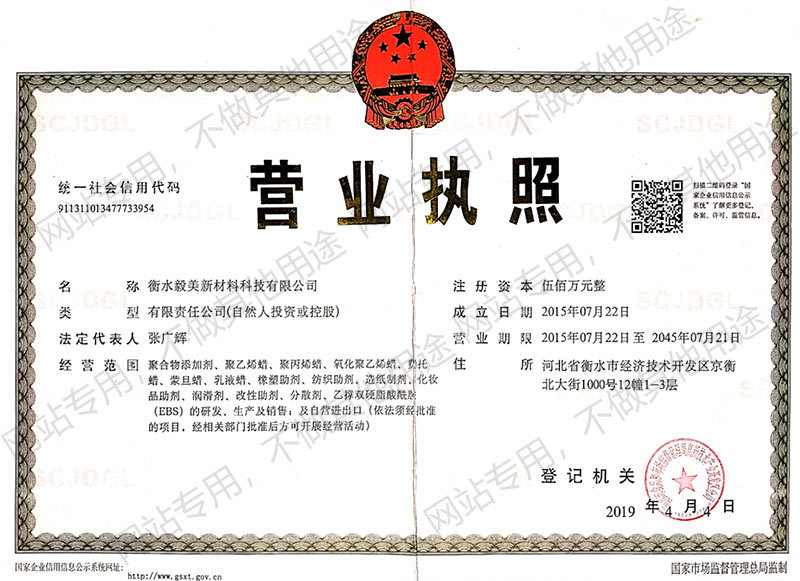
About UsHengshui yi mei new material technology co., ltd. was founded in 2015, is a collection of product development, production, sales and service as one of the high and new technology enterprises, yi mei company focused on deep processing of wax products, determined to become china's professional wax products supplier

-
ProductsThe company mainly produces and sells: polyethylene wax, oxidized polyethylene wax, synthetic Fischer-Tropsch wax, oxidized Fischer-Tropsch wax, maleic anhydride grafted wax, polypropylene wax, micro-powder wax, high-end composite wax and other eight series of dozens of models of high quality products.
-
NewsAt the beginning of its establishment, Yimei Company invested in the establishment of the "Polymer Additive R & D Center", insisting on scientific and technological innovation as the life force of enterprise development. Concentrate funds, technology, and talents in the company's scientific and technological innovation activities, focus on scientific research, public relations and technological breakthroughs of new products, new technologies, and new processes, and resolutely master core technologies.
-
SupportAt the beginning of its establishment, Yimei Company invested in the establishment of the "Polymer Additive R & D Center", insisting on scientific and technological innovation as the life force of enterprise development. Concentrate funds, technology, and talents in the company's scientific and technological innovation activities, focus on scientific research, public relations and technological breakthroughs of new products, new technologies, and new processes, and resolutely master core technologies.
-
RecruitmentOur company always adheres to the talent concept of "people-oriented", actively creates an atmosphere of respect, understanding, integrity and friendship, respects people's knowledge and talents, selects and develops mechanisms, and provides a growth platform for talents. make talents become a strong support for the sustainable development of enterprises, and realize the common growth and development of enterprises and talents.

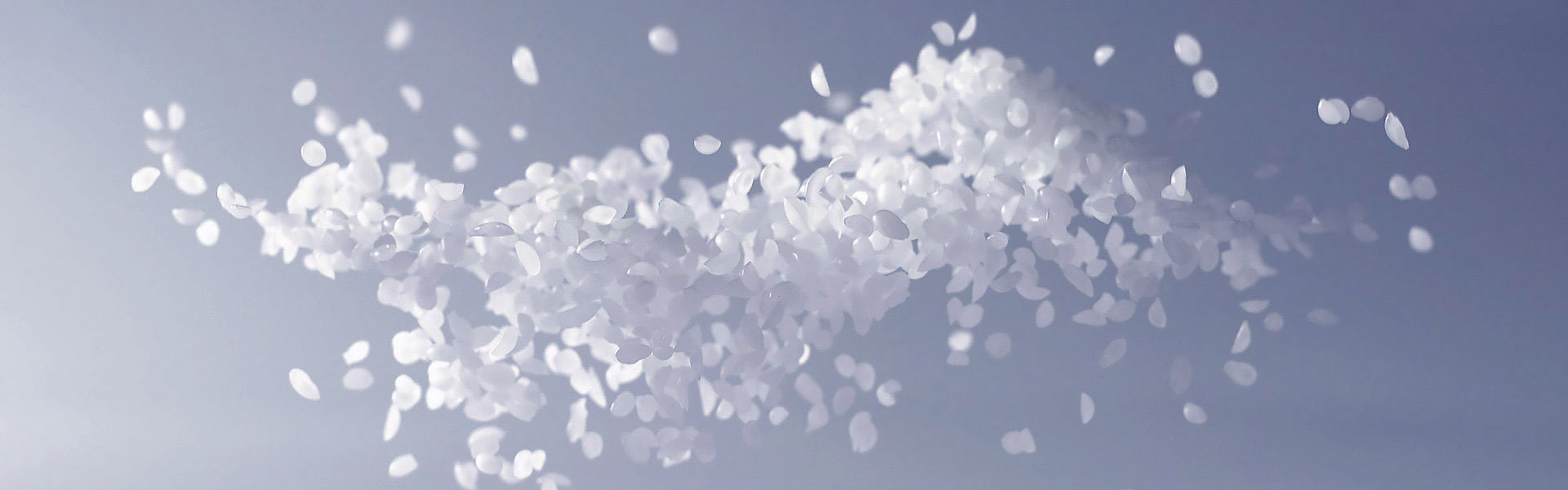
Papua New Guinea FT Wax F70
Category:
Papua New GuineaFischer-tropsch Wax
Product Description
| Grade | Melting point (℃) | Viscosity (mpa.s@140℃) |
Volatility (%) |
Whiteness (%) | Density (g/cm³) |
Appearance |
| F70 | 70 ± 2 | 7 | < 3 | 80 ± 5 | 0.92 | Particle |
Fischer Tropsch wax is a methylene polymer, which is an alkane polymer synthesized from hydrocarbon syngas or natural gas. It mainly relies on high quality and cheap raw materials of coal chemical industry for iron-based or cobalt-based synthesis, which has obvious advantages over crude oil wax price.
Oxidized FT wax, also known as oxidized Fischer-Tropsch wax, is a specialized type of wax that is produced through the oxidation of Fischer-Tropsch (FT) wax. FT wax is a synthetic wax derived from the conversion of carbon monoxide and hydrogen gases into long-chain hydrocarbons. The oxidation process introduces functional groups such as carboxyl and hydroxyl, modifying the properties of the wax and expanding its range of applications. Oxidized FT wax offers unique characteristics that make it a valuable additive in various industries, including coatings, adhesives, and personal care products.
In the coatings industry, oxidized FT wax is used as a surface modifier and rheology modifier. It enhances the scratch resistance, anti-blocking properties, and overall durability of coatings and paints. The functional groups introduced during oxidation improve the wax's compatibility with different binders and pigments, resulting in improved dispersion and stability. This wax also acts as a rheology modifier, controlling the viscosity and flow behavior of the coating, leading to optimal application and film formation.
In the adhesives industry, oxidized FT wax acts as a tackifier and viscosity modifier. It improves the adhesion properties of adhesives and sealants, enhancing their bond strength and durability. The functional groups in the wax enhance compatibility with various adhesive systems, allowing for improved wetting and spreading on different substrates. Additionally, it acts as a viscosity modifier, controlling the rheological properties of the adhesive formulation, ensuring optimal application and performance.